


 Login / Sign Up

Blog

Is Walking After Eating Good for You? Know the Benefits
After a meal, it is common to feel like sitting on the sofa, scrolling through your phone, or simply resting. But what if a short walk after eating could support your digestion, blood sugar levels, and overall health?
Walking after eating is a simple habit that does not require a gym membership, special equipment, or a complicated workout plan. Even a gentle walk for a few minutes can help you stay active after a meal.
But is walking immediately after eating good for you? How long should you walk? Is walking after dinner better than walking at another time of the day
Does walking after eating help?
Yes, for most healthy adults, walking after meals can be a healthy habit.
A gentle walk after eating may help your body use some of the glucose released from the food you have eaten. It can also encourage movement of the digestive system and prevent you from remaining inactive for long periods.
You do not need to walk fast or for a long time to get benefits. A comfortable, easy-paced walk can be enough.
However, walking after eating should not replace regular physical activity. Ideally, it should be part of an overall healthy lifestyle that includes balanced meals, sufficient sleep, stress management, and regular exercise.
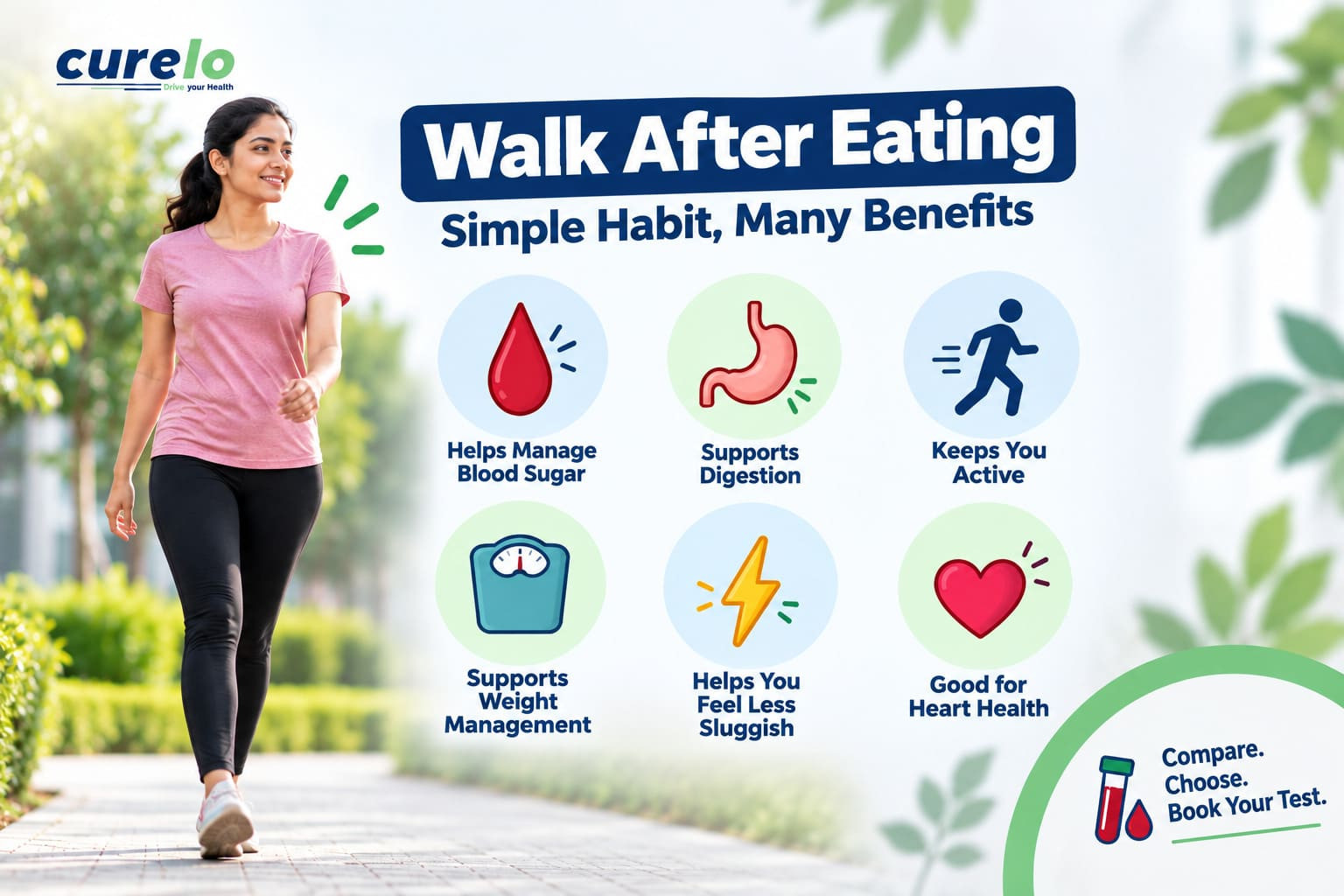
What Are the Benefits of Walking After Eating?
There are several potential benefits of walking after eating, especially when it becomes a regular habit.
1. May Help Manage Blood Sugar
One of the most important benefits of walking after eating is its potential effect on blood sugar.
When you eat carbohydrates, your body breaks them down into glucose. Blood glucose naturally rises after a meal. Physical activity allows your muscles to use glucose for energy, which may help reduce the rise in blood sugar.
This is particularly useful for people who are trying to maintain healthy blood sugar levels.
A short walk after a meal may therefore be a simple way to add more movement to your day.
2. May Support Digestion
Gentle movement after a meal may help keep your digestive system active.
Instead of immediately lying down after eating, walking at an easy pace keeps your body moving. For some people, this may help them feel less heavy or uncomfortable after a meal.
However, if you have eaten a very large meal, avoid intense exercise immediately afterward. A slow and comfortable walk is a better option.
3. Can Help You Stay Active
Modern lifestyles often involve sitting for several hours at a time. You may sit while working, travelling, watching television, or using your phone.
Adding a short walk after meals is an easy way to break up long periods of sitting.
For example, walking for 10 minutes after breakfast, lunch, or dinner can gradually add more movement to your day without feeling like a separate workout.
4. May Support Weight Management
If your goal is weight management, walking after eating can contribute to your overall daily activity.
Walking burns calories, although the amount depends on factors such as your body weight, walking speed, duration, and frequency.
However, walking alone does not guarantee weight loss. Your overall calorie intake, diet quality, sleep, activity level, and other lifestyle factors also matter.
Think of post-meal walks as one small habit that supports a healthier routine.
5. May Help You Feel Less Sluggish
A large meal can sometimes leave you feeling sleepy or inactive.
Instead of immediately sitting or lying down, a gentle walk can help you stay alert and get some movement into your day.
You do not have to walk quickly. Even a relaxed stroll around your home, office, or neighbourhood can be useful.
6. Can Support Heart Health
Walking regularly is a form of aerobic physical activity and can support cardiovascular health when performed consistently.
While a short post-meal walk is not a replacement for a complete exercise routine, it can contribute to your overall physical activity.
Over time, small habits such as walking more throughout the day can add up.
When Is the Best Time for Walking After Meals?
So, when should you actually start walking?
For most people, a short, gentle walk soon after eating is a practical choice. You do not necessarily need to wait for a long time before moving.
If you feel comfortable, you can start with a few minutes of easy walking after your meal.
The important thing is to avoid turning it into a high-intensity workout immediately after eating.
Your body is digesting food, so keep the pace comfortable. If you experience stomach discomfort, cramps, nausea, or unusual pain, stop and give your body time to recover
How Long Should You Walk After Eating?
You do not need to walk for an hour to make post-meal walking part of your routine.
For beginners, 10 to 15 minutes of comfortable walking after a meal can be a simple starting point.
If you enjoy it and feel comfortable, you can gradually increase the duration.
For example:
- 5 minutes: Good for beginners or when you have very little time
- 10–15 minutes: An easy daily target
- 20–30 minutes: Useful if you have more time and feel comfortable
- Longer walks: Can be included as part of your regular exercise routine
Consistency matters more than trying to walk for a very long time once in a while.
How Fast Should You Walk After Eating?
You do not need to walk at a fast pace immediately after a meal.
Start with a slow to moderate pace where you can comfortably talk without feeling breathless.
The goal of walking after meals is to add gentle movement, not to turn your post-meal walk into a demanding workout.
If you have just eaten a heavy meal, you may want to walk even more slowly.
As your body gets comfortable with the habit, you can adjust your walking speed depending on your fitness level and goals.
Walking After Dinner: Is It Better Than Walking at Other Times?
Walking after dinner is popular because dinner is often followed by a long period of sitting or sleeping.
A short evening walk can help you avoid immediately lying down after eating and can add movement to your day.
It may also be easier to make it a routine because many people have more free time after dinner.
However, there is no rule saying that walking after dinner is the only or best time to walk.
If you have time after breakfast or lunch, those walks can also be useful. The best time is often the time that you can follow consistently.
Can Walking After Eating Help With Weight Loss?
Walking can support weight loss by increasing your daily energy expenditure. However, walking after eating should not be considered a quick weight-loss solution.
Weight loss usually depends on maintaining an appropriate calorie deficit over time while getting enough nutrients and protein.
For example, replacing sugary drinks with water, eating more vegetables and protein, controlling portion sizes, and walking regularly can work together as part of a healthy lifestyle.
If you are trying to lose weight, it can also be useful to understand your overall health rather than focusing only on weight.
Regular health checkups can help you keep track of important health markers. With platforms such as Curelo, you can compare diagnostic tests and packages from different labs and choose what suits your needs.
Can You Walk Immediately After Eating?
For most people, gentle walking shortly after eating is generally fine.
However, "immediately" does not mean you should start running or doing intense exercise as soon as you finish your meal.
Give yourself a moment, especially if you have eaten a large meal, and then start walking at a comfortable pace.
Your body's response also matters. If walking makes you feel uncomfortable, wait a little longer before starting.
What Should You Avoid While Walking After Meals?
While post-meal walking is generally simple, a few things are worth keeping in mind.
Avoid intense exercise
Running, heavy strength training, or intense workouts immediately after a large meal may cause stomach discomfort.
Do not push through pain
Mild tiredness is different from pain. Stop walking if you experience significant pain, dizziness, chest discomfort, or difficulty breathing.
Avoid making it stressful
You do not need to hit a specific step count every time you eat. The goal is to build a sustainable habit.
Do not depend on walking alone
Walking is helpful, but your overall lifestyle matters. A balanced diet, regular exercise, good sleep, and stress management all contribute to better health.
Easy Ways to Make Walking After Meals a Habit
Building a habit is easier when you connect it with something you already do.
Try these simple ideas:
- Walk around your building after lunch.
- Take a short walk after dinner instead of sitting immediately.
- Walk while talking on the phone.
- Take a few extra rounds around your home.
- Invite a family member to join you.
- Start with just 5–10 minutes.
- Keep comfortable walking shoes ready.
If you miss a day, simply start the next day again. You do not have to be perfect.
Walking After Eating vs Sitting After Eating
The difference may seem small, but replacing some sitting time with light movement can be a useful lifestyle change.
Instead of finishing dinner and immediately spending the next hour on your phone or watching television, you could take a short walk first.
You do not have to choose between exercise and rest for the entire day. Small periods of movement can fit naturally into your routine.
The key is to find activities that you can maintain over the long term.
Who Should Be More Careful With Post-Meal Walking?
Most people can safely take a gentle walk after eating. However, if you have a medical condition, are recovering from an illness or surgery, or frequently experience symptoms such as severe stomach pain, dizziness, or shortness of breath during activity, speak with a healthcare professional about what level of activity is appropriate for you.
If you have diabetes or take medicines that can lower blood sugar, it is also important to understand how physical activity may affect your blood glucose and follow your healthcare professional's advice.
Conclusion
Walking after eating is one of the simplest ways to add more movement to your daily routine. A short, comfortable walk after meals may support blood sugar management, digestion, daily activity levels, and overall health.
You do not need to walk for hours. Starting with 5–15 minutes can make the habit easier to maintain.
Whether you choose walking after dinner, lunch, or breakfast, consistency is more important than choosing a "perfect" time.
And remember, good health is about more than one habit. Regular movement, balanced nutrition, adequate sleep, and timely health checks all work together.
If you want to stay proactive about your health, Curelo makes it easier to compare and choose diagnostic tests and health packages from different labs based on your needs.
FAQs
1. Is walking after eating good for you?
Yes. For most people, gentle walking after a meal can be a healthy habit. It may help your muscles use glucose, support digestion, increase daily physical activity, and reduce the amount of time you spend sitting. A short walk is usually enough; you do not need to exercise intensely.
2. How long should I walk after eating?
A 10–15 minute walk is a simple starting point for most people. Beginners can start with just 5 minutes and gradually increase the duration. If you have more time, a 20–30 minute walk can also be part of your daily activity routine. The most important thing is to choose a duration you can follow consistently.
3. Is it good to walk after dinner?
Yes, walking after dinner can be a convenient way to add movement to your evening. A gentle walk after dinner may help you avoid sitting for long periods and can contribute to your daily physical activity. However, keep the pace comfortable, particularly after a heavy meal.
4. Can walking after meals reduce blood sugar?
Walking after meals may help reduce the rise in blood glucose because active muscles use glucose for energy. The effect can vary from person to person and depends on factors such as the meal, walking duration, intensity, and individual health. People with diabetes should follow their healthcare professional's advice about exercise and blood sugar monitoring.
5. Can walking after eating help with weight loss?
It can contribute to weight management by increasing daily physical activity and calorie expenditure. However, walking alone does not guarantee weight loss. Your overall diet, calorie intake, sleep, exercise, and lifestyle habits also matter. A consistent walking routine combined with a balanced diet is generally more useful than relying on post-meal walks alone.
6. Can I walk immediately after eating?
For most people, gentle walking shortly after eating is fine. However, avoid intense exercise immediately after a large meal. Start slowly and pay attention to how your body feels. If you experience discomfort, nausea, cramps, dizziness, or pain, stop and rest.
7. Is walking after meals better than walking in the morning?
Not necessarily. Both can be useful. Walking after meals has the added benefit of introducing movement around the time you have eaten, while morning walks can help you start your day actively. The best time depends on your schedule and what you can do consistently.
8. Is 10 minutes of walking after eating enough?
Ten minutes is a good starting point, especially if you are currently not very active. Even a short walk is better than remaining completely inactive. As you become more comfortable, you can increase the duration or add walks after more than one meal. Your overall activity throughout the day matters too.
Need Help In Booking a Lab Test?
Share Your Details, We Will Call You Right Back!


