


 Login / Sign Up


Blog

Karwa Chauth Fasting Health Tips: How to Keep the Vrat Safe (Diabetes, BP, and Pregnancy)
Overview
- Why it is important to follow safe fasting practices during Karwa Chauth.
- Healthy sargi food options to help maintain energy throughout the day.
- Foods to eat and avoid before starting the Karwa Chauth fast.
- Tips to prevent dehydration and manage weakness during fasting.
- Precautions for women with diabetes who wish to observe the vrat.
- Karwa Chauth fasting tips for women with high or low blood pressure.
- Why pregnant women should consult their doctor before fasting.
- Warning signs during fasting that should never be ignored.
- Tips for breaking the Karwa Chauth fast safely after moonrise.
Karwa Chauth is a special festival for many married women across India. From dressing up and performing rituals to enjoying sargi before sunrise and breaking the fast after seeing the moon, the day is filled with love, traditions, and celebrations.
However, fasting for an entire day without food or water can be physically challenging. It may cause weakness, headaches, dizziness, dehydration, and changes in blood sugar levels, especially for people with existing health conditions.
Following the right Karwa Chauth fasting tips can help you understand how to prepare for the fast, what to eat during sargi, and when to take extra precautions. Women with diabetes, high blood pressure, or pregnancy-related health concerns need special attention because prolonged fasting and avoiding water may not be safe for them.
Why Is It Important to Fast Safely on Karwa Chauth?
During Karwa Chauth, many women observe a fast from sunrise until moonrise. Depending on the season and location, this can mean going without food and water for several hours.
While some healthy adults may tolerate fasting, every person's body responds differently. The effects can depend on their health, medications, activity levels, weather, and what they eat before the fast begins.
Not drinking water for long periods can lead to dehydration. Similarly, going without food can cause low blood sugar in people taking certain diabetes medicines. People with blood pressure problems may also experience dizziness or weakness, particularly if their medicines or fluid intake affect their blood pressure.
This does not mean you cannot enjoy Karwa Chauth. It means you should understand your health needs and make informed decisions before observing the vrat.
If you have a medical condition or take regular medicines, speak with your doctor before fasting. Your health and safety should always come first.
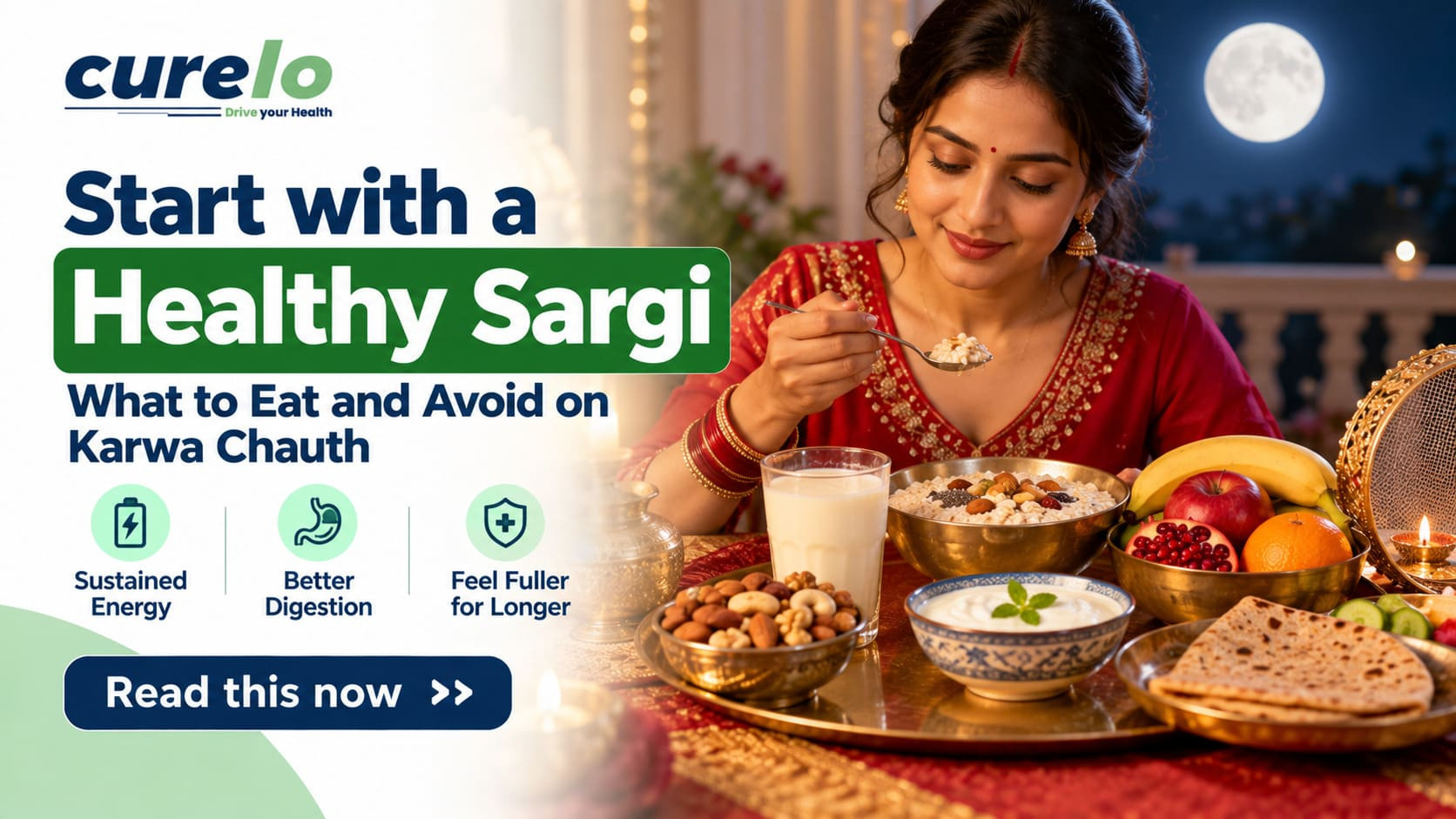
1. Start with a Healthy Sargi
Sargi is the pre-dawn meal traditionally eaten before beginning the Karwa Chauth fast. Since you may not eat or drink again for several hours, choosing the right foods can help you feel more comfortable throughout the day.
The goal is to eat a balanced meal that provides energy, protein, fibre, and fluids instead of relying only on sweets or fried foods.
What to Eat During Sargi
Here are some options to include in your Karwa Chauth sargi healthy food choices:
- Whole grains: Choose whole-wheat roti, oats, or other whole-grain foods for sustained energy.
- Protein-rich foods: Include eggs, paneer, curd, or dal to help you feel full for longer.
- Fresh fruits: Apples, oranges, pears, and other suitable seasonal fruits provide fibre and nutrients.
- Nuts and seeds: A small portion of almonds, walnuts, or seeds can provide healthy fats and additional energy.
- Milk or curd: These can provide protein and calcium while adding variety to your meal.
- Water: Drink enough water before the fast begins, unless your doctor has advised you to restrict fluids.
You do not need to eat an unusually large meal. A balanced, satisfying sargi is generally a better choice than overeating.
What Should You Avoid During Sargi?
Try to limit foods that may leave you uncomfortable or thirsty during the day.
- Very salty foods, such as salty snacks and pickles.
- Excessively fried or oily foods that may cause indigestion.
- Large amounts of sweets, sugary drinks, and desserts.
- Too much tea or coffee, particularly if caffeine causes acidity, palpitations, or headaches.
2. Stay Hydrated Before the Fast Begins
Dehydration is one of the main concerns during a fast that does not allow water.
Drink water regularly in the hours before the fast begins rather than trying to drink a large amount all at once. You can also include water-rich foods, such as fruit and curd, in your sargi.
Avoid excessive caffeine if it tends to make you feel uncomfortable or increases your need to urinate. Do not rely on sugary drinks to maintain hydration.
During the fast, avoid strenuous exercise, prolonged exposure to the sun, and unnecessary physical exertion. If possible, rest in a cool environment and take breaks from household chores.
Once you break the fast, begin drinking water gradually. If you have been dehydrated, avoid drinking alcohol or consuming a very large, heavy meal immediately.
People with kidney disease, heart failure, or other conditions requiring fluid restriction should follow their doctor's advice rather than increasing water intake on their own.
3. Karwa Chauth Fast for Diabetics: What Should You Know?
Fasting can be risky for people with diabetes, particularly those who take insulin or medicines that can lower blood sugar. Going without food and water for several hours may increase the risk of low blood sugar, high blood sugar, and dehydration.
If you have diabetes, do not assume that you can safely fast just because your blood sugar levels are usually controlled.
Can People with Diabetes Observe Karwa Chauth?
The answer depends on your diabetes type, blood sugar control, medicines, and overall health. Some people may face a higher risk of complications than others.
Before deciding to fast, consult your doctor or diabetes care team. They can help assess your risk and advise whether fasting is appropriate for you.
If you have poorly controlled diabetes, frequent episodes of low blood sugar, serious diabetes-related complications, or a recent medical emergency, fasting may be particularly dangerous.
Important Tips for People with Diabetes
If your doctor has confirmed that fasting is appropriate for you, follow their personalised instructions.
- Discuss your medicines beforehand: Never skip, reduce, or change the timing of insulin or other diabetes medicines on your own.
- Check your blood sugar: Follow your doctor's recommended monitoring schedule. Checking blood sugar does not mean you have to break your fast.
- Choose balanced sargi: If you are permitted to eat before fasting, include protein, fibre-rich foods, and suitable portions of whole grains.
- Know the warning signs: Sweating, shakiness, sudden hunger, confusion, dizziness, and unusual weakness may indicate low blood sugar.
- Avoid strenuous activity: Heavy exercise and excessive physical work may increase the risk of blood sugar fluctuations.
When Should a Person with Diabetes Break the Fast?
Your health is more important than completing the vrat. If your blood sugar is below 70 mg/dL (3.9 mmol/L), or you experience symptoms suggesting hypoglycaemia, stop fasting and follow your doctor's emergency plan. A blood sugar reading above 300 mg/dL (16.7 mmol/L), persistent vomiting, or symptoms of severe dehydration also require prompt medical assessment and may mean the fast must be stopped.
For people taking diabetes medicines, a fasting plan should include clear instructions on when to stop fasting and how to manage abnormal readings.
4. Karwa Chauth Health Tips for Women with High Blood Pressure
High blood pressure, also called hypertension, often does not cause noticeable symptoms. However, fasting without water, changes in medication routines, and excessive physical activity may cause problems for some people.
Women taking medicines for blood pressure should be especially careful about changing their regular schedules.
How Can You Manage High BP During Karwa Chauth?
Keep these Karwa Chauth health tips in mind if you have high blood pressure.
- Speak with your doctor: Ask whether fasting without water is appropriate for your condition.
- Take medicines as prescribed: Do not skip or change your medication timing without medical advice. Some medicines need to be taken with food or at specific times.
- Limit salty foods during sargi: Excess salt can contribute to higher blood pressure, particularly in salt-sensitive people.
- Avoid excessive physical activity: Rest when needed and avoid spending too much time outdoors in hot weather.
- Monitor your blood pressure if advised: Follow your usual monitoring plan and pay attention to symptoms such as dizziness or unusual weakness.
Is It Safe to Fast If You Have Low Blood Pressure?
People with low blood pressure may experience light-headedness or fainting, especially when standing up after sitting or lying down. Dehydration can make these symptoms worse.
If you regularly experience low blood pressure, fainting, or dizziness, consult your doctor before attempting a dry fast.
If you feel faint, confused, or severely weak during the vrat, do not ignore the symptoms to complete the ritual. Sit or lie down safely, seek help, and stop fasting if necessary.
Can Pregnant Women Observe Karwa Chauth?
Pregnancy is a time when the body needs adequate fluids and nutrients to support both the mother and the developing baby. A fast that involves avoiding food and water for many hours may increase the risk of dehydration and other complications.
Pregnant women should not undertake a prolonged dry fast without medical advice. The safest choice is generally to avoid fasting without food and water during pregnancy, particularly if there are existing complications.
The risks may be greater for women with gestational diabetes, high blood pressure, anaemia, severe nausea or vomiting, or a history of pregnancy complications.
Why Can Fasting Be Risky During Pregnancy?
Here are some concerns to understand:
- Dehydration: Not drinking water for several hours can cause headaches, dizziness, and reduced urine output.
- Low blood sugar: Going without food may cause weakness or low blood sugar, especially in women taking glucose-lowering medicines.
- Nutritional needs: Pregnancy increases the need for several nutrients, including protein, iron, and folate.
- Existing complications: Women with gestational diabetes, pre-eclampsia, or other pregnancy-related conditions may need regular meals, fluids, or close monitoring.
The effects of fasting during pregnancy vary, and available evidence does not establish that prolonged dry fasting is safe for every pregnant woman.
What Can Pregnant Women Do Instead?
If you wish to participate in Karwa Chauth, speak with your obstetrician about safer ways to celebrate.
Depending on your medical needs and cultural practices, you may be able to participate in the prayers, dressing up, family gatherings, and other rituals without avoiding food and water.
Your health and your baby's well-being deserve priority. You can honour the meaning of the festival without putting yourself at unnecessary risk.
Warning Signs You Should Never Ignore During the Fast
Even if you do not have a known medical condition, prolonged fasting without water can affect your body.
Pay attention to how you feel throughout the day. Do not dismiss severe symptoms as a normal part of fasting.
Watch out for:
- Persistent dizziness or feeling faint.
- Severe headache or unusual weakness.
- Excessive thirst and a very dry mouth.
- Very little urine or unusually dark urine.
- A racing heartbeat or difficulty standing.
- Confusion, fainting, or unusual drowsiness.
- Symptoms of low or very high blood sugar if you have diabetes.
Do not wait until moonrise if your body is showing signs of distress.
How to Break Your Karwa Chauth Fast Safely
After a long day without food or water, it may be tempting to eat a large meal immediately. However, eating slowly and rehydrating gradually can help you avoid discomfort.
Follow these simple tips:
- Start with water: Drink water slowly rather than consuming a large quantity all at once.
- Eat a small portion first: Choose a light snack or a small meal that suits your dietary needs.
- Include a balanced dinner: Add vegetables, protein-rich foods, and whole grains where appropriate.
- Avoid overeating: Large, oily meals may cause bloating, acidity, or nausea.
- Limit excess sugar and salt: Avoid making sweets and salty snacks the main part of your post-fast meal.
- Follow your medical plan: If you have diabetes or another medical condition, follow your doctor's instructions for medicines, monitoring, and food intake.
If you have diabetes and your blood sugar is low, do not delay treatment to wait for the usual time to break the fast. Follow your prescribed hypoglycaemia treatment plan.
Similarly, if you are pregnant, have high blood pressure, or take regular medication, follow the advice given by your healthcare professional.
Conclusion
Karwa Chauth is a meaningful celebration of love, commitment, and tradition. However, observing the vrat should not mean ignoring your body's needs or putting your health at risk.
Following practical Karwa Chauth fasting tips, choosing nutritious sargi foods, staying hydrated before the fast, and understanding your medical needs can help you make informed decisions.
If you have diabetes, high or low blood pressure, or are pregnant, consult your doctor before fasting. Pay attention to warning signs and seek medical help when needed.
FAQs
1. What should I eat during Karwa Chauth sargi to stay energetic throughout the day?
Choose a balanced meal containing whole grains, protein, healthy fats, and fibre. Options include whole-wheat roti with paneer, eggs, oats with milk, curd, fresh fruit, and a small portion of nuts. Drink water before the fast begins, unless you have been advised to restrict fluids.
Avoid eating too many sweets or salty, fried foods. These foods may leave you feeling uncomfortable and are not a substitute for a balanced meal. Remember that even a nutritious sargi cannot guarantee that you will remain comfortable or hydrated throughout a long fast.
2. Can diabetic women keep the Karwa Chauth fast?
Fasting may be unsafe for some women with diabetes, particularly those taking insulin or medicines that can cause low blood sugar. Going without food and water can also increase the risk of dehydration and high blood sugar.
Speak with your doctor before deciding to fast. They can assess your blood sugar control, medicines, and risk of complications. If you are advised not to fast, follow that advice. If you do fast under medical guidance, know when to stop and how to manage abnormal blood sugar readings.
3. Is Karwa Chauth fasting safe during pregnancy?
Prolonged fasting without food and water is generally not recommended during pregnancy without medical guidance. It may increase the risk of dehydration, weakness, and blood sugar fluctuations.
The risks may be higher if you have gestational diabetes, high blood pressure, anaemia, or pregnancy-related complications. Speak with your obstetrician before observing the vrat. You can also participate in the festival's rituals and celebrations without undertaking a dry fast.
4. What are the common side effects of fasting on Karwa Chauth?
Common problems may include headaches, hunger, tiredness, irritability, dizziness, and dehydration. Some people may also experience acidity or weakness, particularly if they have not eaten a balanced pre-fast meal.
People with diabetes may develop low or high blood sugar, while people with blood pressure problems may experience dizziness or faintness. If symptoms are severe or persistent, stop fasting and seek medical help instead of waiting until moonrise.
5. How can I avoid dehydration during Karwa Chauth?
Drink water regularly before the fast begins and include water-rich foods, such as fresh fruit and curd, in your sargi. Avoid excessive caffeine, strenuous exercise, and prolonged exposure to heat.
Once the fast ends, drink water gradually. Remember that these steps cannot completely prevent dehydration when you go without fluids for many hours. If you have kidney or heart conditions that require fluid restriction, follow your doctor's advice.
Need Help In Booking a Lab Test?
Share Your Details, We Will Call You Right Back!


