


 Login / Sign Up

Blog

SGPT Test: Normal Range, High SGPT Causes & What Your Report Means
Your liver performs hundreds of important functions every day. It helps digest food, stores energy, processes nutrients, and removes harmful substances from the body. But liver problems do not always cause noticeable symptoms in the early stages.
This is where a SGPT test can be useful.
SGPT, also known as ALT (alanine aminotransferase), is an enzyme mainly found in the liver. When liver cells are irritated or damaged, SGPT can leak into the blood, causing its level to rise.
But what does a high SGPT level actually mean? Is it always a sign of liver disease? And what is considered a normal SGPT level?
What Is the SGPT Test?
The SGPT test is a blood test used to measure the amount of alanine aminotransferase (ALT) in your blood.
SGPT is found mainly in liver cells, although smaller amounts are present in other tissues. When liver cells are damaged or inflamed, the enzyme can enter the bloodstream.
Therefore, an increased SGPT level can be a sign that the liver is under stress.
Doctors may recommend an SGPT test as part of a liver function test (LFT) or when they want to investigate symptoms or conditions that may affect the liver.
The test is usually performed using a blood sample. Your doctor may interpret the SGPT result along with other liver markers such as SGOT/AST, bilirubin, alkaline phosphatase (ALP), and albumin.
What Is the SGPT Normal Range?
The SGPT normal range can vary slightly between laboratories because different laboratories may use different testing methods and reference ranges.
In many laboratories, ALT/SGPT is considered to be roughly within the range of 7–56 U/L, but your report may show a different reference range.
For this reason, do not judge your result only by comparing it with a number found online. Always check the reference range printed on your laboratory report.
SGPT Levels: What They May Mean
A single abnormal result does not automatically mean that you have liver disease. Your doctor will consider your symptoms, medical history, medications, lifestyle, and other test results before determining the cause.
What Does a High SGPT Level Mean?
A high SGPT level generally indicates that liver cells may be irritated, inflamed, or damaged.
However, SGPT is not a disease by itself. It is a marker that can provide a clue about what may be happening inside your body.
For example, SGPT can increase because of fatty liver, viral hepatitis, certain medicines, alcohol use, or even strenuous exercise in some cases.
The degree of elevation also matters. A mildly elevated result can have very different implications from an extremely high result.
That is why your SGPT result should always be interpreted in context rather than in isolation.
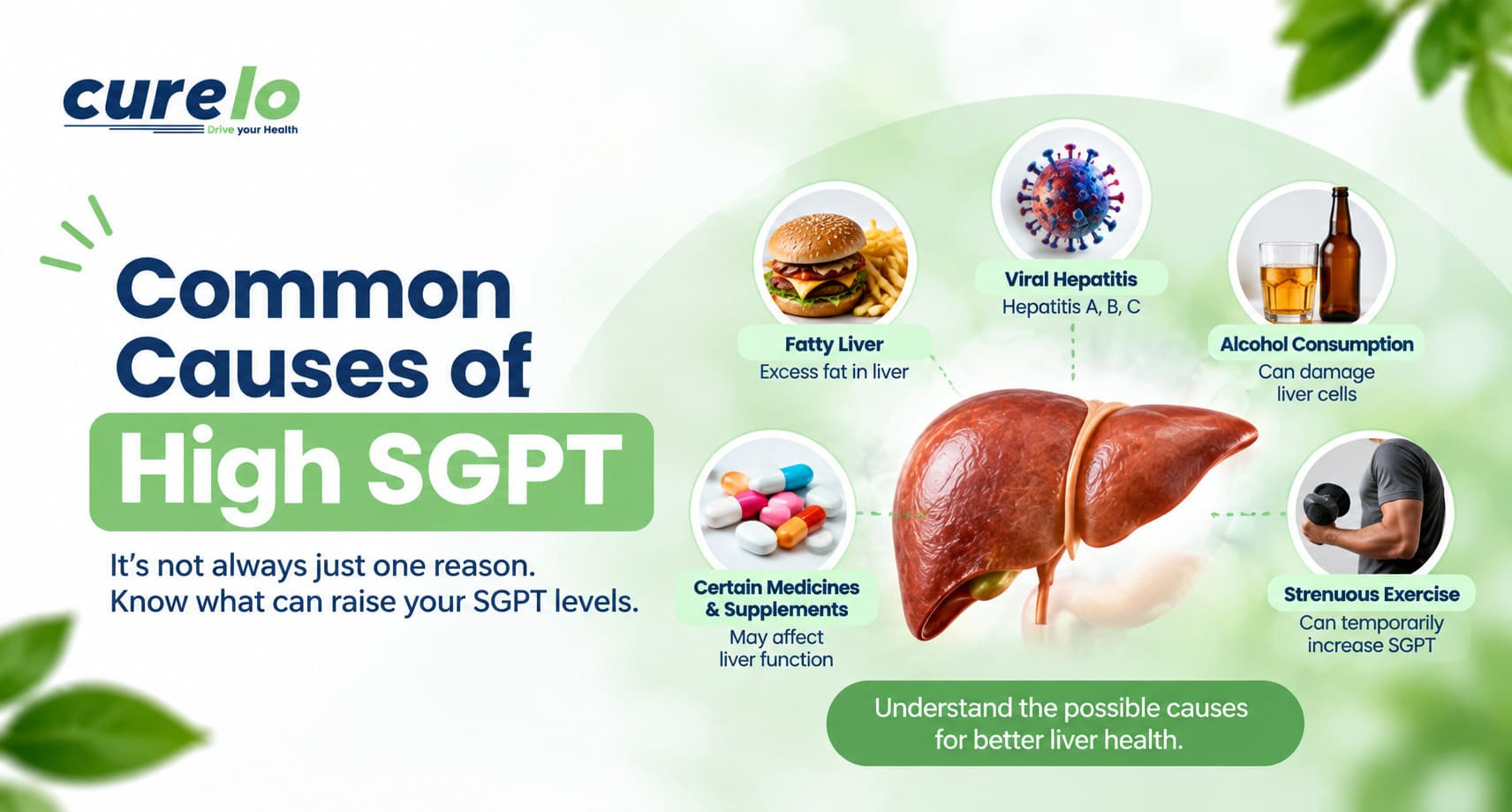
SGPT High Causes: Why Can SGPT Increase?
There are several possible causes of high SGPT. Some are related directly to the liver, while others may temporarily affect the enzyme level.
1. Fatty Liver
Fatty liver is one of the common reasons for elevated liver enzymes.
It occurs when excess fat accumulates in the liver. It is often associated with overweight or obesity, insulin resistance, type 2 diabetes, high cholesterol, and metabolic health problems.
A person can have fatty liver without obvious symptoms.
2. Viral Hepatitis
Hepatitis viruses such as hepatitis A, B, and C can cause inflammation of the liver.
When liver cells become inflamed or damaged, SGPT may increase. The level can sometimes become significantly elevated during acute hepatitis.
Additional tests may be required to identify whether a hepatitis infection is present.
3. Alcohol Consumption
Regular or excessive alcohol consumption can damage liver cells and contribute to abnormal liver enzyme levels.
Alcohol-related liver problems can range from fatty liver to more serious conditions such as alcoholic hepatitis and cirrhosis.
4. Certain Medicines and Supplements
Some prescription medicines, over-the-counter medicines, and herbal or dietary supplements can affect the liver.
This does not mean you should stop a prescribed medicine if your SGPT is high. Instead, inform your doctor about everything you take so they can determine whether a medication could be contributing to the result.
5. Obesity and Metabolic Problems
Excess body weight, diabetes, high triglycerides, and insulin resistance can increase the risk of fatty liver and elevated liver enzymes.
Improving diet, physical activity, weight management, and metabolic health may help improve liver health when these factors are involved.
6. Intense Exercise or Muscle Injury
Although SGPT is primarily associated with the liver, ALT can also be found in other tissues.
Very intense physical activity or muscle injury may sometimes contribute to elevated liver enzymes. Your doctor may consider this possibility based on your history and other test results.
7. Other Liver Conditions
Several other liver conditions can increase SGPT, including autoimmune liver diseases and certain inherited or metabolic conditions.
The exact cause cannot be determined from SGPT alone.
What Is the Difference Between SGPT and SGOT?
SGPT and SGOT are commonly tested together.
- SGPT (ALT): Primarily associated with the liver.
- SGOT (AST): Found in the liver as well as muscles, heart, and other tissues.
Both can increase when cells are damaged.
Doctors may look at the SGPT and SGOT levels together rather than relying on just one number. The relationship between these enzymes, along with bilirubin and other liver tests, can provide additional clues.
What Symptoms Can Occur With High SGPT?
A mildly elevated SGPT level may not cause any symptoms at all. In fact, many people discover abnormal liver enzymes during routine blood testing.
When an underlying liver condition does cause symptoms, they may include:
- Tiredness or weakness
- Loss of appetite
- Nausea or vomiting
- Abdominal discomfort, particularly in the upper right side
- Dark urine
- Pale-coloured stools
- Yellowing of the eyes or skin
- Itching
However, these symptoms are not specific to high SGPT. Having no symptoms does not necessarily mean that your liver is completely healthy.
This is one reason routine testing can sometimes identify a potential problem before symptoms become obvious.
What Should You Do If Your SGPT Is High?
If your report shows a high SGPT level, don't panic.
The first step is to understand how high the value is and why it may have increased.
Your doctor may review:
- Your SGPT and other liver test results
- Current medicines and supplements
- Alcohol intake
- Weight and metabolic health
- Previous liver test results
- Symptoms and medical history
- Risk factors for hepatitis
- Recent strenuous exercise or illness
Depending on the situation, your doctor may recommend repeating the liver tests, additional blood tests, an ultrasound, or other investigations.
If you have recently received your test report and want to understand your available testing options, Curelo can help you compare diagnostic labs and choose a suitable option based on factors such as price, test availability, and other preferences.
Can High SGPT Come Down?
Yes, SGPT can return to the normal range when the underlying cause is addressed.
For example, if elevated SGPT is associated with fatty liver, improving diet, increasing physical activity, managing weight, and controlling conditions such as diabetes or high cholesterol may help improve liver health.
If a medicine is responsible, a doctor may review the medication and make appropriate changes if necessary.
If an infection or another liver condition is involved, treatment will depend on the specific diagnosis.
There is no single medicine or home remedy that can safely lower SGPT for everyone. The goal should be to identify and address the reason behind the elevation.
How Can You Support Liver Health?
You can take several practical steps to support your liver:
Eat a Balanced Diet
Include vegetables, fruits, whole grains, lean proteins, and other nutrient-rich foods. Limit excessive sugar, highly processed foods, and unhealthy fats.
Maintain a Healthy Weight
If you are overweight, gradual and sustainable weight loss can be beneficial for liver health, particularly when fatty liver is involved.
Stay Physically Active
Regular physical activity can support weight management and metabolic health. Even moderate activities such as walking can be useful when done consistently.
Avoid Excessive Alcohol
Excessive alcohol can put stress on the liver. If you are concerned about abnormal liver tests, discuss alcohol use with your doctor.
Be Careful With Medicines and Supplements
Do not take unnecessary supplements or medicines without medical advice. Always tell your doctor about the products you are using.
Get Tested When Recommended
If your doctor recommends an SGPT test or a broader liver function test, getting the test and following up on abnormal results can help identify potential problems early.
You can use Curelo to compare available diagnostic testing options and choose a lab that fits your requirements.
When Should You See a Doctor?
A high SGPT result should not be ignored, especially if it remains elevated or is accompanied by other abnormal liver tests.
Seek medical advice if your SGPT is repeatedly high or if you develop symptoms such as yellow skin or eyes, very dark urine, severe abdominal pain, persistent vomiting, unusual bleeding, or significant weakness.
Very high liver enzyme levels may require prompt medical evaluation.
Remember, the number on your report is only one piece of the picture. The underlying cause is what matters most.
Conclusion
The SGPT test is a useful way to look for signs of liver cell injury, but one abnormal number does not tell the entire story.
If your report shows a high SGPT level, focus less on the number alone and more on understanding why it is elevated. Fatty liver, hepatitis, alcohol, medicines, metabolic problems, and several other factors can affect SGPT.
Knowing your results, following up when needed, and taking care of your overall health can help you stay proactive about your liver health.
When you need diagnostic tests, Curelo makes it easier to compare, choose, and book diagnostic labs based on your preferences, so you can make a more informed choice about your testing.
FAQs
1. What is the normal SGPT level?
The SGPT normal range varies between laboratories. A commonly used reference range is around 7–56 U/L, but your laboratory may use a different range depending on its testing method.
Always use the reference range provided on your own report when deciding whether your result is high or normal.
2. What does a high SGPT level mean?
A high SGPT level usually means that cells, particularly liver cells, may be irritated or damaged. Common causes include fatty liver, viral hepatitis, alcohol use, certain medicines, and metabolic problems.
However, SGPT alone cannot identify the exact cause. Other tests and your medical history are often needed.
3. Is SGPT 100 dangerous?
An SGPT level of 100 U/L is above the normal range used by many laboratories, but the significance depends on the laboratory's reference range and your overall health.
It does not automatically mean severe liver disease. Your doctor may look at other liver tests, symptoms, medications, and previous results to understand why it is elevated.
4. What are the common SGPT high causes?
Common SGPT high causes include fatty liver, viral hepatitis, alcohol-related liver injury, certain medicines and supplements, metabolic conditions, and sometimes strenuous exercise or muscle injury.
The cause can vary significantly from one person to another, so an elevated SGPT result should be evaluated in context.
5. Can fatty liver cause high SGPT?
Yes. Fatty liver can cause elevated SGPT and other liver enzymes. Many people with fatty liver have few or no symptoms, so abnormal liver enzymes may sometimes be found during routine blood testing.
If fatty liver is suspected, your doctor may recommend additional tests or imaging along with lifestyle changes.
6. How can I reduce my SGPT level naturally?
The best approach depends on the reason for the elevation. If fatty liver or metabolic health is involved, maintaining a healthy weight, exercising regularly, eating a balanced diet, limiting alcohol, and managing conditions such as diabetes and high cholesterol may help.
Avoid taking supplements specifically to lower SGPT without medical advice, as some supplements can themselves affect the liver.
7. Is SGPT and ALT the same test?
Yes. SGPT is the older name commonly used for alanine aminotransferase (ALT). Modern laboratory reports often use the term ALT, although SGPT is still widely used in everyday healthcare conversations.
8. Should I worry if my SGPT is slightly high?
Not necessarily. A mild elevation can occur for several reasons and does not automatically indicate serious liver disease.
Your doctor may recommend repeating the test or checking other liver markers to understand the reason. If the level stays elevated or other results are abnormal, further evaluation may be needed.
Need Help In Booking a Lab Test?
Share Your Details, We Will Call You Right Back!


