


 Login / Sign Up

Blog

Rice for Weight Loss? Myth, Facts, and Health Insights
Rice is one of the most common foods in Indian meals. From dal-chawal and rajma-chawal to biryani and curd rice, it is a regular part of many diets. But when people start trying to lose weight, rice is often one of the first foods they think about giving up.
This leads to a common question: Can you eat rice and still lose weight?
The short answer is yes. Eating rice does not automatically cause weight gain. What matters more is your overall calorie intake, portion size, the type of rice you choose, and what you eat with it.
Is Rice Good for Weight Loss?
So, is rice good for losing weight? It can be.
Rice is mainly a source of carbohydrates, which provide your body with energy. The problem is usually not rice itself but eating very large portions or having rice with other high-calorie foods without considering the total meal.
For weight loss, you need to create a calorie deficit. This means your body needs to use more energy than you consume over time.
Rice can be part of this approach when you:
- Control your portion size
- Include enough protein in your meal
- Add vegetables and other fibre-rich foods
- Avoid excessive oil, butter and ghee
- Choose cooking methods that keep calories under control
- Maintain an overall balanced diet
For example, a bowl of rice with dal, vegetables and curd can be a much more balanced meal than a large serving of rice with a calorie-heavy curry.
Therefore, you don't have to completely stop eating rice just because you are trying to lose weight.
How much rice should you eat to lose weight?
Portion size is one of the most important things to consider when eating rice for weight loss.
Rice is easy to overeat because it is relatively soft and filling in the moment, but a large serving can add a significant number of calories to your meal.
A practical approach is to keep rice as one part of your plate rather than making it the entire meal.
You can follow a simple plate structure:
- ¼ plate: Rice or another whole-grain carbohydrate
- ¼ plate: Protein such as dal, eggs, chicken, fish, paneer or tofu
- ½ plate: Vegetables or salad
This doesn't mean you need to measure every grain of rice. Instead, focus on maintaining reasonable portions.
Your individual needs can also vary depending on your age, activity level, body size, and overall diet.
Should You Eat White Rice for Weight Loss?
Many people believe that white rice for weight loss is completely off-limits. That's not necessarily true.
White rice is a refined grain, which means the outer layers of the grain are removed during processing. It generally contains less fibre than brown rice.
However, you can still include white rice in a weight-loss diet.
The key is how much you eat and what you eat alongside it.
For example, instead of eating a large plate of plain white rice, you could have a moderate serving with:
- Dal
- Grilled chicken or fish
- Paneer or tofu
- Mixed vegetables
- Salad
- Curd
Adding protein and vegetables can make the meal more balanced and may help you feel satisfied for longer.
So, you don't have to eliminate white rice simply because you're trying to lose weight.
Brown Rice for Weight Loss: Is It Better?
Brown rice is often recommended because it is a whole grain.
Unlike white rice, brown rice retains more of the grain's outer layers. This means it generally provides more fibre and some additional nutrients.
Fibre can help with fullness, which may make it easier for some people to manage their food intake.
Brown rice may therefore be a useful option if:
- You prefer its taste and texture
- You want more fibre in your diet
- It keeps you fuller between meals
- You enjoy whole grains
However, brown rice is not a magic weight-loss food.
Simply replacing white rice with brown rice will not automatically lead to weight loss if you continue eating more calories than your body needs.
The best rice for weight loss is ultimately the one you can enjoy in appropriate portions while maintaining an overall balanced diet.
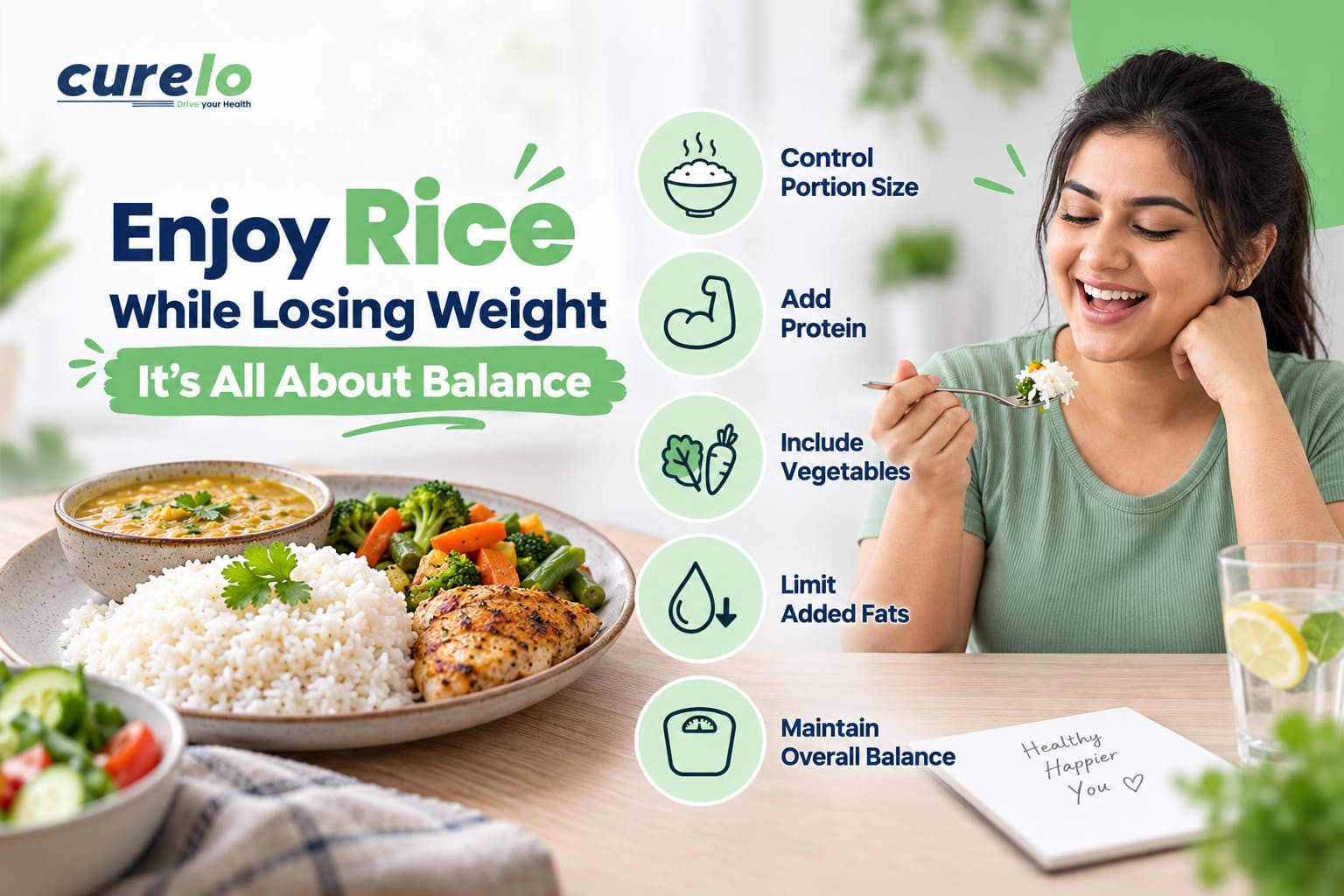
How to Eat Rice for Weight Loss
If you don't want to give up rice while losing weight, a few simple changes can make your meals more balanced.
1. Watch Your Portion
You don't have to completely remove rice from your plate. Start by reducing very large portions.
Try serving a moderate amount of rice and filling the rest of your plate with vegetables and protein.
2. Add Protein
Protein can help you feel full and supports muscle maintenance during weight loss.
Good options include:
- Eggs
- Dal
- Chicken
- Fish
- Paneer
- Tofu
- Greek yogurt or curd
- Beans and legumes
For example, dal with rice can be a simple and nutritious combination when eaten in appropriate portions.
3. Add More Vegetables
Vegetables add fibre, vitamins, minerals and volume to your meal without adding excessive calories.
Try pairing rice with sabzi, sautéed vegetables, salad or a vegetable-based curry.
4. Be Careful With Added Fats
Rice itself may not be the biggest issue. The extra oil, butter, ghee and creamy gravies served with it can significantly increase the calorie content of a meal.
You don't have to completely avoid fats, but keep portions reasonable.
5. Choose Cooking Methods Wisely
Steamed or boiled rice can be easier to fit into a calorie-controlled diet than heavily fried rice preparations.
That doesn't mean you can never eat fried rice or biryani. These foods can still be enjoyed occasionally, while your everyday meals remain balanced.
6. Don't Skip Meals Just to Eat Rice
Some people drastically cut their food intake during the day because they plan to eat a large rice-based dinner.
This can make it harder to control portions later.
Instead, focus on eating balanced meals throughout the day.
Can You Eat Rice at Night During Weight Loss?
Yes, you can eat rice at night while trying to lose weight.
There is no universal rule that says eating rice after a particular time automatically causes weight gain.
Your overall calorie intake and eating pattern matter more than the clock.
If rice is part of your normal dinner, you can have a moderate portion along with protein and vegetables.
For example:
Rice + dal + vegetable sabzi + curd
can make a simple and balanced dinner.
However, if you tend to eat very large portions of rice at night or snack heavily afterward, adjusting your overall meal and eating habits may help.
Is Brown Rice Always Better for Weight Loss?
Not necessarily.
Brown rice generally has more fibre than white rice, which can make it a useful choice for some people. But weight loss depends on your overall calorie intake.
If you eat a very large portion of brown rice, you can still consume more calories than your body needs.
Similarly, eating a reasonable portion of white rice with vegetables and protein can fit into a weight-loss diet.
Instead of asking, "Which rice burns more fat?", focus on the bigger picture:
Portion + protein + vegetables + overall calories + regular physical activity = a more sustainable approach to weight loss.
Healthy Rice-Based Meals for Weight Loss
You don't need complicated recipes to make rice part of a healthy diet.
Here are some simple ideas:
Rice + Dal + Sabzi
A classic Indian combination that provides carbohydrates, plant-based protein and vegetables.
Rice + Grilled Chicken + Vegetables
A protein-rich option that can be filling and easy to portion.
Rice + Rajma + Salad
Rajma provides protein and fibre, while salad adds volume and nutrients.
Rice + Fish + Vegetable Curry
Fish provides protein and other nutrients, while vegetables help make the meal more balanced.
Vegetable Rice + Curd
Add plenty of vegetables to rice and pair it with curd for a simple meal.
The goal isn't to make rice "healthy" or "unhealthy." Instead, build a meal around it that supports your nutritional needs.
What Matters More Than Giving Up Rice?
Weight loss is not about finding one food to blame.
Instead of completely removing rice, focus on habits that can make a bigger difference:
- Eat appropriate portions
- Include protein in every main meal
- Eat plenty of vegetables
- Choose whole grains regularly
- Limit highly processed snacks and sugary drinks
- Stay physically active
- Get adequate sleep
- Drink enough water
- Follow a diet that you can maintain long term
If you are unsure about your nutritional needs, tracking your health markers can also provide useful information. Regular health testing can help you and your healthcare professional understand areas such as blood sugar, cholesterol and other important health parameters. With platforms such as Curelo, you can compare diagnostic tests and packages and choose an option that suits your needs.
Conclusion
So, is rice good for weight loss?
Yes, rice can absolutely be part of a weight-loss diet.
You don't have to completely stop eating white rice, and you don't have to switch to brown rice if you don't enjoy it. What matters most is your portion size, total calorie intake and the quality of the rest of your meal.
Think of rice as one component of your diet, not something you need to fear.
A moderate serving of rice paired with protein, vegetables and other nutritious foods can make a satisfying and balanced meal.
The best diet for weight loss is one that helps you manage your calorie intake without making you feel like you have to give up all the foods you enjoy.
If you're working toward better health and want to understand your current health markers, Curelo can help you compare and book the diagnostic tests you may need from the comfort of your home.
Also, to better understand your diet, you can book a free diet consultation on our platform.
FAQs
1. Can I eat rice every day and still lose weight?
Yes. You can eat rice every day and still lose weight if your overall calorie intake supports weight loss. Portion size is important, but so are the foods you eat with rice. Pairing rice with protein, vegetables and fibre-rich foods can create a more balanced meal.
2. Is white rice good for weight loss?
White rice can be included in a weight-loss diet. It has less fibre than brown rice, but eating it in a controlled portion does not automatically cause weight gain. Pair it with protein and vegetables and pay attention to your overall calorie intake.
3. Is brown rice better than white rice for weight loss?
Brown rice generally contains more fibre because it is less processed. This may help with fullness. However, brown rice is not automatically better for weight loss. The amount you eat and your total daily calorie intake matter more.
4. How much rice should I eat per day to lose weight?
There is no single portion that works for everyone. Your ideal amount depends on factors such as your calorie needs, activity level and the rest of your diet. As a general approach, keep rice to a moderate portion and fill a significant part of your plate with vegetables and include a good source of protein.
5. Can I eat rice at night and still lose weight?
Yes. Eating rice at night does not automatically lead to weight gain. What matters more is your total calorie intake and overall diet. A moderate serving of rice with dal, vegetables, eggs, chicken, fish or another protein source can be part of a healthy dinner.
6. Which rice is best for weight loss?
There is no single "best" rice for weight loss. Brown rice can be useful because it generally has more fibre, while white rice can also be included when portions are controlled. Choose the type you enjoy and can comfortably include in a balanced diet.
7. Does eating rice increase belly fat?
Rice does not specifically cause belly fat. Body fat tends to increase when you consistently consume more calories than your body uses. Large portions, calorie-dense foods and an overall excess of calories can contribute to weight gain. Managing your overall diet and staying active are more important than avoiding rice alone.
8. Can I eat dal and rice while trying to lose weight?
Yes. Dal and rice can be a nutritious combination. Rice provides carbohydrates, while dal provides plant-based protein and other nutrients. Add vegetables or salad and keep the portions appropriate for your needs to make the meal more balanced.
Need Help In Booking a Lab Test?
Share Your Details, We Will Call You Right Back!


