


 Login / Sign Up


Blog

Pre-Marital Health Checkup: 10 Tests Every Couple Should Consider Before Marriage
Overview
- A pre-marital health checkup helps couples understand their health and identify potential medical concerns before marriage.
- A pre-marriage blood test can help assess blood health, blood sugar levels, blood group, and certain inherited conditions.
- Important premarital screening tests include:
- Complete Blood Count (CBC)
- Blood Group and Rh Factor Test
- Thalassemia and Sickle Cell Screening
- Blood Sugar Test
- Thyroid Function Test
- HIV Screening Test
- Hepatitis B and Hepatitis C Screening
- Syphilis Screening Test
- Fertility and Reproductive Health Assessment, when indicated
- Vitamin and Nutritional Deficiency Tests, when needed
- Couples may also consider blood pressure, cholesterol, and rubella immunity assessments based on their health needs.
- The recommended tests depend on medical history, family history, lifestyle, and future pregnancy plans.
- Consulting a doctor helps couples choose the right tests and understand their results.
- Couples can use Curelo to compare available diagnostic tests, laboratory options, and prices.
- A pre-marital health checkup promotes early detection, informed family planning, and a healthier future together.
Marriage is an important milestone that brings two people together to build a life, share responsibilities, and plan for the future. While couples often spend time planning their wedding, finances, and home, one important aspect can easily be overlooked: their health.
A pre marital health checkup helps couples understand their current health, identify possible medical conditions, and discuss important health concerns before marriage. It may include blood tests, screening for infections, checks for inherited conditions, and other tests based on personal and family medical history.
These tests are not about finding faults or questioning a partner's health. Instead, they encourage open communication, informed decisions, and a healthier future together.
Whether you are planning to get married soon or simply want to take a proactive approach to your health, understanding the available premarital screening tests can help you make better decisions.
What Is a Pre-Marital Health Checkup?
A pre-marital health checkup is a medical assessment that helps individuals understand their health before marriage. It can identify certain infections, blood-related conditions, lifestyle-related health concerns, and inherited disorders that may affect future family planning.
A pre marital health checkup for couples is not necessarily a fixed package of tests that everyone must undergo. The recommended tests depend on factors such as age, medical history, family history, vaccination status, lifestyle, and plans for having children.
For example, a couple with a family history of thalassemia may benefit from specific blood tests and genetic counselling. Another couple may need screening for diabetes, thyroid disorders, or sexually transmitted infections based on their individual health risks.
The goal is to help both partners make informed decisions about their health and future.
Why Is a Pre-Marriage Blood Test Important?
A pre marriage blood test can provide useful information about your blood health, blood group, blood sugar levels, and certain infections or inherited conditions.
Some health conditions do not cause noticeable symptoms in their early stages. A person may feel completely healthy while having a condition that needs medical attention or could be relevant to a future pregnancy.
Getting tested before marriage can help couples:
- Identify health conditions that may require treatment or monitoring.
- Understand their risk of passing certain inherited conditions to their children.
- Detect specific infections early and seek appropriate treatment.
- Discuss reproductive health and future pregnancy plans with a doctor.
- Make informed decisions about preventive care and lifestyle changes.
However, not every couple needs every available test. A healthcare professional can recommend the most appropriate screening based on individual circumstances.
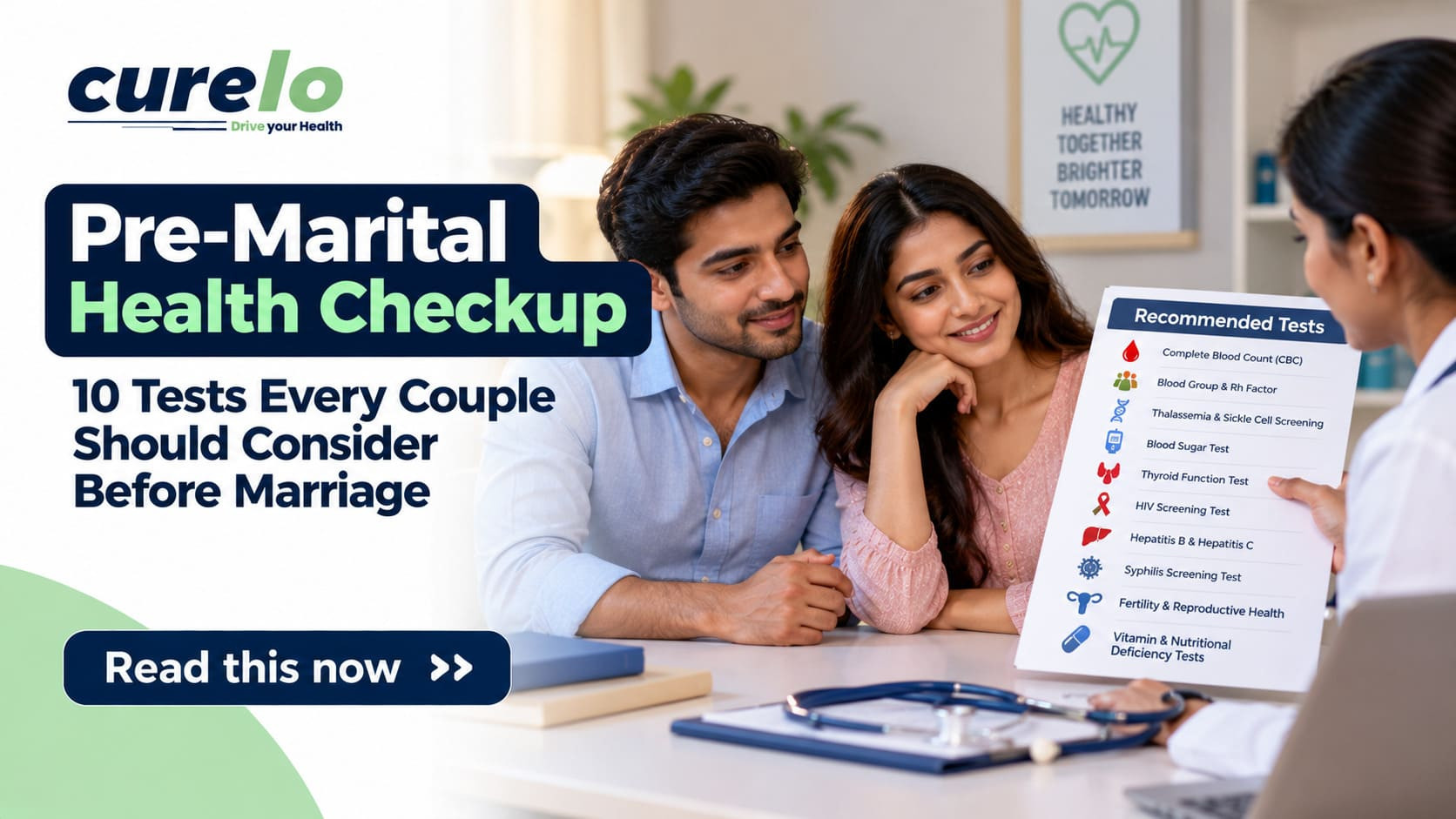
10 Premarital Screening Tests Every Couple Should Consider
Here are 10 important tests that couples can discuss with their doctor before marriage. The list is a starting point, not a mandatory checklist for everyone.
1. Complete Blood Count (CBC)
A Complete Blood Count, or CBC, is one of the common blood tests used to assess overall health. It measures different components of your blood, including red blood cells, white blood cells, haemoglobin, and platelets.
Why is it important?
- It can help detect anaemia, which may cause tiredness, weakness, and dizziness.
- It provides information about red blood cells that may suggest an inherited blood condition.
- It can identify changes in white blood cells and platelets that may need further evaluation.
Anaemia is particularly important to identify before pregnancy because low haemoglobin levels may require treatment and monitoring.
A CBC alone cannot diagnose every blood disorder. If the results suggest an underlying condition, a doctor may recommend additional tests.
2. Blood Group and Rh Factor Test
Knowing your blood group is useful for future medical care. This test identifies whether your blood group is A, B, AB, or O and whether you are Rh-positive or Rh-negative.
Why is it important?
Blood group information can be useful in emergencies when a blood transfusion is needed. The Rh factor is also relevant during pregnancy.
If a pregnant woman is Rh-negative and the baby is Rh-positive, Rh incompatibility can sometimes cause complications. Medical teams can usually prevent these problems through appropriate testing, monitoring, and preventive treatment.
Remember that different blood groups do not make a couple incompatible for marriage. This test is mainly useful for medical planning, particularly if pregnancy is planned.
3. Thalassemia and Sickle Cell Screening
Thalassemia and sickle cell disease are inherited blood disorders. A person may carry a genetic change without experiencing significant symptoms.
This makes carrier screening an important consideration, especially for couples with a family history of these conditions or other relevant risk factors.
Why is it important?
If both partners carry certain disease-causing variants affecting the same inherited blood condition, their children may have a risk of developing that condition.
A doctor may recommend a CBC, haemoglobin analysis, high-performance liquid chromatography (HPLC), or other appropriate tests to identify carrier status.
For example, when both partners carry beta-thalassemia trait, each pregnancy has a 25% chance of resulting in a child with beta-thalassemia major, a 50% chance of a child who is a carrier, and a 25% chance of a child who does not inherit either altered copy.
These probabilities apply to each pregnancy independently. Genetic counselling helps couples understand their individual results and reproductive options.
4. Blood Sugar Test
Diabetes can develop gradually, and some people may not experience noticeable symptoms in the early stages.
A fasting blood glucose test or HbA1c test can help assess blood sugar levels. The doctor will recommend the appropriate test based on age, symptoms, family history, and other risk factors.
Why is it important?
- It can help identify diabetes or elevated blood sugar levels.
- It supports early treatment and lifestyle changes.
- It helps couples understand health factors that may matter when planning a pregnancy.
An HbA1c test estimates average blood sugar levels over approximately the previous two to three months. A fasting glucose test measures blood sugar after a period without food.
Abnormal results may require confirmation or further assessment. Identifying diabetes early can help reduce the risk of long-term complications.
5. Thyroid Function Test
The thyroid gland produces hormones that regulate metabolism, energy use, and several other body functions. When the thyroid produces too much or too little hormone, it can affect overall health.
A thyroid-stimulating hormone (TSH) test is commonly used to assess thyroid function. Additional tests, such as free T4, may be needed depending on the result.
Why is it important?
Thyroid disorders can cause symptoms such as fatigue, unexplained weight changes, changes in heart rate, or menstrual irregularities. Some people may have no obvious symptoms.
Thyroid problems can also affect fertility and pregnancy when they are untreated or poorly controlled.
Testing is particularly worth discussing if either partner has symptoms, a history of thyroid disease, or other relevant risk factors. Not everyone needs a thyroid profile simply because they are getting married.
6. HIV Screening Test
HIV is a virus that affects the immune system. A person can live with HIV for years without obvious symptoms, which is one reason testing can be important.
An HIV screening test may be considered as part of sexual health planning, depending on individual circumstances and informed choice.
Why is it important?
- It helps identify HIV infection so that appropriate care can begin.
- Effective treatment can help people with HIV live long, healthy lives.
- Treatment that maintains an undetectable viral load prevents sexual transmission of HIV.
- Early diagnosis and treatment can help reduce the risk of transmission to a baby during pregnancy and childbirth.
A reactive screening result does not, by itself, confirm HIV infection. Additional testing is needed according to the recommended diagnostic process.
HIV testing should be voluntary, confidential, and supported by appropriate counselling. Couples should approach the conversation with respect rather than stigma.
7. Hepatitis B and Hepatitis C Screening
Hepatitis B and hepatitis C are viral infections that affect the liver. Some people have these infections without obvious symptoms, and untreated infections may lead to long-term liver damage.
A doctor may recommend a hepatitis B surface antigen (HBsAg) test and hepatitis C antibody screening, followed by additional testing when required.
Why is it important?
- It can help identify an infection that needs medical evaluation.
- It supports timely treatment or monitoring.
- Hepatitis B screening can help guide vaccination and prevention decisions.
- It helps healthcare professionals plan appropriate precautions during pregnancy and childbirth when relevant.
Hepatitis B can be prevented through vaccination. If a person tests positive, the next steps depend on the results and clinical assessment.
Testing recommendations vary according to personal risk factors, previous testing, vaccination history, and pregnancy plans.
8. Syphilis Screening Test
Syphilis is a sexually transmitted infection caused by bacteria. It can sometimes remain unnoticed because its early symptoms may be mild or may disappear without the infection being cured.
Blood tests such as VDRL or RPR are commonly used for screening, with additional testing when necessary.
Why is it important?
- It helps identify an infection that may otherwise go untreated.
- Early diagnosis allows appropriate treatment.
- It can help prevent serious complications.
- Treating syphilis before pregnancy can reduce the risk of transmission to the baby.
Syphilis is treatable, particularly when detected early. However, a screening result must be interpreted by a healthcare professional because other conditions can sometimes cause a false-positive result.
Sexual health screening should be based on informed consent, medical advice, and individual circumstances.
9. Fertility and Reproductive Health Assessment
A fertility assessment is not the same as a routine blood test. It may involve a medical history, physical examination, and specific investigations depending on the concerns of each partner.
For women, a doctor may recommend an assessment of menstrual health, ovulation, or reproductive organs when indicated. Tests such as anti-Müllerian hormone (AMH) or pelvic ultrasound may be appropriate in selected cases.
For men, an assessment may include a medical history and, when indicated, semen analysis to evaluate sperm count, movement, and shape.
Why is it important?
A reproductive health assessment may help identify certain conditions that could affect conception or pregnancy. It can also help couples understand when further evaluation may be useful.
However, no single fertility test can guarantee whether someone will or will not be able to have children. For example, AMH alone cannot predict the likelihood of natural conception.
If you are planning a pregnancy soon, have irregular periods, have a known reproductive condition, or have concerns about fertility, consult a qualified healthcare professional about appropriate testing.
10. Vitamin and Nutritional Deficiency Tests
Nutritional deficiencies can affect energy levels, blood health, and general well-being. Depending on symptoms and medical history, a doctor may recommend testing for iron deficiency, vitamin B12 deficiency, or vitamin D deficiency.
Common investigations may include serum ferritin, vitamin B12, and 25-hydroxyvitamin D.
Why is it important?
- Iron deficiency can contribute to anaemia and fatigue.
- Vitamin B12 deficiency can affect red blood cells and nerve function.
- Vitamin D deficiency can affect bone health and muscle function.
Identifying a deficiency allows the doctor to recommend suitable dietary changes, supplements, or further investigations.
These tests are not compulsory for every couple. They are more useful when there are symptoms, dietary risk factors, known deficiencies, or other clinical reasons to investigate.
Other Health Checks to Discuss Before Marriage
Along with these 10 tests, couples may benefit from other health assessments depending on their needs.
- Blood pressure check: Helps identify high blood pressure, which may not cause noticeable symptoms.
- Cholesterol test: May be useful for people with risk factors for heart disease.
- Rubella immunity assessment: May be relevant for women planning pregnancy, particularly if vaccination history is uncertain.
- Mental health discussion: Provides an opportunity to discuss emotional well-being, stress, and any ongoing mental health concerns with a qualified professional.
These assessments should be selected based on individual needs rather than added automatically to every screening package.
How to Prepare for a Pre-Marital Health Checkup
Preparing for your tests can make the process easier and help ensure that you receive appropriate advice.
- Consult a doctor first. Discuss your medical history, family history, symptoms, and future pregnancy plans.
- Check fasting requirements. Some tests require fasting, while others do not. Follow the instructions provided by your healthcare professional or laboratory.
- Share your medications. Tell your doctor about any medicines, supplements, or existing treatments.
- Discuss family medical history. Conditions such as thalassemia, sickle cell disease, diabetes, and inherited disorders may influence which tests are recommended.
- Review the results with a doctor. Do not interpret abnormal results on your own. Some findings require repeat testing or further investigation.
- Respect privacy and consent. Both partners should understand the purpose of each test and make their own informed decisions about testing.
How Much Does a Pre-Marital Health Checkup Cost in India?
The cost of a pre-marital health checkup depends on the number and type of tests included, the laboratory, and the city where the tests are performed.
A basic package may include a CBC, blood sugar testing, and blood group testing. More comprehensive packages may include thyroid function, infection screening, and haemoglobin analysis for inherited blood conditions.
Specialised tests, such as genetic testing or fertility investigations, may cost extra.
Before booking, check which tests are included in the package, whether confirmatory tests are charged separately, and whether a doctor will help you understand the results.
You can use Curelo to compare available diagnostic tests and packages by price, test details, and laboratory options. This can help you make a more informed choice based on your doctor's recommendations.
Conclusion
A pre-marital health checkup is a practical step towards building a healthier future together. It can help couples understand their health, identify certain conditions early, and prepare for future family planning with greater confidence.
From a CBC and blood sugar test to inherited blood disorder screening and selected infection tests, the right investigations can provide valuable information when chosen according to individual needs.
Remember, health screening is about awareness, prevention, and informed choices, not judging a partner's health. Every result should be understood in its medical context, and both partners deserve privacy, respect, and support throughout the process.
FAQs
1. Which tests should be done before marriage?
Tests that couples may consider include a CBC, blood group and Rh factor, thalassemia and sickle cell screening, blood sugar testing, thyroid function testing, and screening for certain infections, such as HIV, hepatitis B, hepatitis C, and syphilis.
Reproductive health and nutritional deficiency tests may also be appropriate in some cases. The exact list depends on your health, family history, risk factors, and pregnancy plans. A doctor can help you select the most useful tests instead of recommending an unnecessary full panel.
2. Is a pre-marital health checkup mandatory in India?
A pre-marital health checkup is not generally mandatory across India. Couples can choose to undergo testing to understand their health and make informed decisions about their future.
The Indian government's guidance on inherited blood disorders supports screening and counselling in appropriate settings, including for people who seek premarital screening. However, this does not mean every couple is required to complete a fixed list of tests before marriage.
3. Is a blood test necessary before marriage?
There is no single blood test that every couple must take before marriage. However, blood tests can provide useful information about anaemia, blood sugar, inherited blood conditions, and certain infections.
A CBC and appropriate carrier screening may be particularly useful depending on medical and family history. Other tests should be chosen based on individual circumstances and medical advice.
4. Why should both partners get tested for thalassemia?
Thalassemia is an inherited blood disorder. A person can carry a thalassemia-related genetic variant without experiencing significant symptoms.
If both partners carry certain variants affecting the same type of thalassemia, their children may be at risk of developing the disease. Testing both partners helps establish whether that risk exists. Genetic counselling can then explain the results and available reproductive options.
Being a carrier does not automatically mean someone will develop thalassemia or that a couple cannot have children together. The purpose of screening is to provide information for informed decisions.
5. Can premarital screening tests detect infertility?
No. Routine premarital screening tests cannot confirm whether a person is fertile or infertile.
If a couple has concerns about fertility, a doctor may recommend a targeted assessment. Depending on the situation, this could include an evaluation of menstrual cycles and ovulation, semen analysis, or investigations for specific reproductive conditions.
Tests such as AMH may provide information about ovarian reserve but cannot independently determine whether a woman can conceive naturally. Fertility assessment should be tailored to the individual rather than treated as a compulsory part of every pre-marital package.
Need Help In Booking a Lab Test?
Share Your Details, We Will Call You Right Back!


