


 Login / Sign Up


Blog

Breast Cancer Screening in India: Mammogram, Ultrasound, and Self-Exam (Which One at What Age?)
Overview
- What is breast cancer screening, and why is early detection important?
- Mammogram test: How it works and the right age to get one.
- Breast ultrasound: When is it needed and how does it help?
- Breast self-examination: How to check your breasts at home.
- Breast cancer symptoms: 7 warning signs women should not ignore.
- Breast lump causes: Common reasons behind breast lumps and when to worry.
- Mammogram vs ultrasound vs self-examination: Which screening method is best?
- Breast cancer risk factors and who needs early screening.
- Simple ways to maintain breast health and reduce risk.
Breast cancer is one of the most common cancers affecting women in India. While the diagnosis can feel scary, finding breast cancer early can make a significant difference in treatment and recovery.
One of the biggest challenges is that many women are unsure about when they should start breast cancer screening, which test they should choose, and whether a mammogram or breast ultrasound is necessary. Some women also believe that checking their breasts at home is enough to detect cancer.
But is it?
The truth is that mammograms, ultrasounds, clinical breast examinations, and self-examinations serve different purposes. The right approach depends on your age, breast health, family history, and individual risk factors.
What Is Breast Cancer Screening?
Breast cancer screening refers to checking the breasts for possible signs of cancer before noticeable symptoms develop.
The main purpose is to identify cancer at an early stage, when treatment may be more effective and the chances of successful recovery may be higher.
Screening does not always mean getting a mammogram. Doctors may recommend different methods depending on a woman's age, medical history, and risk level.
The commonly used methods include:
- Mammogram: An X-ray of the breast used to detect unusual changes, including lumps and tiny calcium deposits.
- Breast ultrasound: Uses sound waves to create images of breast tissue and help examine suspicious areas.
- Clinical breast examination: A physical examination performed by a trained healthcare professional.
- Breast self-examination: Checking your own breasts to become familiar with their usual appearance and feel.
It is important to remember that screening tests are meant for women who do not have noticeable symptoms. If you find a lump or experience an unusual breast change, you should consult a doctor rather than waiting for your next screening appointment.
Why Is Early Breast Cancer Detection Important?
Breast cancer may not cause noticeable symptoms during its early stages. This is why screening and awareness are important, even when you feel completely healthy.
When breast cancer is detected early, doctors may have more treatment options available. Early diagnosis can also help reduce the chances of the disease spreading to nearby lymph nodes or other parts of the body.
However, many women delay medical consultations because they:
- Assume that breast lumps are always harmless.
- Feel uncomfortable discussing breast-related problems.
- Believe breast cancer only affects older women.
- Ignore changes because there is no pain.
- Are unsure which screening test they need.
Remember, breast cancer can also affect younger women. Age alone should never be a reason to ignore an unusual breast change.
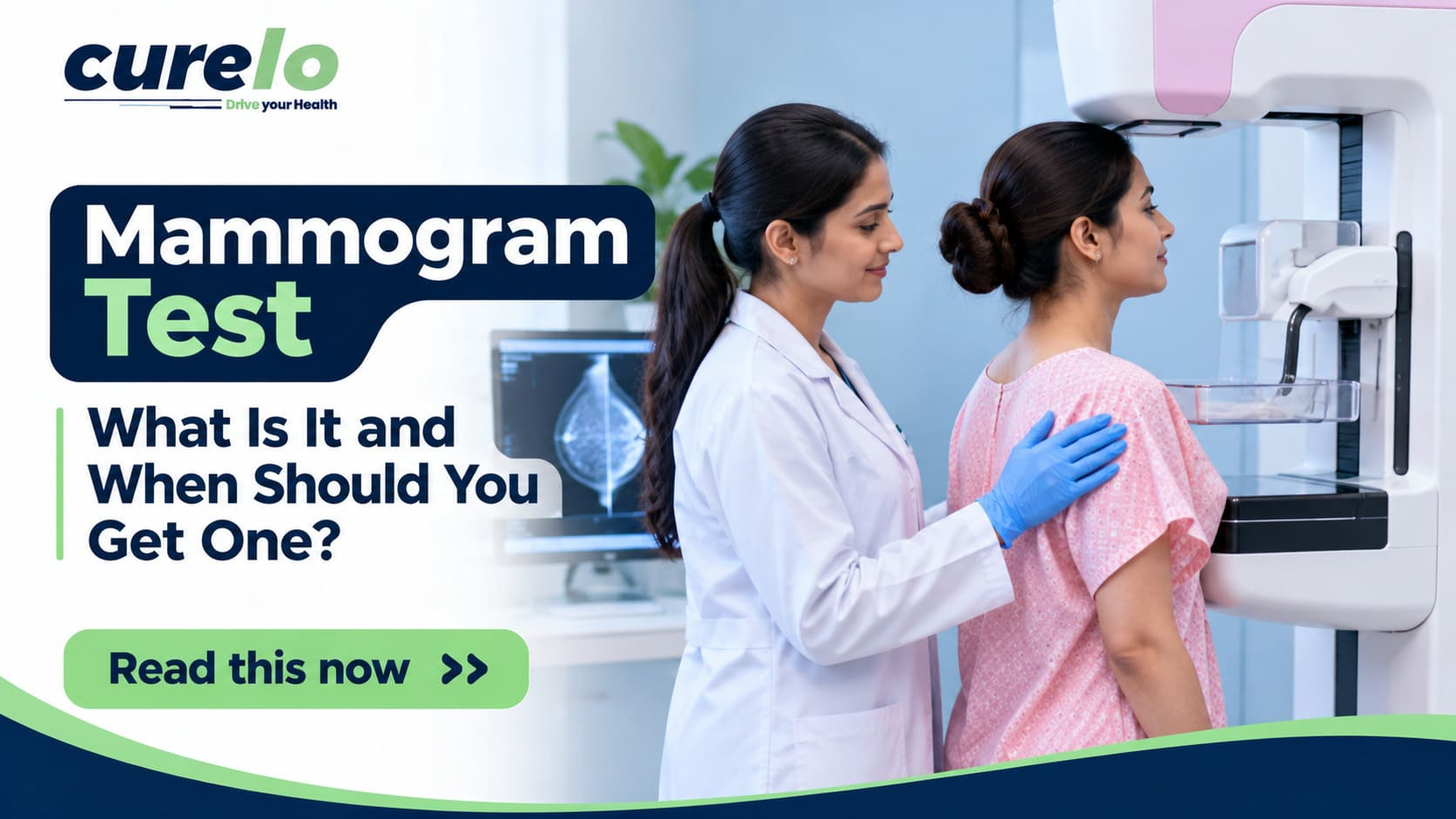
Mammogram Test: What Is It and When Should You Get One?
A mammogram test is one of the most commonly used methods for detecting breast cancer early. It uses low-dose X-rays to create images of the breast and identify unusual changes that may not be felt during a physical examination.
A mammogram can detect:
- Small lumps or tumours in the breast.
- Tiny calcium deposits called microcalcifications.
- Changes in breast tissue.
- Areas that may need further investigation.
How Is a Mammogram Test Performed?
During the test, you will be asked to stand in front of a mammography machine. Each breast is placed between two flat plates, which gently press the breast tissue to get clear images.
The compression may feel slightly uncomfortable, but it usually lasts only a few seconds.
The procedure generally takes around 15–20 minutes.
At What Age Should Women Get a Mammogram?
In India, the Breast Imaging Society of India recommends considering annual mammography-based screening from the age of 40 for women at average risk.
However, India's government population-based screening programme uses clinical breast examination for women aged 30–65 years, generally once every five years. These are different approaches, and a personalised screening plan should be discussed with a doctor.
Here is a simple age-wise overview:
| Age group | Recommended approach |
|---|---|
| Below 30 years | Breast awareness and medical evaluation of any unusual changes. Mammography is not routinely required for average-risk women. |
| 30–39 years | Clinical breast examination and risk assessment. Mammography may be considered if a doctor identifies a reason. |
| 40–49 years | Discuss regular mammography screening with a doctor. |
| 50–65 years | Regular mammography may be recommended based on individual risk and health. |
| Above 65 years | Continue screening depending on overall health, medical history, and life expectancy. |
Breast Ultrasound: When Is It Needed?
A breast ultrasound is another imaging test used to examine breast tissue. Unlike mammography, it uses high-frequency sound waves instead of X-rays.
It helps doctors understand whether a breast lump is:
- A fluid-filled cyst.
- A solid lump.
- An area of unusual breast tissue that needs further examination.
When Should You Get a Breast Ultrasound?
Doctors may recommend a breast ultrasound in the following situations:
- For younger women: Younger women often have denser breast tissue, which can make mammograms harder to interpret. Ultrasound can help examine a suspicious area.
- When a breast lump is detected: It helps identify whether the lump is fluid-filled or solid.
- After an abnormal mammogram: Doctors may use ultrasound to examine a particular area more closely.
- During pregnancy or breastfeeding: Ultrasound is often the first imaging test used to investigate a breast lump in these situations.
Is Ultrasound Better Than Mammography?
Not necessarily. Both tests serve different purposes.
A mammogram is an established screening tool that can detect certain changes even before a lump becomes noticeable. Ultrasound is particularly useful for examining specific areas and evaluating lumps.
In many cases, doctors recommend both tests because they provide complementary information.
A breast ultrasound should not automatically replace a mammogram for routine screening in women for whom mammography is recommended.
Breast Self-Examination: Can You Check for Breast Cancer at Home?
Breast self-examination means checking your own breasts to become familiar with their normal appearance and feel.
It does not require special equipment and can be done at home.
However, it is important to understand that self-examination is not a substitute for medical screening. Research has not established that routine, structured self-examinations alone reduce breast cancer deaths.
The main purpose is to help women recognise unusual changes and seek medical advice without delay.
How to Perform a Breast Self-Examination?
You can follow these simple steps:
Step 1: Look at your breasts in the mirror
Stand straight and look for changes in the size, shape or appearance of your breasts.
Step 2: Check for skin changes
Look for dimpling, swelling, redness, unusual skin texture or changes around the nipples.
Step 3: Raise your arms
Raise both arms and check whether you notice any unusual changes in the shape or appearance of your breasts.
Step 4: Feel your breasts
Using the pads of your fingers, gently feel each breast in a circular pattern. Check for unusual lumps, thickened areas or swelling.
Step 5: Check your underarms
Feel the areas around your armpits for any unusual lumps or swelling.
Step 6: Check your nipples
Look for unexpected changes in nipple direction, inversion or discharge, particularly bloody discharge.
You can do this occasionally as part of becoming familiar with your breasts. If you menstruate, breast tissue may feel different at different points in your cycle, so choose a time when your breasts are less tender.
If you notice something unusual, do not panic. Instead, consult a doctor.
Breast Cancer Symptoms: 7 Warning Signs You Should Not Ignore
Breast cancer does not always cause pain or discomfort. In some cases, women may not experience any noticeable symptoms during the early stages.
However, certain changes should never be ignored.
Here are seven common breast cancer symptoms to watch out for:
- A new breast lump: A new lump in the breast or underarm area is one of the most common warning signs.
- Changes in breast size or shape: An unexplained change in the size or shape of one breast should be evaluated.
- Nipple discharge: Unexpected discharge, especially bloody discharge, needs medical attention.
- Nipple inversion: A nipple that suddenly turns inward or changes direction should be checked.
- Skin dimpling: The skin may appear pulled in, puckered or similar to the texture of an orange peel.
- Redness or swelling: Unusual redness, thickening or swelling of the breast skin can be a warning sign.
- Underarm swelling: A lump or swelling around the armpit or collarbone may indicate enlarged lymph nodes.
Remember, experiencing one of these symptoms does not automatically mean you have breast cancer. However, getting it checked early is important, even if your last mammogram was normal.
Breast Lump Causes: Does Every Lump Mean Cancer?
Finding a lump in your breast can be frightening. However, not every breast lump is cancerous.
There are several possible breast lump causes, and many of them are harmless.
Some common reasons include:
- Fibroadenoma: A common non-cancerous breast lump, particularly in younger women. It often feels firm and moves slightly when touched.
- Breast cysts: Fluid-filled sacs that may cause tenderness or discomfort.
- Hormonal changes: Hormonal fluctuations during the menstrual cycle can make breasts feel swollen, tender or lumpy.
- Fibrocystic breast changes: These can cause thickened or uneven breast tissue, sometimes with pain.
- Infections: Breast infections, particularly during breastfeeding, may cause swelling, redness and painful lumps.
Although most breast lumps are not cancerous, you should never try to diagnose a lump yourself.
A doctor may recommend a clinical examination, ultrasound, mammogram, or biopsy depending on your age and symptoms.
If imaging identifies a suspicious area, a biopsy may be needed to confirm whether cancer cells are present.
Mammogram vs Ultrasound vs Self-Exam: Which One Should You Choose?
Now that we understand the different methods, here is a quick comparison.
| Feature | Mammogram | Ultrasound | Self-examination |
|---|---|---|---|
| Method | Low-dose X-rays | Sound waves | Physical checking at home |
| Detects | Small tumours and tissue changes | Cysts, solid lumps and suspicious areas | Noticeable changes and lumps |
| Best used for | Routine screening at appropriate ages | Investigating lumps and specific areas | Breast awareness |
| Requires a doctor? | Yes | Yes | No |
| Replaces other tests? | No | No | No |
So, which one is best?
There is no single answer for every woman.
- If you are below 30 and have no symptoms, breast awareness and medical advice about your risk are generally appropriate.
- If you are between 30 and 39, discuss clinical breast examination and individual risk assessment with your doctor.
- If you are 40 or older, discuss whether regular mammography is appropriate for you.
- If you notice a lump or unusual change at any age, get it medically evaluated rather than waiting for a routine screening test.
The right screening method is the one recommended according to your age, symptoms, and individual risk factors.
Who Is at a Higher Risk of Breast Cancer?
Although breast cancer can affect any woman, certain factors may increase the chances of developing it.
You may have a higher risk if you:
- Have a mother, sister or daughter who has had breast cancer.
- Have inherited BRCA1 or BRCA2 gene mutations.
- Have previously been diagnosed with breast cancer.
- Have received radiation therapy to the chest at a younger age.
- Have certain hormonal and reproductive risk factors.
- Are getting older.
Having one or more risk factors does not mean you will definitely develop breast cancer. Similarly, women without any known risk factors can also develop it.
If you have a strong family history, speak with a doctor about genetic counselling and an appropriate screening schedule.
How Can You Take Better Care of Your Breast Health?
Breast health awareness should be a regular part of your overall healthcare routine.
Here are a few simple habits that can help:
- Pay attention to changes in your breasts.
- Do not ignore unusual lumps, swelling or nipple discharge.
- Maintain a healthy body weight.
- Stay physically active.
- Limit alcohol consumption.
- Avoid smoking.
- Discuss your family history with your doctor.
- Follow the screening schedule recommended for your age and risk level.
Most importantly, do not wait for pain or discomfort before seeking medical advice.
Conclusion
Breast cancer awareness is not just about knowing the symptoms. It is also about understanding when to get screened and which test is appropriate for your age and health history.
A mammogram, breast ultrasound, and self-examination all have different roles. While mammography is an important screening tool, ultrasound helps investigate specific breast changes, and self-examination helps you become familiar with your body.
Remember, early detection starts with awareness and timely medical attention.
Do not ignore unusual changes, do not rely only on self-examination, and do not delay a doctor's consultation because of fear or hesitation.
Your breast health deserves attention at every age.
FAQs
1. At what age should women start breast cancer screening in India?
In India, the government's population-based screening programme recommends clinical breast examination for women aged 30–65 years, generally once every five years.
For mammography-based screening, the Breast Imaging Society of India recommends considering annual screening from age 40 for average-risk women.
Women with a family history of breast cancer or other high-risk factors may need to start screening earlier. It is best to discuss the appropriate age and frequency with a doctor.
2. Is a mammogram painful?
A mammogram may cause temporary discomfort because the breast is gently compressed between two plates during the procedure.
However, the compression usually lasts only a few seconds. Some women experience mild tenderness, but the discomfort generally goes away shortly after the test.
If you have sensitive breasts, inform the technician before the procedure. If you menstruate, scheduling the test when your breasts are less tender may make it more comfortable.
3. Can breast ultrasound detect cancer?
Yes, breast ultrasound can help identify suspicious breast changes and lumps. It is particularly useful for checking whether a lump is solid or filled with fluid.
However, ultrasound is not a complete replacement for mammography. It may not detect certain abnormalities, such as some microcalcifications, that a mammogram can identify.
Doctors may recommend ultrasound alone or alongside mammography, depending on your age, symptoms, and medical history.
4. Can a breast lump be cancerous without causing pain?
Yes. A breast lump caused by cancer may not be painful, especially during the early stages.
However, many painless breast lumps are also non-cancerous, such as fibroadenomas and cysts.
You should consult a doctor whenever you notice a new lump, even if it does not hurt. A clinical examination and appropriate imaging tests can help determine its cause.
5. Is breast self-examination enough to detect breast cancer?
No. Breast self-examination alone is not enough to detect or rule out breast cancer.
It can help you become familiar with how your breasts normally look and feel, making it easier to notice unusual changes.
However, some breast cancers may not cause noticeable lumps or other symptoms. This is why self-examination should not replace recommended screening tests or medical evaluation.
Need Help In Booking a Lab Test?
Share Your Details, We Will Call You Right Back!


