


 Login / Sign Up

Blog

What Foods Are Highest in Protein? 10 Best Options
Protein is one of the most important nutrients your body needs every day. It helps build and repair muscles, supports healthy skin and tissues, and can also help you feel full for longer. Whether you want to build muscle, manage your weight, or simply eat a more balanced diet, adding enough protein to your meals can make a difference.
But with so many foods labelled as “high protein,” it can be difficult to know which ones actually offer a good amount of protein.
The good news is that you do not need complicated meals or expensive supplements to increase your protein intake. Many everyday foods are naturally rich in protein and can easily be added to your regular meals.
Why Is Protein Important?
Protein is made up of amino acids, which your body uses to build and repair tissues. It also plays a role in making enzymes, hormones, and other substances your body needs to function properly.
Getting enough protein can be particularly important if you:
- Exercise regularly or do strength training
- Want to maintain muscle while losing weight
- Are recovering from an illness or injury
- Have a physically active lifestyle
- Want meals that keep you full for longer
- Are trying to build healthier eating habits
Protein is also important as we get older because maintaining muscle mass becomes increasingly important.
However, eating more protein is not automatically better. Your overall diet, health conditions, activity level, and individual nutritional needs all matter.
How Much Protein Do You Need?
Protein needs vary from person to person. Factors such as age, body weight, activity level and overall health can affect how much you need.
For a healthy adult, a commonly used general reference is around 0.8 grams of protein per kilogram of body weight per day. People who exercise regularly, are older, or have specific nutritional goals may need different amounts.
Instead of trying to get all your protein from one meal, it can be helpful to include a protein source across breakfast, lunch, snacks, and dinner.
If you are unsure about your nutritional needs, consider discussing your diet with a qualified healthcare professional or dietitian.
10 Best High-Protein Foods to Add to Your Diet
There are plenty of protein-rich foods to choose from, including both animal and plant sources. Here are 10 nutritious options to consider.
1. Eggs
Eggs are one of the easiest ways to add protein to your diet. A large egg provides roughly 6 grams of protein.
They also contain several vitamins and minerals, making them a convenient option for breakfast, lunch, or a snack.
You can have eggs boiled, scrambled, poached, or as an omelette. Pair them with vegetables and whole-grain toast for a balanced meal.
Simple idea: Try a vegetable omelette with spinach, tomatoes and onions.
2. Chicken Breast
Chicken breast is a popular source of lean protein. Around 100 grams of cooked chicken breast can provide approximately 30 grams of protein, although the exact amount varies depending on preparation.
It can be useful for people who want to increase their protein intake without adding large amounts of carbohydrates.
You can add grilled chicken to salads, wraps, sandwiches or rice-based meals.
Choose cooking methods such as grilling, baking or roasting instead of deep frying if you want to keep the meal lighter.
3. Fish
Fish can provide both protein and other important nutrients. Depending on the variety, 100 grams of cooked fish may provide around 20–30 grams of protein.
Fatty fish such as salmon also provide omega-3 fatty acids, while options such as rohu, pomfret, tuna and other commonly eaten fish can also contribute to your protein intake.
Try grilled or baked fish with vegetables and a serving of whole grains for a balanced meal.
4. Paneer
Paneer is a popular vegetarian protein source in Indian diets. Around 100 grams of paneer can provide roughly 18–20 grams of protein, depending on the type and preparation.
It can be added to curries, salads, wraps, sandwiches, or stir-fries.
However, paneer can also be relatively high in fat and calories, particularly full-fat varieties. Portion size matters if you are following a calorie-controlled diet.
Simple idea: Add grilled paneer cubes to a salad with cucumber, tomatoes, and other vegetables.
5. Greek Yogurt or Hung Curd
Greek yogurt is thicker and generally contains more protein than regular yogurt. Depending on the brand, a serving can provide around 10 grams or more of protein.
Hung curd can also be a useful option in Indian meals.
You can have it as breakfast with fruit and nuts, use it as a base for dips or add it to smoothies.
When buying packaged yogurt, check the nutrition label and choose options with less added sugar.
6. Soybeans and Tofu
Soy-based foods are among the most useful plant-based protein-rich foods.
Cooked soybeans can provide a substantial amount of protein, while tofu offers a versatile option for vegetarian and vegan meals.
Tofu can be grilled, stir-fried or added to curries and soups.
If you follow a vegetarian or vegan diet, including soy foods regularly can make it easier to meet your protein needs.
7. Lentils and Dal
Dal is a staple in many Indian households and is an affordable way to add plant protein to your meals.
Different types of lentils, including masoor dal, moong dal, chana dal and toor dal, provide protein along with fibre and other nutrients.
While dal may not contain as much protein per 100 grams as chicken or fish, it is still an important part of a balanced vegetarian diet.
Try pairing dal with vegetables and whole grains such as roti or brown rice.
8. Chickpeas
Chickpeas, also called chana, are another excellent plant-based protein option. They also contain fibre, which can help make meals more filling.
You can use boiled chickpeas in salads, chana chaat, hummus or curries.
For a simple snack, mix boiled chickpeas with cucumber, tomato, onion, lemon juice and spices.
If your goal is weight management, remember that portion size still matters because chickpeas also provide carbohydrates and calories.
9. Nuts and Seeds
Nuts and seeds such as almonds, peanuts, pumpkin seeds and chia seeds provide protein along with healthy fats and other nutrients.
However, they are calorie-dense, so you do not need a large quantity to benefit from them.
A small handful of nuts can work well as a snack, while seeds can be sprinkled over yogurt, salads, or oatmeal.
Peanut butter can also be added to whole-grain toast or smoothies. Look for varieties without excessive added sugar.
10. Cottage Cheese
Cottage cheese is another protein-rich dairy food that can be included in meals or snacks. Depending on the product, a serving can provide a significant amount of protein.
It can be eaten with fruit, added to salads or used in sandwiches and wraps.
For people looking for protein-rich foods for weight loss, choosing a lower-fat version and watching portion sizes may be useful, depending on their overall diet.
What Are the Best Protein-Rich Foods for Weight Loss?
If you are trying to lose weight, protein can be useful because it may help you feel satisfied after meals and support muscle maintenance when combined with appropriate calorie intake and physical activity.
Some useful protein-rich foods for weight loss include:
- Eggs
- Chicken breast
- Fish
- Greek yogurt
- Low-fat dairy
- Tofu
- Lentils
- Chickpeas
- Soybeans
- Moderate portions of nuts and seeds
But no single food causes weight loss. Your total calorie intake, food quality, physical activity, sleep, and overall lifestyle all matter.
A simple approach is to build meals around a protein source, add plenty of vegetables, and include an appropriate portion of whole grains or other carbohydrates.
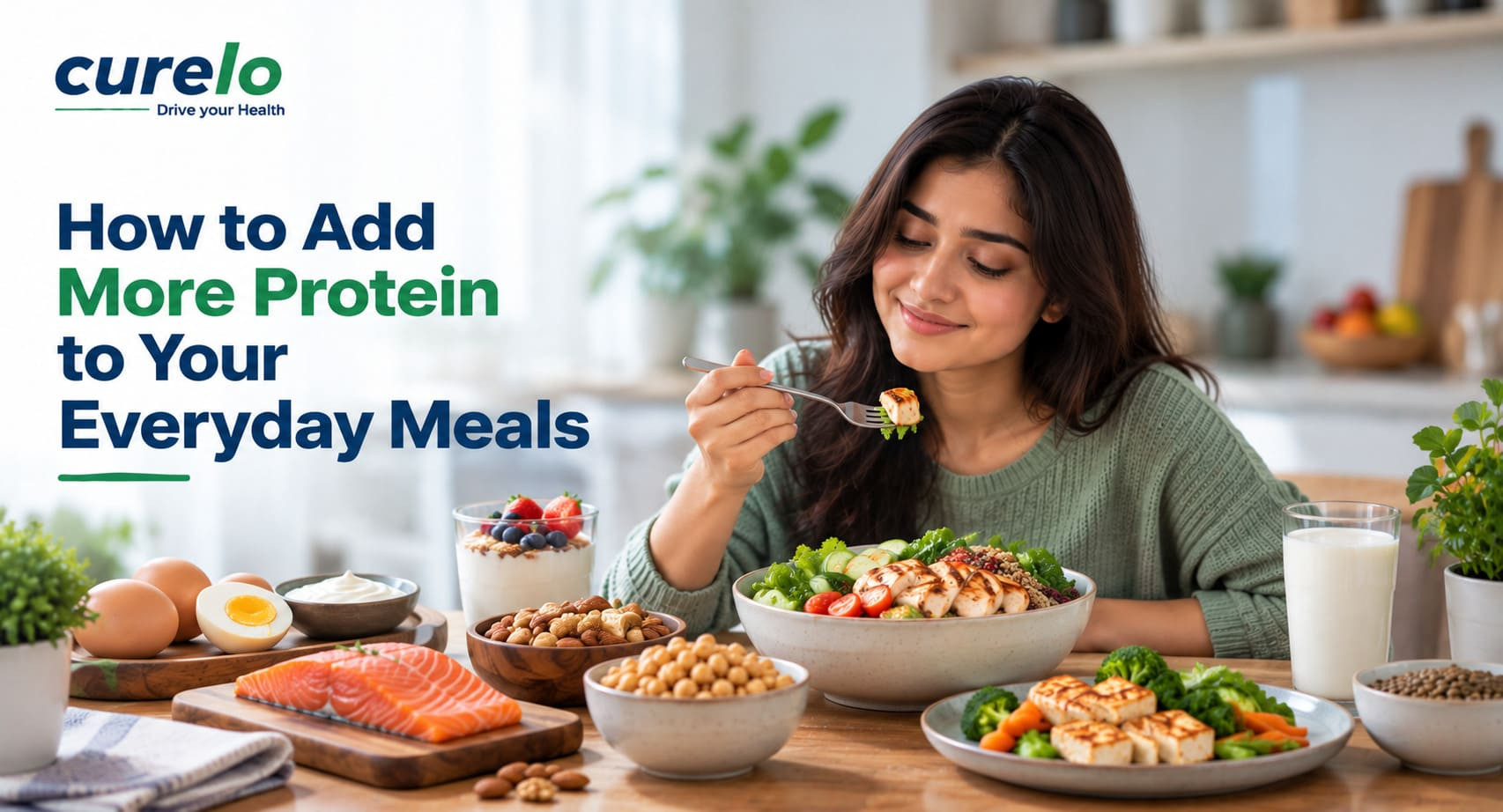
How to Add More Protein to Your Everyday Meals
You do not need to completely change your diet to eat more protein. Small changes can help.
At breakfast
- Add eggs to your breakfast.
- Have Greek yogurt with fruit and seeds.
- Add paneer or tofu to a vegetable sandwich.
At lunch
- Add dal or chickpeas to your meal.
- Include chicken, fish, paneer, or tofu.
- Pair your protein source with vegetables and whole grains.
- For snacks
- Have boiled eggs.
- Try roasted chickpeas.
- Have a small serving of nuts.
- Choose unsweetened Greek yogurt.
At dinner
- Include a protein source such as dal, paneer, tofu, chicken, or fish.
- Add vegetables to increase fibre and nutrients.
- Keep portions balanced instead of focusing only on protein.
Is a High-Protein Diet Right for Everyone?
A high protein diet can be useful for certain people, but it is not suitable for everyone in the same way.
People with certain kidney conditions or other medical conditions may need to monitor their protein intake. If you have a medical condition, are pregnant, are recovering from an illness, or have specific dietary requirements, speak with your doctor or a registered dietitian before making major changes to your diet.
It is also important not to replace fruits, vegetables, whole grains and healthy fats simply to increase protein intake.
The goal should be a balanced diet, not just a high-protein diet.
Conclusion
Adding more protein to your diet does not have to mean eating complicated meals or relying on protein supplements. Eggs, chicken, fish, paneer, yogurt, soy, dal, chickpeas, nuts, and seeds are all practical high-protein foods that can fit into different types of diets.
The key is variety and balance. Include a protein source in your meals, eat plenty of vegetables and fruits, choose nutritious carbohydrates, and pay attention to portion sizes.
FAQs
1. What food has the highest amount of protein?
The protein content varies between foods and depends on the serving size and preparation method. Among commonly eaten foods, lean meats such as chicken breast can provide around 30 grams of protein per 100 grams when cooked. Fish, eggs, dairy products, soy foods, and legumes are also useful protein sources.
Rather than focusing on one food with the highest protein content, it is better to include different protein sources throughout the day.
2. What are the best high-protein foods for vegetarians?
Vegetarians have many options, including paneer, Greek yogurt, milk, tofu, soybeans, lentils, chickpeas, beans, nuts, and seeds.
Combining different plant-based foods throughout the day can help provide a wider range of amino acids. Meals such as dal with rice, chole with roti, or tofu with vegetables can be simple ways to include protein.
3. Which protein-rich foods are good for weight loss?
Eggs, chicken, fish, Greek yogurt, tofu, lentils, and chickpeas can all fit into a weight-loss diet.
However, the food itself does not cause weight loss. Portion sizes and total calorie intake matter. Choosing minimally processed protein sources and pairing them with vegetables and fibre-rich foods can help create filling, balanced meals.
4. How can I get enough protein without eating meat?
You can get protein from foods such as dal, chickpeas, beans, tofu, soybeans, paneer, Greek yogurt, milk, nuts, and seeds.
If you follow a vegetarian or vegan diet, planning your meals around different plant-based protein sources can help you meet your nutritional needs.
5. Is it healthy to eat protein every day?
Yes. Protein is an essential nutrient that your body needs every day. The important thing is to consume an appropriate amount based on your individual needs.
Instead of getting most of your protein from processed foods or supplements, try to include a variety of whole-food sources such as eggs, dairy, fish, lean meat, legumes, soy foods, nuts, and seeds.
6. How much protein should I eat in a day?
There is no single protein target that works for everyone. A commonly used reference for healthy adults is around 0.8 grams per kilogram of body weight per day, but individual needs can vary based on age, activity level, body composition, health status, and goals.
If you are exercising regularly, trying to build or maintain muscle, or managing a health condition, your requirements may be different. A doctor or dietitian can help you determine an appropriate intake.
Need Help In Booking a Lab Test?
Share Your Details, We Will Call You Right Back!


