


 Login / Sign Up

Blog
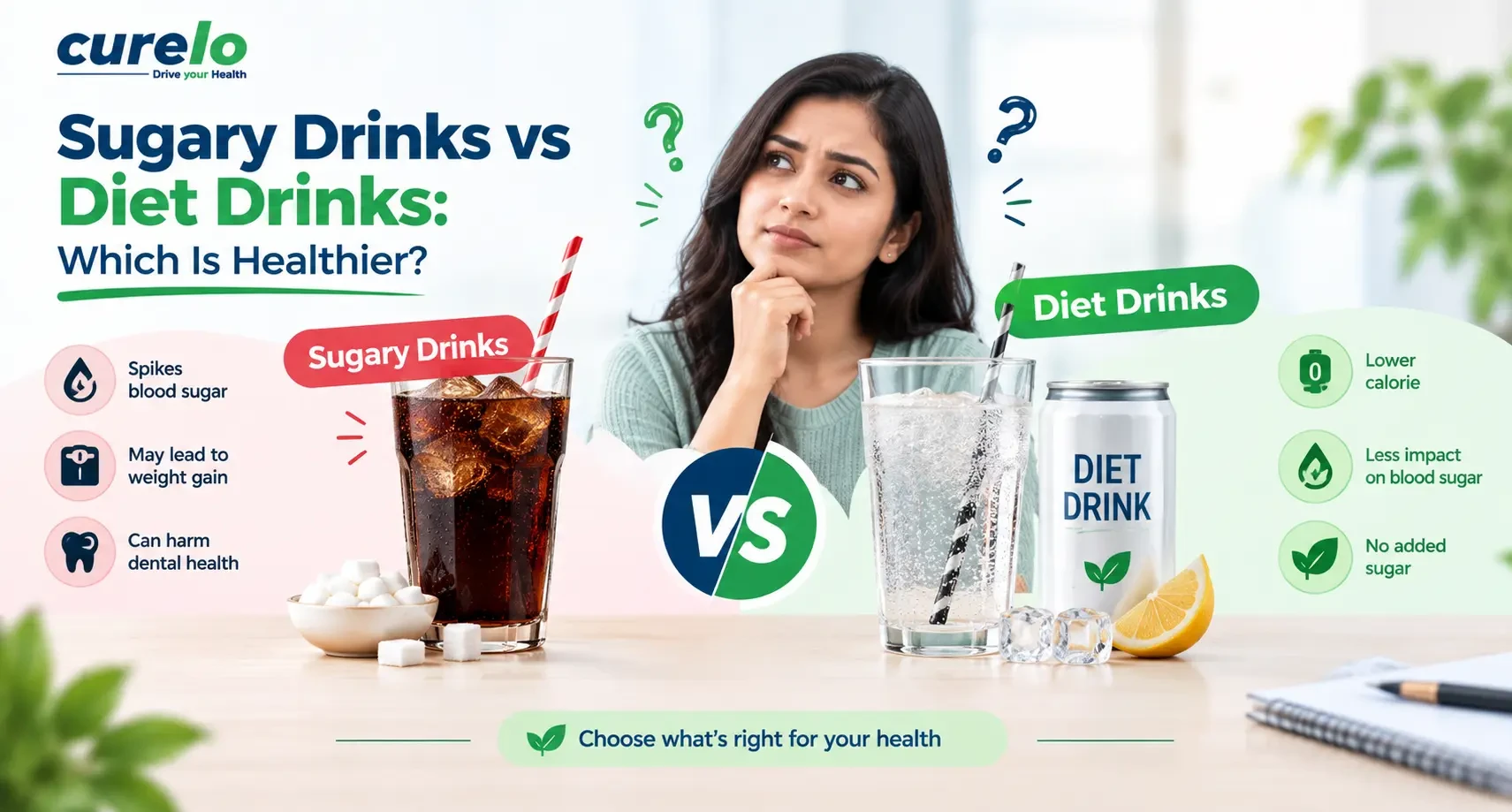
Sugary Drinks vs Diet Drinks: Which Is Healthier?
When you want a cold, refreshing drink, you may find yourself choosing between a regular soft drink and a diet or zero-sugar version. Regular drinks contain added sugar, while diet drinks usually use low- or no-calorie sweeteners instead.
This raises a common question: Are diet drinks actually healthier than sugary drinks?
The answer isn't as simple as calling one drink "healthy" and the other "unhealthy." The better choice can depend on how often you drink it, how much you consume, your overall diet, and what you are trying to achieve.
In this guide, we'll look at sugary drinks vs diet drinks, including their calories, sugar content, sweeteners, possible effects on weight and blood sugar, and healthier drinks you can choose instead.
Sugary Drinks vs Diet Drinks: What's the Difference?
The main difference is the type of sweetener used.
Sugary drinks are sweetened with added sugars such as sugar, glucose syrup, fructose or high-fructose corn syrup. Common examples include regular soft drinks, sweetened fruit drinks, energy drinks, sweetened iced teas and some packaged beverages.
Diet or zero-sugar drinks generally contain little or no added sugar. Instead, they use low- or no-calorie sweeteners to provide a sweet taste.
Here's a simple comparison:
However, the nutrition information can vary between products, so checking the label is still important.
How Sugary Drinks Affect Your Health
Sugary drinks can add a significant amount of sugar and calories to your diet without making you feel as full as solid food.
For example, drinking a large serving of a sugary beverage can add a substantial amount of sugar to your daily intake. Having these drinks frequently may make it easier to consume more calories than you need.
Regularly consuming high amounts of sugary drinks has been associated with an increased risk of health problems such as weight gain, type 2 diabetes and dental problems.
One reason is that liquid calories can be easy to consume quickly, particularly when the drink is not accompanied by a meal.
Do Sugary Drinks Cause Weight Gain?
Sugary drinks can contribute to weight gain when they increase your overall calorie intake.
This doesn't mean that drinking one sugary beverage automatically causes weight gain. Your overall eating pattern, physical activity, portion sizes and total calorie intake also matter.
If you regularly replace water or other low-calorie beverages with sugary drinks, reducing them may be one practical way to lower your overall sugar and calorie intake.
Also Read: https://curelohealth.com/blog/stop-eating-sugar-for-30-days
Are Diet Drinks Healthier Than Sugary Drinks?
Diet drinks are often lower in calories and added sugar than their regular versions.
For someone who frequently drinks sugary soft drinks, switching to a diet or zero-sugar version can reduce the amount of added sugar and calories coming from beverages.
However, lower in sugar does not automatically mean healthy.
Diet drinks can still be highly processed and may contain caffeine, acids, flavours and low- or no-calorie sweeteners. Their nutritional value can also be limited.
So rather than thinking of diet drinks as a health drink, it may be more accurate to consider them as a lower-sugar alternative to regular sugary drinks.
Diet Drinks vs Regular Drinks: What About Artificial Sweeteners?
One of the biggest differences between diet and regular drinks is the use of low- or no-calorie sweeteners.
Depending on the product, these may include sweeteners such as aspartame, sucralose, acesulfame potassium or steviol glycosides.
Approved sweeteners are evaluated for safety by food-safety authorities when used within established acceptable intake levels. However, research continues to examine their long-term effects and how they may influence dietary habits and metabolic health.
The important point is that replacing sugar with a low-calorie sweetener doesn't make a beverage nutritionally equivalent to water, milk or other nutrient-containing drinks.
Diet Soda vs Regular Soda for Weight Loss
If you're trying to reduce your calorie intake, the difference between regular and diet soda can be relevant.
Regular soda contains added sugar and calories, while diet soda generally contains little or no calories.
Therefore, replacing a regular sugary soda with a zero-sugar version can reduce calories from beverages.
But diet soda should not be viewed as a guaranteed weight-loss drink.
Weight changes depend on total calorie intake, food choices, physical activity, sleep and several other factors. If someone replaces regular soda with diet soda but consumes more calories elsewhere, the overall effect may be limited.
For weight management, water and other unsweetened beverages are generally simpler choices.
What About Diet Drinks and Blood Sugar?
This is another common question: Are diet drinks better for people concerned about blood sugar?
Because diet drinks generally contain little or no sugar, they usually have less direct impact on blood glucose than equivalent sugary drinks.
Sugary beverages can cause blood glucose to rise because they contain carbohydrates in the form of sugars.
However, people managing diabetes or blood glucose should consider the entire diet rather than focusing on one beverage alone.
If you have diabetes, are taking glucose-lowering medication or have specific dietary restrictions, your healthcare professional can help you choose beverages that fit your individual needs.
Can Diet Drinks Help Reduce Sugar Intake?
For people who regularly consume sugary drinks, switching to a diet or zero-sugar option can be one way to reduce added sugar intake.
For example:
Regular soda → Zero-sugar soda → Unsweetened beverage
Some people may find this gradual approach easier than stopping sweetened beverages suddenly.
At the same time, taste preferences can keep people dependent on very sweet drinks. If possible, gradually reducing how often you drink sweetened beverages can help you become more comfortable with less-sweet options.
Are Diet Drinks Safe to Drink Every Day?
Whether you should drink diet beverages every day depends on your overall diet and personal circumstances.
Having a diet drink occasionally is different from relying on several servings every day.
If diet drinks are replacing large amounts of sugary beverages, they may help reduce sugar and calorie intake. But if they are replacing water throughout the day, there may be little nutritional benefit.
A practical approach is to make water and other unsweetened beverages your regular choices, while keeping sweetened beverages—whether sugary or artificially sweetened—more occasional.
Sugary Drinks vs Diet Drinks: Which Is Better for Diabetes?
When comparing an equivalent regular and diet beverage, the diet version generally contains much less sugar and carbohydrate.
That means it typically has a smaller direct effect on blood glucose than a sugary version.
However, this doesn't mean that diet drinks are a treatment for diabetes or that people with diabetes can consume unlimited amounts.
For people with diabetes, the overall meal pattern, carbohydrate intake, medication, activity and individual blood glucose response all matter.
If you're unsure which beverages are appropriate for you, discuss your choices with a doctor or registered dietitian.
What Should You Drink Instead?
If you're trying to cut down on sugary or diet drinks, you don't have to choose plain water every time. There are several simple alternatives.
1. Water
Water is the simplest option for staying hydrated without added sugar or calories.
2. Sparkling Water
Unsweetened sparkling water can provide the carbonation you may enjoy in soft drinks without added sugar.
3. Unsweetened Tea
Green tea, black tea and herbal teas can be consumed without added sugar. If you prefer sweetness, gradually reducing the amount can help.
4. Lemon or Fruit-Infused Water
Adding lemon, cucumber, mint or a small amount of fruit can make water more appealing without turning it into a sugary beverage.
5. Plain Milk
Milk provides nutrients such as protein and calcium, although it also contains naturally occurring sugar. Choose portions according to your nutritional needs.
Sugary Drinks vs Diet Drinks: A Simple Decision Guide
Not sure what to choose? Consider this:
If you're currently drinking regular sugary drinks frequently:
Switching to a low- or no-sugar alternative may help reduce your sugar and calorie intake.
If you already drink diet beverages:
You can continue to focus on moderation and consider replacing some servings with water or unsweetened drinks.
If your main goal is hydration:
Water is usually the simplest choice.
If you're managing diabetes or blood sugar:
Choose beverages based on your overall carbohydrate intake and individual health needs, and follow advice from your healthcare professional.
If you're trying to manage your weight:
Look at your overall calorie intake rather than relying on a particular beverage to produce weight loss.
So, Are Diet Drinks Healthier Than Sugary Drinks?
When comparing the same type and serving size of a regular and diet beverage, the diet version usually contains significantly less sugar and fewer calories.
That can make it a useful lower-sugar alternative for someone who regularly consumes sugary drinks.
But that doesn't mean diet drinks should replace water or other nutritious beverages completely.
The bigger picture matters: how often you drink them, what else you eat and drink, your activity level and your individual health goals.
For most people, a practical approach is to limit sugary drinks, use diet drinks in moderation if preferred, and make water and unsweetened beverages the main part of daily hydration.
FAQs
Are diet drinks healthier than sugary drinks?
Diet drinks generally contain less sugar and fewer calories than regular sugary drinks. They may therefore be a lower-sugar alternative, but they should not automatically be considered healthy drinks.
Is diet soda better than regular soda for weight loss?
Diet soda can reduce calories from beverages when it replaces a regular sugary soda. However, it does not guarantee weight loss. Overall diet and calorie intake matter more.
Do diet drinks raise blood sugar?
Most diet drinks contain little or no sugar, so they generally have less direct effect on blood glucose than sugary drinks. The exact ingredients vary by product.
Are sugary drinks bad for diabetes?
Sugary drinks can provide a large amount of added sugar and can raise blood glucose. People with diabetes may benefit from limiting them, based on their individual dietary plan.
What is the healthiest drink to have every day?
For most people, water is a simple choice for regular hydration. Unsweetened tea and other low- or no-sugar beverages can also be included depending on individual needs.
Can I drink diet soda every day?
Moderation is important. If you drink diet soda regularly, consider balancing it with water and other unsweetened beverages rather than relying on it as your primary source of hydration.
Need Help In Booking a Lab Test?
Share Your Details, We Will Call You Right Back!


