

 Login / Sign Up

Blog

Why Am I Having Loose Motion? Causes, What to Eat & How to Stop It
Loose motion is a common digestive problem that most people experience at some point. It usually means passing loose or watery stools more often than usual. In many cases, it gets better on its own within a few days. However, frequent loose motion can cause dehydration and weakness, especially if you are losing a lot of fluids.
So, why does loose motion happen? It can be caused by something as simple as eating contaminated food or a sudden change in diet. In some cases, it may be linked to an infection, food intolerance, medication, or an underlying digestive condition.
What Is Loose Motion?
Loose motion refers to frequent bowel movements where the stool is softer or more watery than normal. It may happen once or several times a day.
Loose motion can sometimes occur along with other symptoms such as:
- Stomach cramps or pain
- Bloating
- Nausea or vomiting
- Weakness
- Fever
- Urgent need to use the toilet
- Dehydration
- Loss of appetite
Most short-term cases are not serious. However, if loose motion continues for several days or is accompanied by severe symptoms, medical attention may be needed.
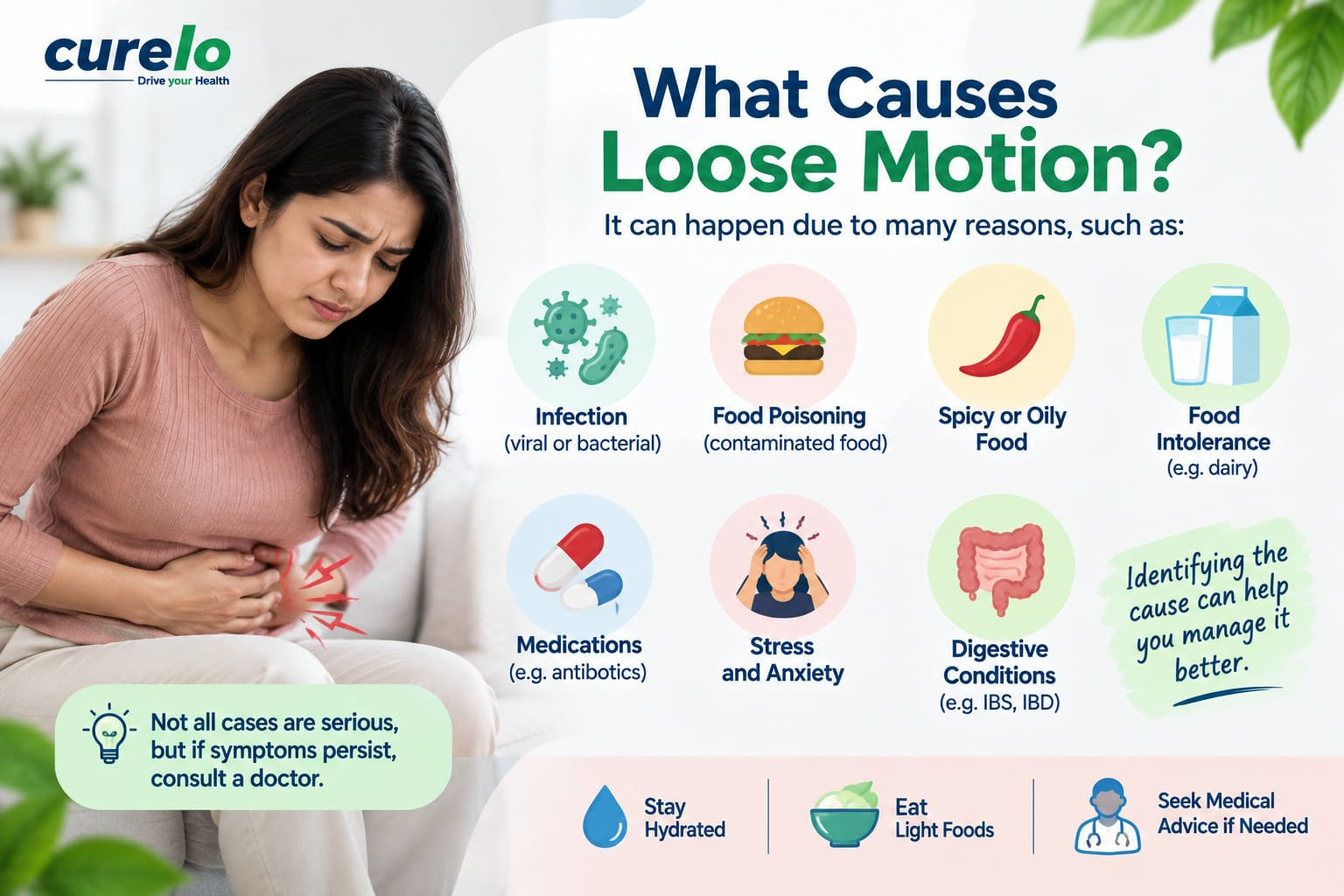
What Causes Loose Motion?
There are several possible loose motion causes. Identifying the possible trigger can help you understand what may be happening and when you should seek medical advice.
1. Stomach Infection
Viral or bacterial infections are among the most common causes of sudden loose motion. These infections can spread through contaminated food, unsafe drinking water, or poor hygiene.
They may also cause vomiting, stomach cramps, fever, and weakness.
2. Food Poisoning
Eating food contaminated with harmful bacteria, viruses, or toxins can lead to food poisoning. Symptoms may appear within a few hours or a few days after eating contaminated food.
Loose stools, vomiting, abdominal cramps, and fever are common symptoms.
3. Eating Something That Does Not Suit You
Certain foods can trigger loose motion in some people. This can include very spicy, oily, or fatty foods.
Eating a large meal after a long gap can also sometimes upset digestion.
4. Food Intolerance
Some people have difficulty digesting certain foods. For example, people with lactose intolerance may develop loose motion, gas, bloating, or stomach discomfort after consuming milk or dairy products.
If you repeatedly experience loose motion after eating a particular food, it may be useful to discuss the pattern with a healthcare professional.
5. Medications
Certain medicines can affect the digestive system. Antibiotics, for example, may change the balance of bacteria in the gut and cause diarrhoea or loose stools in some people.
If loose motion starts after beginning a new medicine, speak with your doctor rather than stopping the medicine on your own.
6. Stress and Anxiety
Your brain and digestive system are closely connected. Stress and anxiety can affect how quickly food moves through your digestive tract.
For some people, periods of high stress may result in loose stools, stomach cramps, or an urgent need to use the toilet.
7. Digestive Conditions
Repeated or long-lasting loose motion can sometimes be associated with conditions such as irritable bowel syndrome (IBS), inflammatory bowel disease, or other digestive problems.
If loose motion keeps coming back, it is important to look beyond temporary food-related causes and discuss the symptoms with a healthcare professional.
What to Eat During Loose Motion?
When you have loose motion, your digestive system may be more sensitive than usual. Instead of eating heavy meals, choose simple foods that are easier to digest.
Foods You Can Try
1. Banana
Bananas are soft and easy to digest. They also provide potassium, an electrolyte that can be lost when you have frequent watery stools.
2. Rice
Plain white rice is generally easy on the stomach. You can have it in small portions without adding too much oil or spices.
3. Toast or Plain Bread
Plain toast or bread can be a simple option when your appetite is low.
4. Khichdi
A simple khichdi made with rice and moong dal can be a gentle meal for many people. Keep it light and avoid adding excessive spices, ghee, or oil.
5. Curd
Some people tolerate plain curd well. However, if dairy products make your symptoms worse, it is better to avoid them temporarily.
6. Soups and Light Foods
Clear soups and other light meals can provide some nutrition while being easier to digest.
Most importantly, focus on replacing lost fluids.
What to Drink During Loose Motion?
Dehydration is one of the biggest concerns during frequent loose motion.
Drink plenty of fluids throughout the day. Depending on your symptoms, this can include:
- Water
- Oral rehydration solution (ORS)
- Clear soups
- Coconut water
ORS is particularly useful because it helps replace both fluids and electrolytes lost through diarrhoea.
Take small, frequent sips if you feel nauseous instead of drinking a large amount at once.
What Should You Avoid During Loose Motion?
Some foods and drinks may make digestive symptoms worse.
It may help to temporarily avoid:
- Fried and greasy foods
- Very spicy food
- Alcohol
- Excess caffeine
- Very sugary drinks
- Foods that you know trigger your symptoms
- Large, heavy meals
Once your symptoms improve, you can gradually return to your usual diet.
Loose Motion Home Remedies That May Help
Looking for loose motion home remedies is common when symptoms are mild. The focus should mainly be on hydration, rest, and simple foods.
Stay Hydrated
Drink water regularly and use ORS to replace lost fluids and electrolytes.
Eat Small Meals
Instead of eating a large meal, try smaller portions throughout the day.
Get Enough Rest
Your body may need extra rest while recovering from an infection or digestive upset.
Maintain Good Hygiene
Wash your hands properly after using the toilet and before eating or preparing food. This is particularly important when an infection may be responsible for the symptoms.
Home remedies can help manage mild symptoms, but they should not replace medical care when symptoms are severe or persistent.
How to Stop Loose Motion?
If you are wondering how to stop loose motion, the first step is to understand what may be causing it.
For mild cases, focus on:
- Drinking plenty of fluids and ORS
- Eating light, easily digestible foods
- Avoiding oily and spicy foods
- Getting enough rest
- Maintaining proper hand hygiene
- Monitoring your symptoms
Avoid taking antibiotics without medical advice. Antibiotics do not help every type of diarrhoea and may be unnecessary in many cases.
If your symptoms are severe, keep returning, or do not improve, consult a healthcare professional. Depending on your symptoms and medical history, they may recommend tests to identify the underlying cause.
If you need help understanding which diagnostic tests may be relevant to your symptoms, Curelo can help you compare available diagnostic options and choose a suitable test or lab based on your needs.
When Should You See a Doctor?
Loose motion usually improves within a few days, but certain symptoms should not be ignored.
Seek medical advice if you have:
- Blood or black stools
- Severe abdominal pain
- Persistent vomiting
- High fever
- Signs of dehydration
- Severe weakness or dizziness
- Very frequent watery stools
- Symptoms that are getting worse
- Loose motion that continues for several days
Extra care may be needed for young children, older adults, pregnant people, and people with weakened immune systems or other medical conditions.
If symptoms continue or keep coming back, getting the right medical advice can help identify the underlying cause instead of repeatedly treating the symptoms.
How Can You Prevent Loose Motion?
Not every episode of loose motion can be prevented, but some everyday habits can reduce your risk.
- Wash your hands with soap before eating and after using the toilet.
- Drink safe and clean water.
- Wash fruits and vegetables properly.
- Cook meat, eggs, and seafood thoroughly.
- Avoid food that has been left unrefrigerated for too long.
- Be careful with food and water when travelling.
- Avoid sharing utensils with someone who has an infectious stomach illness.
Good food and water hygiene is particularly important in preventing infections that can cause diarrhoea.
Conclusion
Loose motion is often temporary, but it should not always be ignored. Understanding the possible causes of loose motion, staying hydrated, eating simple foods, and maintaining good hygiene can help you manage mild symptoms.
While looking for loose motion home remedies may be helpful for temporary relief, persistent or severe symptoms need proper medical attention.
And if you need diagnostic tests as part of understanding an ongoing health concern, Curelo can help you compare labs and diagnostic options, choose what suits your needs, and book your test conveniently.
Listen to your body, stay hydrated, and don't ignore symptoms that persist.
FAQs
1. How long does loose motion usually last?
Mild loose motion caused by a temporary infection or food-related problem often improves within a few days. However, the duration depends on the underlying cause.
If loose motion continues for several days, keeps coming back, or becomes severe, consult a healthcare professional. Persistent diarrhoea can sometimes be linked to an infection, medication, food intolerance, or an underlying digestive condition.
2. What should I eat to stop loose motion quickly?
There is no single food that can immediately stop loose motion. The main priorities are staying hydrated and choosing simple foods that your stomach can tolerate.
You can try foods such as bananas, plain rice, toast, simple khichdi, and light soups. Eat small portions and avoid oily, spicy, or very heavy meals until your digestion improves.
3. Is ORS good for loose motion?
Yes. ORS can be useful during loose motion because it helps replace the fluids and electrolytes lost through frequent watery stools.
Water is also important, but ORS provides electrolytes along with fluids. If you have frequent diarrhoea, drinking ORS according to the product instructions can help reduce the risk of dehydration.
4. Can I drink milk during loose motion?
It depends on how your body responds. Some people may temporarily have difficulty digesting lactose after an episode of diarrhoea, which can make milk cause more bloating or loose stools.
If you notice that milk makes your symptoms worse, avoid it temporarily and discuss persistent symptoms with a healthcare professional.
5. What are the common causes of loose motion?
Common loose motion causes include stomach infections, food poisoning, contaminated food or water, food intolerance, certain medicines, stress, and some digestive conditions.
If loose motion happens repeatedly without an obvious reason, it is worth discussing your symptoms with a doctor to determine whether an underlying problem needs to be checked.
Need Help In Booking a Lab Test?
Share Your Details, We Will Call You Right Back!