

 Login / Sign Up

Blog

Men’s Mental Health: 10 Common Signs of Stress, Anxiety and Depression
Mental health is an important part of overall health, but it is often overlooked, especially in men. Work pressure, financial concerns, relationship problems, family responsibilities, loneliness, and major life changes can all affect emotional well-being. Yet, many men may find it difficult to talk about what they are going through.
This can make men's mental health issues harder to recognise. Instead of openly discussing sadness, fear, or anxiety, some men may show changes in their behaviour, sleep, physical health, or relationships.
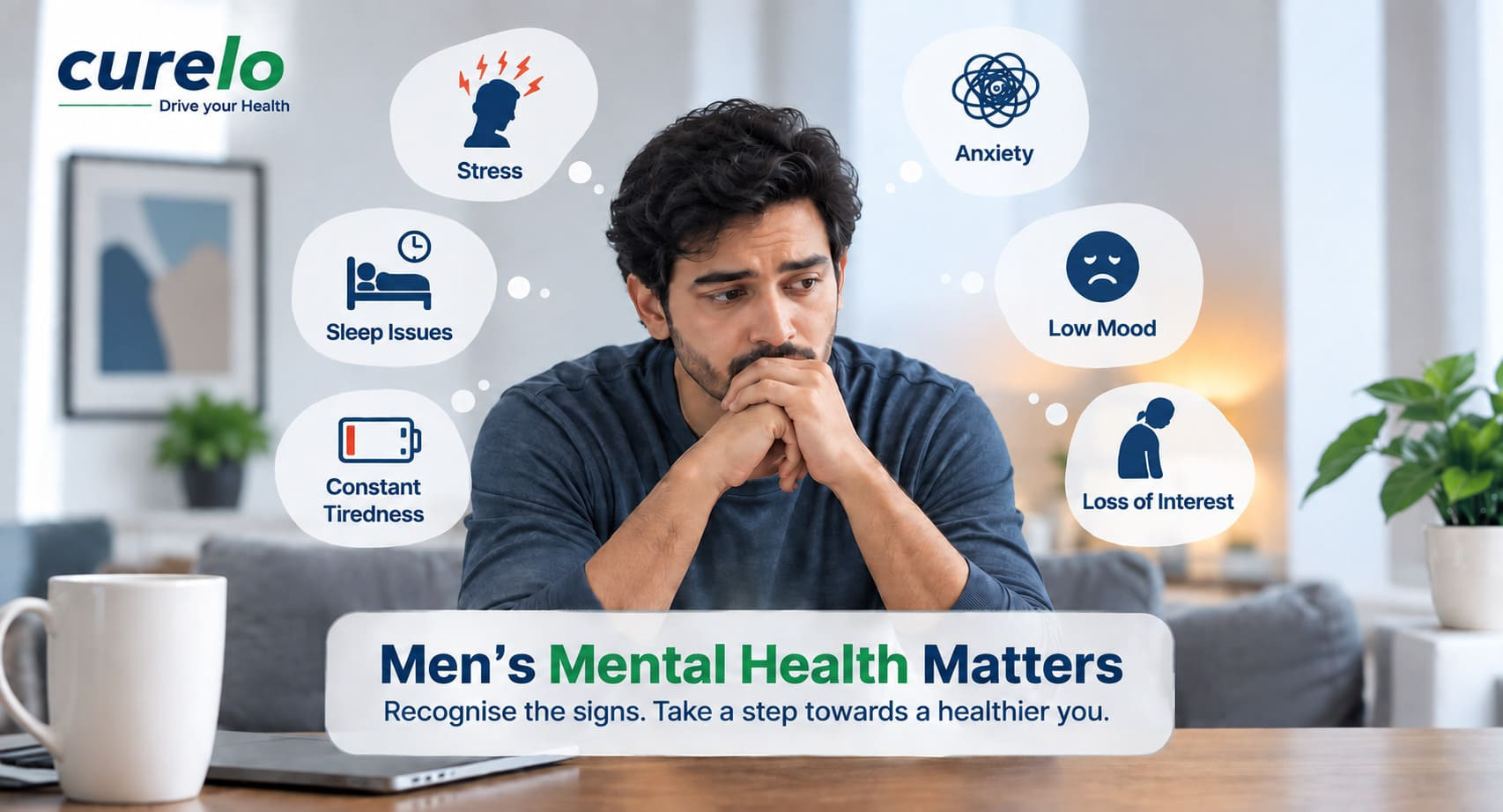
Knowing the common mental health symptoms in men can make it easier to notice when something may not be right. Stress, anxiety, and depression can affect anyone, and recognising the signs early can help a person seek appropriate support.
Why Is Men’s Mental Health Important?
Mental health affects how you think, feel, behave, work, and interact with others. When mental health problems are left unaddressed, they can affect sleep, physical health, relationships, productivity, and quality of life.
Men may sometimes feel pressure to appear strong, handle problems on their own, or avoid discussing emotions. Social expectations around masculinity can make it harder for some men to acknowledge that they need help.
However, asking for support is not a sign of weakness. It is a practical step towards taking care of your health.
Understanding mental health for men also means looking beyond obvious signs such as feeling sad. Stress, anxiety, and depression can appear in different ways.
10 Common Signs of Stress, Anxiety and Depression in Men
The following signs can occur with stress, anxiety, depression, or other mental health concerns. Having one or more of these signs does not automatically mean someone has a mental health condition. If symptoms are persistent, severe, or affecting daily life, speaking with a qualified mental health professional can help.
1. Constant Irritability or Anger
One of the commonly overlooked mental health symptoms in men is increased irritability.
A person who is usually calm may suddenly become frustrated over small things. They may lose their temper more often, argue with family members, or feel constantly annoyed.
Anger can sometimes be an outward expression of stress, anxiety, emotional exhaustion, or depression. Paying attention to changes in your usual behaviour can help identify when something needs attention.
2. Feeling Tired All the Time
Feeling exhausted after a busy day is normal. However, persistent tiredness without an obvious reason may deserve attention.
Mental health problems can affect energy levels and motivation. Even after getting enough sleep, a person may feel physically and mentally drained.
If tiredness continues, it is also important to consider physical causes. Conditions such as anaemia, thyroid problems, nutritional deficiencies, and sleep disorders can also cause fatigue. A healthcare professional can help determine the possible cause.
3. Changes in Sleep
Stress and anxiety can make it difficult to fall asleep or stay asleep. Some people may wake up repeatedly during the night or wake up feeling tired.
Depression can also affect sleep. Some people may sleep much more than usual, while others may struggle to sleep.
A noticeable change in your usual sleep pattern, particularly when it continues for several weeks, should not be ignored.
4. Losing Interest in Things You Enjoy
Another important sign is losing interest in activities that once brought happiness.
You may stop meeting friends, avoid hobbies, lose interest in exercise, or no longer enjoy activities that previously made you feel good.
This loss of interest or pleasure can be associated with depression. It may happen gradually, so friends or family members may notice the change before the person does.
5. Difficulty Concentrating
Stress can make it difficult to focus. When your mind is constantly occupied with worries, everyday tasks may require more effort.
You might forget appointments, struggle to complete work, have difficulty making decisions, or find it hard to follow conversations.
Difficulty concentrating can have many causes, including poor sleep, stress, certain physical conditions, medications, and mental health concerns. Persistent changes should be discussed with a healthcare professional.
6. Excessive Worry or Feeling on Edge
Occasional worry is a normal part of life. Anxiety becomes more concerning when worrying becomes excessive or difficult to control.
You may constantly think about work, money, health, relationships, or what might go wrong. You may also feel restless or tense even when there is no immediate danger.
Physical symptoms can occur too, including a racing heartbeat, sweating, muscle tension, stomach discomfort, or difficulty sleeping.
7. Changes in Appetite or Weight
Mental health can influence eating habits.
Some men may lose their appetite when they are stressed or depressed, while others may eat more than usual as a way of coping with difficult emotions.
These changes can sometimes lead to unexplained weight loss or weight gain.
If your eating pattern or weight changes significantly without a clear reason, it is worth discussing it with a healthcare professional.
8. Withdrawing From Friends and Family
Social withdrawal can be another warning sign.
A person may stop answering messages, avoid social gatherings, spend more time alone, or feel that they do not want to talk to anyone.
While everyone needs some alone time, consistently withdrawing from people you normally enjoy spending time with may indicate that something is affecting your emotional well-being.
Staying connected with trusted people can provide emotional support and make it easier to talk about what you are experiencing.
9. Increased Use of Alcohol or Other Substances
Some people may try to cope with stress or difficult emotions through alcohol, smoking, or other substances.
Using these regularly to relax, sleep, forget problems, or escape difficult feelings can become a harmful coping pattern. Substance use can also worsen anxiety, depression, sleep problems, and relationships.
If you feel that you are relying on a substance to get through the day or manage your emotions, consider speaking confidentially with a healthcare professional or mental health specialist.
10. Feeling Hopeless or Having Thoughts of Self-Harm
Persistent feelings of hopelessness, worthlessness, or feeling that life is not worth living require immediate attention.
Thoughts about death, self-harm, or suicide should always be taken seriously. A person experiencing these thoughts should not have to manage them alone.
If you or someone you know is in immediate danger or may act on these thoughts, seek emergency medical help or contact a local emergency service immediately. Staying with the person and helping them connect with professional support can also be important.
Why Do Men Sometimes Hide Mental Health Problems?
There is no single reason why someone may avoid discussing their mental health.
Some men may have grown up hearing messages such as “be strong,” “deal with it,” or “don’t show emotions.” Others may worry about being judged at work, by friends, or by family.
Some may not recognise their symptoms as mental health concerns in the first place. Instead, they may think they are simply tired, stressed, angry, or having a difficult phase.
This is why awareness of men's mental health issues matters. Mental health problems are health concerns, just like physical health problems. They deserve attention rather than shame.
How Can Men Take Care of Their Mental Health?
Small, consistent steps can support mental well-being:
- Talk to someone you trust: Sharing what you are experiencing can reduce the feeling of carrying everything alone.
- Maintain a regular sleep schedule: Aim for adequate, consistent sleep and limit habits that interfere with sleep.
- Stay physically active: Walking, exercising, or playing a sport can support both physical and mental well-being.
- Eat regular, balanced meals: Nutrition can influence energy and overall health.
- Take breaks from work: Constant work without recovery can increase stress and exhaustion.
- Limit alcohol and avoid using substances to cope: Find healthier ways to manage difficult emotions.
- Stay connected: Regular interaction with friends and family can provide valuable support.
- Seek professional help when needed: A psychologist, psychiatrist, counsellor, or other qualified healthcare professional can help identify the right support.
Your physical and mental health are connected. If you are experiencing ongoing physical symptoms, sleep changes, fatigue, or other unexplained changes along with emotional difficulties, consider discussing them with a healthcare professional. Platforms such as Curelo can also help you explore diagnostic tests from different partner labs when a doctor recommends testing.
When Should You Talk to a Mental Health Professional?
You do not have to wait until symptoms become severe before asking for help.
Consider speaking with a professional if symptoms:
- Continue for several weeks
- Interfere with work, studies, relationships, or daily activities
- Affect your sleep or appetite significantly
- Make it difficult to enjoy normal activities
- Cause persistent worry, sadness, anger, or hopelessness
- Lead you to rely on alcohol or substances to cope
A mental health professional can listen to your concerns, understand your symptoms, and suggest appropriate treatment or support.
Conclusion
Understanding men's mental health starts with recognising that mental well-being is just as important as physical health.
Stress, anxiety, and depression do not always look like sadness. Irritability, fatigue, sleep problems, social withdrawal, difficulty concentrating, changes in appetite, and increased substance use can also be signs that someone is struggling.
If you notice these changes in yourself or someone close to you, do not ignore them. Talking to someone you trust and seeking professional support can be an important first step.
Taking care of your mental health is not about being weak or strong. It is about taking your health seriously.
If you are concerned about changes in your physical or emotional well-being, speak with a qualified healthcare professional and get the right guidance for your situation.
FAQs
1. What are the common signs of poor mental health in men?
Common signs can include persistent irritability, anger, tiredness, sleep problems, loss of interest in activities, difficulty concentrating, excessive worrying, appetite or weight changes, social withdrawal, and increased use of alcohol or other substances. Some men may also experience feelings of hopelessness or worthlessness.
These signs can have different causes and do not necessarily mean that a person has a mental health disorder. If they persist or interfere with daily life, it is a good idea to speak with a qualified mental health professional.
2. How does depression show up in men?
Depression in men can involve sadness, but it does not always appear as sadness. Some men may experience increased anger, irritability, frustration, tiredness, sleep problems, difficulty concentrating, loss of interest, or withdrawal from family and friends.
Some may also try to cope by working excessively, drinking more alcohol, or engaging in other risky behaviours. Persistent symptoms should be discussed with a mental health professional for proper evaluation.
3. What are the signs of anxiety in men?
Anxiety may cause excessive or difficult-to-control worrying, restlessness, feeling constantly on edge, muscle tension, difficulty concentrating, and sleep problems. Physical symptoms such as a racing heartbeat, sweating, stomach discomfort, or rapid breathing can also occur.
If anxiety is interfering with work, relationships, sleep, or everyday activities, professional support can help.
4. Why do men hide their mental health problems?
There can be several reasons. Some men may fear being judged, appearing vulnerable, or being seen as unable to handle responsibilities. Family expectations, workplace culture, social pressure, and personal experiences can also influence how comfortable someone feels discussing mental health.
Creating an environment where men can talk openly without shame can make it easier for them to seek help when they need it.
5. How can I improve my mental health as a man?
Start with basic habits such as getting enough sleep, staying physically active, eating balanced meals, maintaining social connections, taking regular breaks, and finding healthy ways to manage stress.
It is equally important to talk about difficult emotions instead of keeping everything inside. If symptoms continue or begin affecting daily life, consider speaking with a psychologist, psychiatrist, counsellor, or another qualified healthcare professional.
Need Help In Booking a Lab Test?
Share Your Details, We Will Call You Right Back!