


 Login / Sign Up


Blog

Full Body Checkup: Test List, Who Needs It, and How Often (Age-wise Guide for Delhi NCR)
Overview
- A full body checkup helps assess your overall health and identify potential health risks early.
- The full body checkup test list commonly includes CBC, blood sugar, lipid profile, liver function, kidney function and urine tests.
- Additional tests, such as thyroid, vitamin B12 and vitamin D, may be recommended based on your health needs.
- The tests required depend on your age, lifestyle, family history, symptoms and existing medical conditions.
- Adults aged 30 and above should pay particular attention to preventive screening for diabetes and high blood pressure.
- How often should you get a full body checkup? The frequency depends on your health status and your doctor's advice. Not every test needs to be repeated annually.
- Which full body checkup package is best? Choose a package based on relevant test inclusions, laboratory quality, price and your individual health needs.
- Before booking, check fasting requirements, sample collection options and report delivery timelines.
- Curelo helps you compare diagnostic lab packages, test inclusions and prices across available options in Delhi NCR.
A full body checkup is a useful way to understand your health, identify possible risk factors, and take steps to prevent health problems before they become serious. In a busy region like Delhi NCR, where long working hours, traffic, air pollution, irregular meals, and sedentary lifestyles are common, regular health checkups can help you stay aware of your health.
However, a full body checkup does not mean getting every possible medical test done. The right tests depend on your age, medical history, lifestyle, family history, and existing health conditions. Some people may need only a few basic blood tests, while others may benefit from more detailed screening.
What Is a Full Body Checkup?
A full body checkup is a group of medical tests used to assess different aspects of your health. These tests can help check your blood sugar, cholesterol, liver and kidney function, blood counts, and other important health markers.
The exact tests included depend on the package you choose. A basic package may focus on common health indicators, while a comprehensive package may include additional tests for thyroid function, vitamin levels, and other parameters.
A full body checkup can help identify possible signs of conditions such as:
- Diabetes and prediabetes
- High cholesterol
- Anaemia
- Kidney or liver problems
- Thyroid disorders
- Certain nutritional deficiencies
It is important to remember that normal test results do not guarantee that you have no health problems. Similarly, an abnormal result does not always mean you have a disease. Your doctor may recommend repeat testing or further evaluation based on your symptoms and medical history.
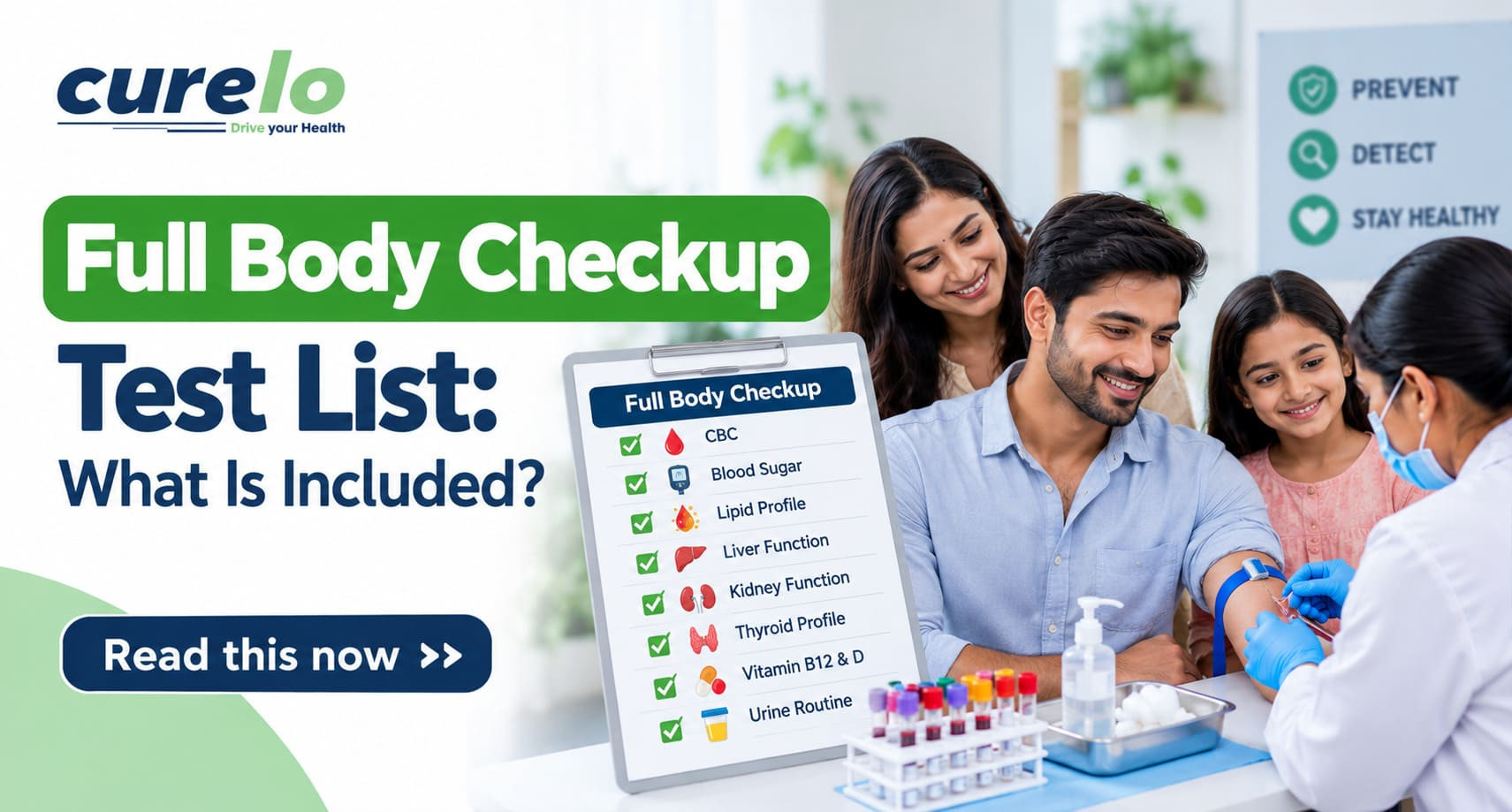
Full Body Checkup Test List: What Is Included?
If you are planning a health checkup, understanding the tests included in the package can help you make a better decision.
Here is a list of common tests found in basic and comprehensive full body checkup packages.
| Test | What does it check? |
|---|---|
| Complete Blood Count (CBC) | Checks haemoglobin, red blood cells, white blood cells and platelets. It can help identify signs of anaemia and certain infections. |
| Fasting Blood Sugar | Measures blood glucose after fasting and helps screen for diabetes. |
| HbA1c | Shows average blood sugar levels over approximately the past 2–3 months. |
| Lipid Profile | Measures cholesterol and triglycerides to help assess cardiovascular risk. |
| Liver Function Test (LFT) | Measures markers that help assess liver health. |
| Kidney Function Test (KFT) | Checks markers such as creatinine and urea to help assess kidney function. |
| Thyroid Profile | Usually includes TSH, with T3 and T4 depending on the package or clinical requirement. |
| Urine Routine Test | Checks urine for substances and abnormalities that may indicate urinary or kidney-related problems. |
| Vitamin B12 | Helps assess vitamin B12 levels when testing is appropriate. |
| Vitamin D | Measures vitamin D levels when there is a clinical reason to check them. |
| Electrolytes | Measures minerals such as sodium and potassium that help maintain normal body functions. |
Not every package includes all these tests. Some packages may also include uric acid, calcium, iron studies, or additional markers.
1. Complete Blood Count (CBC)
A CBC is a common part of a full body checkup. It measures different blood components and can help identify anaemia, abnormal blood cell counts and signs that may need further investigation.
It may be especially useful if you experience persistent tiredness, weakness or dizziness, although these symptoms can have many causes.
2. Blood Sugar Tests
Fasting blood sugar and HbA1c are commonly used to screen for diabetes or identify elevated blood sugar levels.
These tests can be particularly relevant if you have a family history of diabetes, excess weight, low physical activity or other risk factors.
3. Cholesterol and Lipid Profile
A lipid profile measures different types of cholesterol and triglycerides. High levels of certain blood fats can increase the risk of heart disease and stroke over time.
Since high cholesterol may not cause noticeable symptoms, screening can help identify risks that you might otherwise miss.
4. Liver and Kidney Function Tests
Liver and kidney function tests measure substances in your blood that help doctors assess how these organs are working.
Abnormal results may require further evaluation. These tests should be interpreted alongside your medical history, medicines and other clinical findings.
5. Thyroid and Vitamin Tests
Thyroid tests may be recommended when symptoms or risk factors suggest a thyroid problem. Vitamin B12 and vitamin D testing may be useful in selected situations, depending on symptoms, dietary habits and other risk factors.
Who Needs a Full Body Checkup?
A full body checkup can be useful for adults who want to understand their health status, but the need for testing varies from person to person.
You may benefit from discussing a health checkup with your doctor if you:
- Have a family history of diabetes, high blood pressure or heart disease.
- Spend most of your day sitting at a desk.
- Have gained significant weight or have low physical activity.
- Smoke or regularly consume alcohol.
- Experience persistent fatigue, weakness, or other unexplained symptoms.
- Have an existing health condition that requires regular monitoring.
- Have not had your recommended preventive health screenings.
People with symptoms should not wait for their annual checkup. They may need specific tests and a medical consultation sooner.
Full Body Checkup by Age: What Tests Do You Need?
Your health screening needs can change as you grow older. The following age-wise guide provides a general starting point, not a fixed list of tests for everyone.
Age 18–29: Build a health baseline
Focus on blood pressure, weight, and lifestyle assessment. Blood sugar, cholesterol, CBC, or other tests may be recommended depending on your family history, symptoms, and risk factors. Avoid assuming you need every vitamin or hormone test.
Age 30–39: Pay attention to lifestyle risks
Discuss regular blood pressure and diabetes screening, particularly if you have risk factors. Cholesterol testing may also be appropriate. Depending on your health history, your doctor may recommend liver, kidney or other tests, along with age-appropriate reproductive health screening.
Age 50 and above: Personalise preventive screening
Along with monitoring blood pressure, blood sugar and cholesterol, discuss colorectal cancer screening, bone health, vision, hearing and medication reviews. Additional kidney, heart, or other investigations may be needed depending on existing conditions.
How Often Should You Get a Full Body Checkup?
There is no single frequency that suits everyone. The right interval depends on your age, health risks, previous results and your doctor's recommendations.
- Healthy adults under 30: A preventive health review can help establish a baseline. The need for repeat blood tests depends on individual risk and findings.
- Adults aged 30–39: Regular preventive reviews are useful, with blood pressure and diabetes screening based on relevant guidelines and risk factors.
- Adults aged 40–49: Discuss periodic checks for cardiovascular and metabolic risks, along with age-appropriate cancer screening.
- Adults aged 50 and above: Regular reviews become increasingly important, with screening and monitoring tailored to personal health needs.
- People with existing medical conditions: Follow the schedule recommended by your treating doctor. Some tests may be needed every few months, while others may be required less often.
So, how often should you get a full body checkup? An annual review may be a practical reminder for some adults, but it does not mean you need to repeat every blood test every year. Equally, people with diabetes, kidney disease, or other ongoing conditions may need more frequent monitoring.
Which Full Body Checkup Package Is Best?
The best package is not necessarily the one with the highest number of tests or the lowest price. It is the one that matches your health needs and provides the tests you actually require.
Here is a simple guide to help you compare packages.
| Package type | May be suitable for | What to look for |
|---|---|---|
| Basic health checkup | Adults seeking an initial health assessment | CBC, blood sugar, lipid profile, and other relevant basic tests |
| Comprehensive checkup | Adults with additional risk factors or specific screening needs | Basic tests plus clinically relevant liver, kidney, or thyroid tests |
| Diabetes-focused package | People at risk of diabetes or already managing it | Fasting blood sugar, HbA1c and other tests recommended by the doctor |
| Heart health package | People with cardiovascular risk factors | Lipid profile, blood pressure assessment and additional tests when indicated |
| Senior health package | Older adults with age-related or existing health concerns | Relevant organ function tests and personalised screening |
Actual inclusions vary by provider, so always check the detailed test list before booking.
What Should You Check Before Booking?
Before choosing a full body checkup package in Delhi NCR, consider these points:
- Tests included: Read the complete list instead of relying only on the advertised number of parameters.
- Laboratory quality: Check the laboratory's credentials and whether the relevant tests fall within its NABL accreditation scope.
- Sample collection: Confirm whether home collection is available in your location.
- Report delivery: Check the expected turnaround time and how you will receive your reports.
- Price and value: Compare the actual inclusions, collection charges, and other applicable costs.
- Medical guidance: Prefer a process that allows you to discuss abnormal results with a qualified healthcare professional.
Curelo helps you compare diagnostic lab options, package inclusions, and prices, making it easier to choose a suitable health checkup without comparing every laboratory separately.
How to Prepare for a Full Body Checkup
A little preparation can help make your testing experience smoother.
- Check fasting requirements: Some tests require fasting, while others do not. Follow the laboratory's specific instructions.
- Drink water if permitted: Plain water is generally allowed during fasting, unless your healthcare provider advises otherwise.
- Share your medicines: Tell your doctor about your regular medicines and supplements. Never stop prescribed medication on your own just to prepare for a test.
- Carry previous reports: Older results can help your doctor understand changes over time.
- Confirm your booking: Check your collection time, address and the tests included in your selected package.
If you have a medical condition or take regular medicines, ask your healthcare provider whether any special preparation is needed.
Conclusion
A full body checkup can help you take a more informed approach to preventive healthcare. Knowing which tests matter, when to repeat them, and how to interpret your results is more useful than simply choosing a package with the most tests.
Your age, family history, lifestyle, and existing health conditions should guide your screening plan. Regular medical reviews, healthy daily habits, and timely follow-up can help you manage health risks more effectively.
FAQs
1. What is included in a full body checkup?
A full body checkup commonly includes a complete blood count, blood sugar tests, a lipid profile, liver function tests, kidney function tests and urine analysis. Depending on the package, it may also include thyroid tests, vitamin levels, electrolytes and other investigations.
However, there is no standard test list that applies to every package. Some focus on basic health markers, while others include additional tests. Check the exact inclusions and ask your doctor which tests are appropriate for your age, symptoms and medical history.
2. How often should you get a full body checkup?
The frequency depends on your health status and risk factors. Some healthy adults may need only periodic preventive assessments, while people with diabetes, high blood pressure or other medical conditions may require more frequent testing.
An annual health review can be a useful way to stay on top of preventive care, but repeating every test annually is not always necessary. Your doctor can recommend the right interval based on your previous results and current health needs.
3. Which full body checkup package is best for adults?
The best package is one that covers the tests relevant to your health risks without adding unnecessary investigations. A basic package may be sufficient for some healthy adults, whereas people with specific conditions may need a tailored package.
Compare the test list, laboratory credentials, sample collection options and report turnaround time. If you are unsure, consult a doctor before selecting a comprehensive package simply because it includes more tests.
4. Can a full body checkup detect all diseases?
No. A full body checkup cannot detect every disease or guarantee that you are completely healthy. It can help identify certain risk factors and abnormalities, but some conditions require specific tests, physical examinations, or imaging.
For example, routine blood tests cannot replace recommended cancer screening or an evaluation of persistent symptoms. If you notice a new lump, unexplained weight loss, persistent pain or other concerning changes, seek medical advice even if your recent reports were normal.
5. Do I need to fast before a full body checkup?
It depends on the tests included. Some blood sugar tests and certain other investigations may require fasting, while HbA1c and many routine blood tests generally do not require it.
If fasting is needed, the laboratory will usually provide instructions about how long to avoid food and which drinks are allowed. Follow the instructions for your specific tests instead of assuming every full body checkup requires fasting.
Need Help In Booking a Lab Test?
Share Your Details, We Will Call You Right Back!


