


 Login / Sign Up


Blog

Fatty Liver Diet: What to Eat and Avoid
Overview
- Understanding Fatty Liver: What fatty liver disease is, its common causes, and how it affects liver health.
- Fatty Liver Symptoms: Common warning signs and symptoms to watch out for.
- Importance of Diet: How healthy eating habits can help manage fatty liver and reduce fat accumulation.
- Foods for Fatty Liver: Best foods to include, such as green vegetables, whole fruits, whole grains, lean proteins, nuts, and seeds.
- Foods to Avoid: Foods high in added sugar, refined carbohydrates, unhealthy fats, processed meat, and alcohol.
- Indian Diet Chart: A simple one-day Indian meal plan for people with fatty liver.
- Liver Health Tests: Understanding the importance of an LFT test, ultrasound, lipid profile, and other investigations.
- Lifestyle Changes: How regular exercise, weight management, proper sleep, and hydration support liver health.
Fatty liver is becoming increasingly common due to changing food habits, lack of physical activity, weight gain, and other lifestyle factors. Many people may have fatty liver without experiencing any noticeable symptoms in the early stages. However, if left unmanaged, it can sometimes lead to liver inflammation, scarring, and other complications.
The good news is that making healthy lifestyle changes can help manage fatty liver and improve liver health. One of the most important steps is following a balanced fatty liver diet that includes nutritious foods and limits ingredients that put extra pressure on the liver.
But what exactly should you eat if you have fatty liver? Are fruits, eggs, rice, and milk safe? Which foods should you avoid?
What Is Fatty Liver Disease?
Fatty liver disease is a condition in which excess fat builds up inside the liver cells. A small amount of fat in the liver is normal, but too much fat can affect how the liver functions.
Fatty liver is broadly classified into two categories:
- Metabolic dysfunction-associated steatotic liver disease (MASLD): Previously known as non-alcoholic fatty liver disease (NAFLD), it is associated with factors such as obesity, diabetes, high cholesterol, and metabolic health problems.
- Alcohol-associated liver disease (ALD): It develops due to excessive alcohol consumption over time.
In many cases, fatty liver can be managed through lifestyle changes, including healthy eating, regular exercise, and weight management.
What Are the Common Fatty Liver Symptoms?
Fatty liver often develops without clear warning signs. Many people discover it during a routine health checkup or an abdominal ultrasound.
However, some people may experience the following fatty liver symptoms:
- Constant tiredness or low energy.
- Discomfort or pain in the upper right side of the abdomen.
- Unexplained weakness.
- A feeling of heaviness in the stomach.
- Unexplained weight changes.
In advanced stages, symptoms may include yellowing of the skin and eyes, swelling in the legs or abdomen, and easy bruising.
Why Is Diet Important for Fatty Liver?
The liver plays an important role in processing nutrients, managing blood sugar, breaking down fats, and removing waste products from the body.
When too much fat builds up in the liver, its normal functioning can be affected. Poor eating habits, excess sugar, frequent consumption of processed foods, and a lack of physical activity can make the condition worse.
Following a healthy fatty liver diet can help by:
- Reducing excess fat stored in the liver.
- Supporting healthy blood sugar levels.
- Improving cholesterol levels.
- Supporting gradual and sustainable weight loss.
- Reducing the risk of further liver damage.
For people who are overweight, even a gradual reduction in body weight can improve liver health. However, crash diets and rapid weight loss should be avoided.
Best Foods for Fatty Liver: What Should You Eat?
A fatty liver diet does not mean giving up all your favourite foods. The goal is to make healthier choices, control portion sizes, and include more nutritious ingredients in everyday meals.
Here are some foods for fatty liver that you can consider adding to your diet.
1. Green Leafy Vegetables
Vegetables such as spinach, fenugreek leaves, broccoli, cabbage, and lettuce are rich in fibre, vitamins, and antioxidants.
They support overall health and help maintain a balanced diet. Try including at least one serving of green vegetables in your lunch or dinner.
2. Whole Fruits
Fruits provide fibre, vitamins, minerals, and antioxidants. Apples, oranges, guavas, berries, papaya, and pears are good options.
Choose whole fruits instead of packaged fruit juices. Whole fruits contain fibre, which helps manage blood sugar levels and keeps you full for longer.
However, portion control is important, especially for people with diabetes.
3. Whole Grains
Replace refined grains with healthier whole-grain options.
Some good choices include:
- Oats.
- Brown rice.
- Whole wheat roti.
- Dalia.
- Millets such as ragi and jowar.
Whole grains contain more fibre and can help support better blood sugar and cholesterol management.
4. Healthy Protein Sources
Protein is important for maintaining muscle health and supporting the body's normal functions.
Include foods such as dal, chickpeas, kidney beans, lentils, tofu, eggs, fish, and skinless chicken.
Fish containing omega-3 fatty acids, such as salmon and sardines, can be a good addition to a balanced diet.
5. Nuts and Seeds
Almonds, walnuts, chia seeds, and flaxseeds provide healthy fats, fibre, and other important nutrients.
A small handful of unsalted nuts can make a healthy snack. However, avoid eating large quantities because nuts are also calorie-dense.
6. Low-Fat Dairy Products
Milk, curd, and plain yoghurt can provide protein and calcium.
Choose unsweetened and low-fat options instead of flavoured milk, sweetened yoghurt, or desserts containing added sugar.
7. Coffee Without Excess Sugar
Some studies suggest that regular coffee consumption may be associated with better liver health and a lower risk of liver fibrosis.
If you enjoy coffee, unsweetened or lightly sweetened coffee may be a suitable choice. Avoid adding excessive sugar, cream, or flavoured syrups.
Foods to Avoid in Fatty Liver
Along with including healthy foods, it is equally important to limit certain foods that may contribute to excess fat accumulation and metabolic problems.
Here are some foods you should avoid or reduce when following a fatty liver diet.
1. Sugary Foods and Drinks
Excess added sugar, particularly from sugary drinks, can contribute to weight gain and metabolic problems.
Limit:
- Soft drinks and packaged juices.
- Cakes and pastries.
- Candies and chocolates.
- Sweetened tea and coffee.
- Ice creams and sugary desserts.
Pay special attention to beverages containing high amounts of added sugar.
2. Fried and Oily Foods
Regularly eating deep-fried foods can increase calorie intake and make weight management difficult.
Try limiting samosas, pakoras, chips, French fries, and other deep-fried snacks.
Instead, choose grilled, steamed, baked, or lightly sautéed foods.
3. Refined Carbohydrates
White bread, maida-based products, biscuits, and other highly processed carbohydrates can contribute to poor blood sugar control when consumed frequently.
Replace them with whole grains such as oats, whole wheat, and millets.
4. Processed and Red Meat
Processed meats such as sausages, salami, and bacon should be limited.
It is also advisable to reduce frequent consumption of fatty red meat. Choose healthier protein sources such as fish, pulses, eggs, and lean chicken.
5. Alcohol
Alcohol can cause additional liver damage, particularly in people who already have liver disease.
Avoiding alcohol is generally recommended if you have fatty liver, especially if there is liver inflammation or fibrosis. Discuss your individual situation with your doctor.
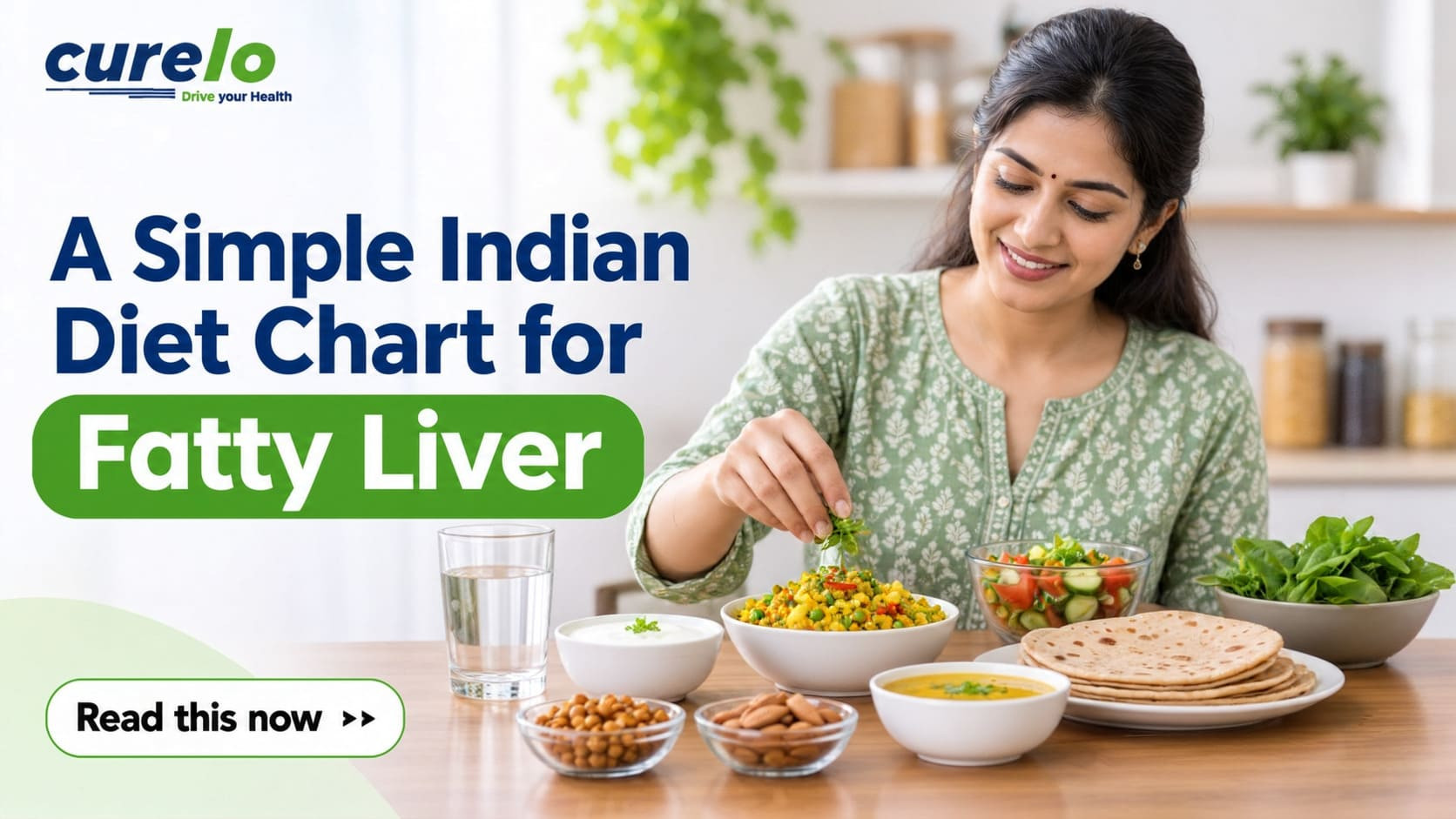
A Simple Indian Diet Chart for Fatty Liver
You do not need an expensive or complicated diet to manage fatty liver. A simple Indian meal plan with balanced portions can help you make healthier choices.
Here is an example of a one-day diet chart:
| Meal | Food options |
|---|---|
| Early morning | A glass of water |
| Breakfast | Vegetable oats or vegetable poha with plain curd |
| Mid morning | One apple, guava, or orange |
| Lunch | 2 whole wheat rotis, dal, green vegetables, and salad |
| Evening snack | A small handful of almonds or roasted chana |
| Dinner | Vegetable khichdi with curd or 2 rotis with dal and cooked vegetables |
| After dinner | Water, if needed |
This is a general example, not a personalised diet plan. Your food requirements may vary depending on your weight, blood sugar levels, medical history, and activity levels.
How Can You Monitor Your Liver Health?
Eating healthy is important, but monitoring your liver health is equally essential.
Doctors may recommend certain tests to understand how well your liver is functioning and whether further evaluation is needed.
One commonly recommended investigation is the Liver Function Test (LFT).
An LFT is a group of blood tests that measures different substances, including liver enzymes and proteins. It may help identify signs of liver inflammation or damage.
Other investigations may include:
- Ultrasound of the abdomen: Helps identify fat accumulation in the liver.
- Lipid profile: Measures cholesterol and triglyceride levels.
- Blood sugar or HbA1c test: Helps assess blood sugar levels and diabetes risk.
- FibroScan: Helps assess liver stiffness and fat accumulation.
Lifestyle Tips to Improve Liver Health
Diet is only one part of managing fatty liver. Your daily habits also play an important role.
Here are some simple changes you can follow:
- Exercise regularly: Aim for at least 150 minutes of moderate physical activity every week, as recommended for most adults.
- Maintain a healthy weight: If you are overweight, gradual weight loss can help reduce liver fat.
- Avoid crash diets: Rapid weight loss and extreme dieting can sometimes worsen liver problems.
- Get enough sleep: Maintain a regular sleep schedule and aim for 7–9 hours of sleep.
- Stay hydrated: Drink enough water throughout the day.
- Avoid unnecessary supplements: Some herbal products and supplements can harm the liver. Consult your doctor before taking them.
Consistency matters more than making too many changes at once. Start with small improvements and gradually build healthier habits.
Conclusion
Managing fatty liver does not require extreme diets or complicated food restrictions. Simple changes, such as eating more vegetables, choosing whole grains, limiting added sugar, avoiding alcohol, and staying physically active, can make a meaningful difference.
Pay attention to your body's health, understand your risk factors, and do not ignore recommended medical checkups.
If you have concerns about your liver health, speak to a healthcare professional and get the appropriate tests recommended. With timely attention and consistent lifestyle changes, you can take better care of your liver and overall well-being.
FAQs
1. Which foods are best for fatty liver?
Foods rich in fibre, vitamins, antioxidants, and healthy fats are good choices for people with fatty liver. Include green leafy vegetables, whole fruits, oats, whole grains, dal, beans, nuts, seeds, and fish in your meals.
Try to reduce sugary drinks, deep-fried foods, processed snacks, and refined carbohydrates. A balanced diet, along with regular exercise, can help improve liver health over time.
2. Can fatty liver be reversed with diet?
In many cases, fatty liver can improve significantly with healthy lifestyle changes, particularly when it is detected early.
Following a balanced diet, reducing excess body weight when necessary, exercising regularly, and avoiding alcohol can help reduce liver fat. However, the results depend on the stage of liver disease and other health conditions.
Advanced liver damage or scarring may not be completely reversible, so medical guidance is important.
3. Which fruits are good for fatty liver?
Apples, oranges, guavas, papaya, pears, and berries are good fruit choices for a fatty liver diet.
These fruits provide fibre, vitamins, and antioxidants that support overall health. Choose whole fruits instead of fruit juices because whole fruits contain fibre and are generally more filling.
People with diabetes should also pay attention to fruit portions and their overall carbohydrate intake.
4. Can I eat rice if I have fatty liver?
Yes, you can eat rice if you have fatty liver. You do not necessarily need to eliminate rice from your diet.
However, portion control is important. You can choose brown rice or other whole grains more frequently because they contain more fibre than white rice.
If you prefer white rice, combine it with dal, vegetables, curd, or another protein source to make your meal more balanced.
Need Help In Booking a Lab Test?
Share Your Details, We Will Call You Right Back!


