


 Login / Sign Up

Blog

Why You May Feel Sick After Monsoon: 10 Tests Doctors May Recommend
Overview
- Monsoon and post-monsoon weather can increase the risk of infections due to mosquitoes, contaminated food and water, and changing weather conditions.
- Fever after monsoon can have several causes, including dengue, malaria, typhoid, viral infections, and urinary infections.
- Doctors may recommend different tests depending on your symptoms, medical history, and how long you have been unwell.
- A fever blood test may include a CBC, CRP, liver and kidney function tests, or other investigations.
- A dengue test may be recommended when symptoms such as sudden fever, body aches, headache, or rash suggest dengue.
- Other tests may help identify malaria, typhoid, UTIs, or respiratory infections.
- Persistent, worsening, or severe symptoms should not be ignored or self-diagnosed.
- Timely testing can help doctors identify the possible cause and decide on the right treatment.
The monsoon season can bring much-needed relief from heat, but it can also create the perfect conditions for infections to spread. Stagnant water, mosquitoes, contaminated food and water, and sudden changes in temperature can increase the risk of several illnesses.
So, if you develop fever after monsoon, body aches, weakness, stomach problems, cough, cold, or unusual tiredness, it is worth paying attention to your symptoms.
Not every fever means dengue or another serious infection. However, because many monsoon diseases can start with similar symptoms, doctors may recommend blood tests or other investigations to find the actual cause.
Here are 10 common tests doctors may consider depending on your symptoms, medical history, and how long you have been unwell.
Why Do People Fall Sick More Often During and After Monsoon?
Monsoon conditions can increase exposure to bacteria, viruses, and parasites.
Standing water provides breeding grounds for mosquitoes that can spread infections such as dengue and malaria. Flooding and water contamination can also increase the risk of illnesses such as typhoid and gastrointestinal infections.
At the same time, humid weather and sudden temperature changes may contribute to respiratory infections.
This means symptoms that appear after the rains can have many different causes. A doctor may use your symptoms along with physical examination and test results to narrow them down.
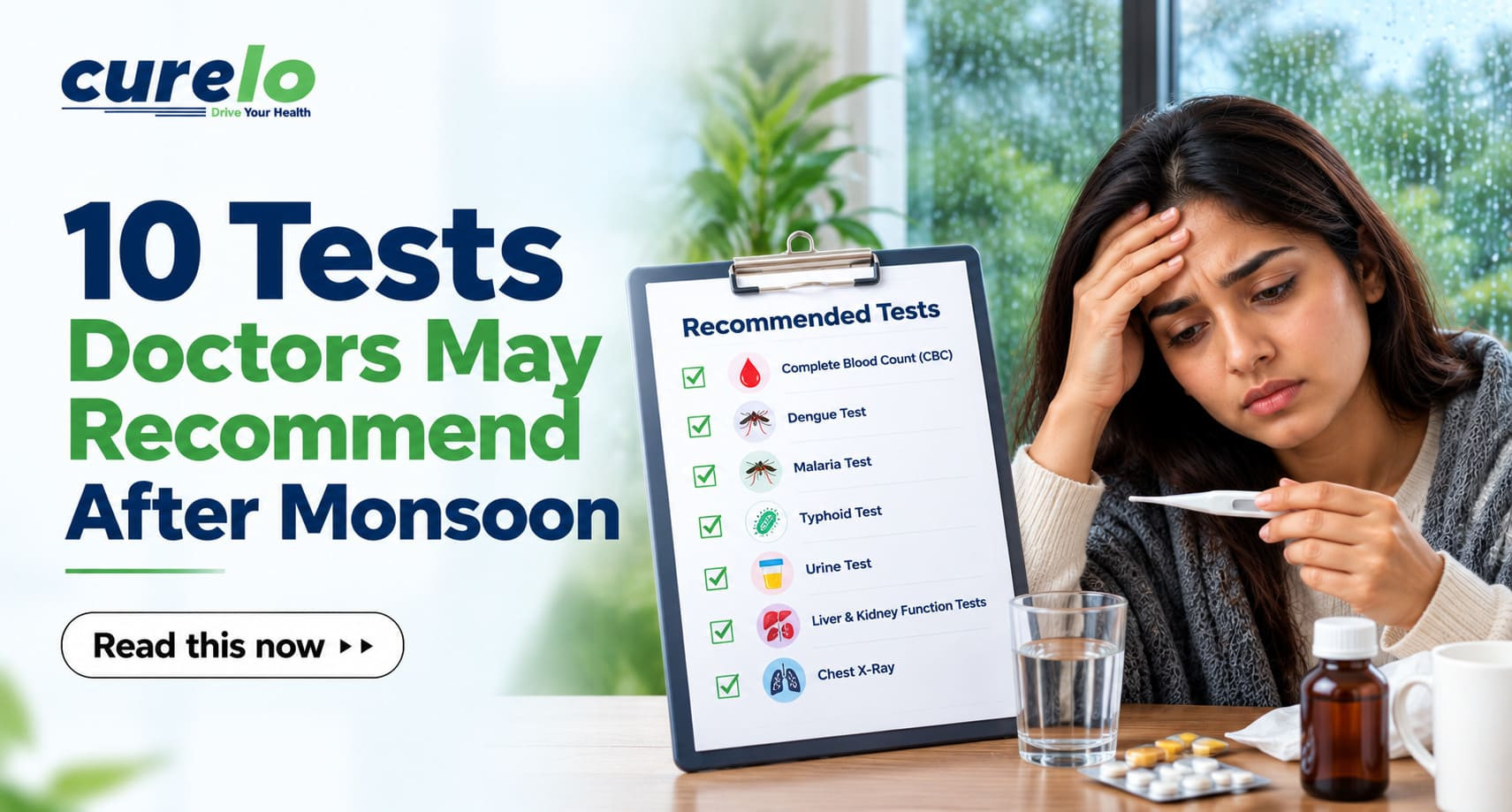
10 Tests Doctors May Recommend After Monsoon
1. Complete Blood Count (CBC)
A Complete Blood Count, commonly called a CBC, is often one of the first blood tests doctors may recommend when someone has a fever or feels unwell.
It measures different types of blood cells, including:
- Red blood cells
- White blood cells
- Platelets
- Haemoglobin
Changes in white blood cell counts can provide clues about infection, while platelet levels may be monitored in conditions such as dengue.
However, a CBC cannot identify the exact infection on its own. Your doctor may recommend additional tests based on your symptoms.
2. Dengue Test
Dengue is one of the infections that doctors may consider when someone develops sudden fever, severe body aches, headache, pain behind the eyes, nausea, or rash.
A dengue test may look for dengue-related markers such as NS1 antigen or antibodies, depending on how many days have passed since symptoms began.
Testing at the right time is important because different dengue tests may be useful at different stages of the infection.
If you have a high fever with severe body pain, rash, vomiting, bleeding, or unusual weakness, speak to a doctor promptly rather than self-medicating.
3. Malaria Test
Mosquitoes can also spread malaria, making it another important consideration during the monsoon season.
Doctors may recommend a malaria test if you have symptoms such as:
- Fever with chills
- Sweating
- Headache
- Body aches
- Weakness
- Nausea or vomiting
Depending on the situation, testing may involve examining a blood sample for malaria parasites or using a rapid diagnostic test.
Because malaria can sometimes become serious if treatment is delayed, persistent fever should not be ignored.
4. Typhoid Test
Typhoid is a bacterial infection that can spread through contaminated food and water.
Symptoms may include prolonged fever, weakness, headache, stomach discomfort, diarrhoea or constipation, and loss of appetite.
If your symptoms and medical history suggest typhoid, your doctor may recommend appropriate testing. Blood culture is commonly used to confirm typhoid, while other tests may sometimes be considered depending on the situation.
It is better not to start antibiotics on your own based only on symptoms. The right treatment depends on the actual cause of the illness.
5. Urine Test
Not every fever after monsoon is caused by a mosquito-borne or water-borne infection.
A urinary tract infection (UTI) can also cause fever, especially when the infection involves the kidneys.
A urine routine examination can look for signs such as white blood cells, red blood cells, bacteria, or other abnormalities. A urine culture may be recommended in some cases to identify the bacteria causing an infection and help guide treatment.
If fever occurs along with burning while urinating, frequent urination, lower abdominal pain, or back/flank pain, tell your doctor.
6. Liver Function Test (LFT)
Some infections can affect the liver, and certain symptoms may prompt doctors to check liver function.
A Liver Function Test measures substances such as liver enzymes, bilirubin, and proteins in the blood.
An LFT may be considered if you have symptoms such as:
- Yellowing of the eyes or skin
- Dark urine
- Persistent nausea
- Loss of appetite
- Abdominal discomfort
- Unexplained weakness
Liver test results need to be interpreted along with other findings because abnormal liver enzymes can have several possible causes.
7. Kidney Function Test (KFT)
Dehydration, infections, vomiting, diarrhoea, or certain medicines can put extra stress on the kidneys.
A Kidney Function Test can help doctors assess how well your kidneys are working. It may include measurements such as creatinine, urea, and electrolytes.
If you have prolonged fever accompanied by dehydration, reduced urine output, vomiting, or significant weakness, your doctor may consider checking kidney function.
8. CRP Test
C-reactive protein, or CRP, is a marker of inflammation in the body.
A CRP test does not tell you exactly which infection you have. Instead, it can help doctors understand whether significant inflammation may be present and assess the overall clinical picture.
Doctors may sometimes use CRP along with a CBC and other tests when a person has persistent fever or symptoms suggesting an infection.
9. Widal Test or Other Typhoid Investigations
The Widal test is often associated with typhoid testing, but it has limitations and can sometimes give misleading results.
Because of this, doctors may prefer other investigations, particularly blood culture, depending on the patient's symptoms and timing.
If you search for a fever blood test, you may come across several options online. But there isn't one blood test that can diagnose every cause of fever.
The right test depends on your symptoms, duration of fever, travel or exposure history, and local disease patterns.
10. Respiratory Infection Tests
Monsoon weather can also coincide with respiratory infections.
If fever occurs along with cough, sore throat, runny nose, congestion, breathing difficulty, or other respiratory symptoms, your doctor may consider tests for specific respiratory infections depending on the clinical situation.
These could include tests for infections such as influenza or COVID-19, when appropriate.
Not everyone with a cough or fever needs a respiratory test. Your doctor can determine whether testing is useful based on your symptoms.
When Should You Get Tested for Fever?
A mild fever may sometimes improve with rest, fluids, and appropriate care. However, you should consider speaking to a healthcare professional if:
- Fever is persistent or keeps returning
- Fever is high or worsening
- You have severe body aches or weakness
- You develop a rash
- You have repeated vomiting or diarrhoea
- You have difficulty breathing
- You notice unusual bleeding
- You feel confused, extremely sleepy, or severely unwell
- You have very little urine or signs of dehydration
If your doctor recommends testing, you can use a diagnostic platform such as Curelo to compare available labs and tests based on factors such as price, parameters, and other relevant details before booking.
Don't Assume Every Monsoon Fever Is Dengue
It is easy to associate every monsoon fever with dengue. But several infections can cause similar early symptoms.
Dengue, malaria, typhoid, viral infections, UTIs, and other illnesses can overlap in how they initially feel.
That is why self-diagnosing based on symptoms alone can be misleading.
For example, body pain and fever can occur with dengue, but similar symptoms can also occur with other infections. Similarly, a low platelet count does not automatically mean that someone has dengue.
A doctor may combine your symptoms, examination, blood counts, and specific tests to reach a diagnosis.
How Can You Prepare for a Fever Blood Test?
Most routine blood tests do not require extensive preparation, but preparation depends on the specific tests your doctor has ordered.
If multiple tests are being done together, some may require fasting while others may not. Follow the instructions given by your healthcare provider or laboratory.
Also tell your doctor about any medicines or supplements you are taking.
If you are getting tested for a suspected infection, don't delay medical care simply because you are waiting for a particular test day or trying to meet fasting requirements. Your healthcare provider can guide you on what is appropriate.
What Can You Do While Recovering?
While the cause of your symptoms is being investigated, focus on basic supportive care.
Drink enough fluids unless your doctor has advised you to restrict them. Eat light, nutritious meals if you can tolerate food and get adequate rest.
Avoid taking antibiotics without medical advice. Antibiotics do not work against viral infections, and unnecessary use can cause problems.
Similarly, don't take multiple medicines simply because they are commonly used for fever. The safest option depends on your health history and the suspected cause.
Conclusion
Feeling sick after the monsoon is common, but persistent or unusual symptoms deserve attention.
A fever after monsoon can have many possible causes, from common viral infections to dengue, malaria, typhoid, or urinary infections. Tests such as a CBC, dengue test, malaria test, liver and kidney function tests, CRP, urine tests, and other investigations may help doctors identify what is happening.
There is no single fever blood test that can diagnose every illness. The most useful test depends on your symptoms and when they started.
FAQs
1. What are the common monsoon diseases in India?
Common monsoon diseases include dengue, malaria, typhoid, viral fever, gastrointestinal infections, respiratory infections, and some water-borne illnesses. The exact risks can vary depending on the location and local outbreaks.
Symptoms can overlap considerably. For example, dengue and malaria can both cause fever, headache, weakness, and body aches. This is why it is better to consult a doctor when symptoms are persistent or severe instead of assuming the cause.
2. Which blood test is best for fever?
There is no single blood test that is best for every fever.
A doctor may start with a CBC and then recommend specific tests based on your symptoms. These may include a dengue test, malaria test, typhoid-related investigations, CRP, liver function tests, or other tests.
The timing of the test also matters. Some infections are easier to detect at certain stages of the illness.
3. When should I get a dengue test?
If you develop symptoms that could suggest dengue, such as sudden fever, strong body aches, headache, pain behind the eyes, nausea, or rash, speak to a doctor about whether you need a dengue test.
The most suitable dengue test can depend on how long you have had symptoms. Your doctor or laboratory can guide you about which test is appropriate and when to take it.
4. Can monsoon cause viral fever?
Yes. Viral infections can occur during the monsoon season, and they may cause fever, tiredness, headache, body aches, cough, sore throat, or stomach symptoms.
However, fever during or after monsoon should not automatically be labelled as viral fever. Dengue, malaria, typhoid, and other infections can initially look similar. If the fever persists or symptoms become worse, medical evaluation is important.
5. What symptoms should I not ignore during monsoon?
Do not ignore very high or persistent fever, severe weakness, difficulty breathing, repeated vomiting, severe abdominal pain, unusual bleeding, confusion, extreme drowsiness, dehydration, or reduced urine output.
These symptoms can sometimes indicate a more serious illness and require prompt medical attention.
Need Help In Booking a Lab Test?
Share Your Details, We Will Call You Right Back!


