


 Login / Sign Up


Blog

Does Eating Too Much Sugar Before a Blood Test Affect Your Results?
Overview
- Eating too much sugar during Diwali can temporarily increase blood sugar levels, but it does not automatically make your blood test results inaccurate.
- Understand how the body processes sugar and how insulin helps regulate blood glucose levels.
- Learn whether eating sweets before a post-Diwali sugar test can affect your results.
- Explore different types of diabetes tests, including Fasting Blood Sugar, Post-Meal Blood Sugar, Random Blood Sugar, and the HbA1c Test.
- Find out why eating extra sweets for a day or two does not suddenly increase your HbA1c levels.
- Understand how many hours of fasting are required before a blood sugar test.
- Know when to schedule a Blood Sugar Test After Diwali for reliable results.
- Discover simple ways to maintain healthy blood sugar levels after festive celebrations.
- Learn why regular Diabetes Test monitoring is important, especially if you have diabetes or are at risk of developing it.
Diwali is all about celebrations, family gatherings, festive meals, and, of course, lots of mithai! From kaju katli and gulab jamun to laddoos and chocolates, it is easy to lose track of how much sugar we consume during the festive season.
But once the celebrations are over, many people start worrying about their health, especially their blood sugar levels.
A common thought that crosses people's minds is:
If you think the same, you are not alone. However, here is something you should know: Eating too much sugar during Diwali does not automatically make your blood sugar test useless or your results inaccurate.
Yes, eating sweets can temporarily increase your blood sugar levels. But the effect depends on what you eat, how much you eat, when you eat, and which blood test you are getting done.
So, before you postpone your post-Diwali sugar test, let's understand how festive eating affects your blood sugar, whether it can change your test results, and when you should get tested.
How Does Eating Too Much Sugar Affect Your Blood Sugar Levels?
Whenever you eat something sweet or consume foods rich in carbohydrates, your digestive system breaks them down into glucose. This glucose enters your bloodstream and causes your blood sugar levels to rise.
In response, your pancreas releases a hormone called insulin. Insulin helps move glucose from your blood into your body's cells, where it can be used for energy.
In people with normal glucose regulation, blood sugar levels generally start coming down within a few hours after eating. However, the exact timing can vary depending on the meal, physical activity, insulin response, and individual health conditions.
For example, eating a small piece of barfi may have a different effect from eating several sweets along with a heavy festive meal.
But what happens if your body does not produce enough insulin or cannot use it properly?
In such cases, blood sugar levels may remain higher for longer than expected. This is why people with diabetes need to be more careful about their sugar intake, even during festivals.
Can Eating Too Much Sugar Before a Blood Test Affect Your Results?
Yes, eating sweets before certain blood tests can affect your results. However, the impact depends on the type of test you are taking.
Let's understand this with a simple example.
Suppose you enjoyed several sweets after Diwali dinner and decided to get your blood sugar tested the next morning.
If you take a fasting blood sugar test without following the required fasting period, your results may not accurately reflect your fasting glucose levels.
Similarly, if you get a random blood sugar test shortly after eating sweets, your glucose levels may be higher because your body is still processing the food.
However, this does not mean you should avoid getting tested after Diwali.
In fact, a Blood Sugar Test After Diwali can help you understand your current glucose levels and identify whether further evaluation is needed.
The key is to choose the right test and follow the correct preparation instructions.
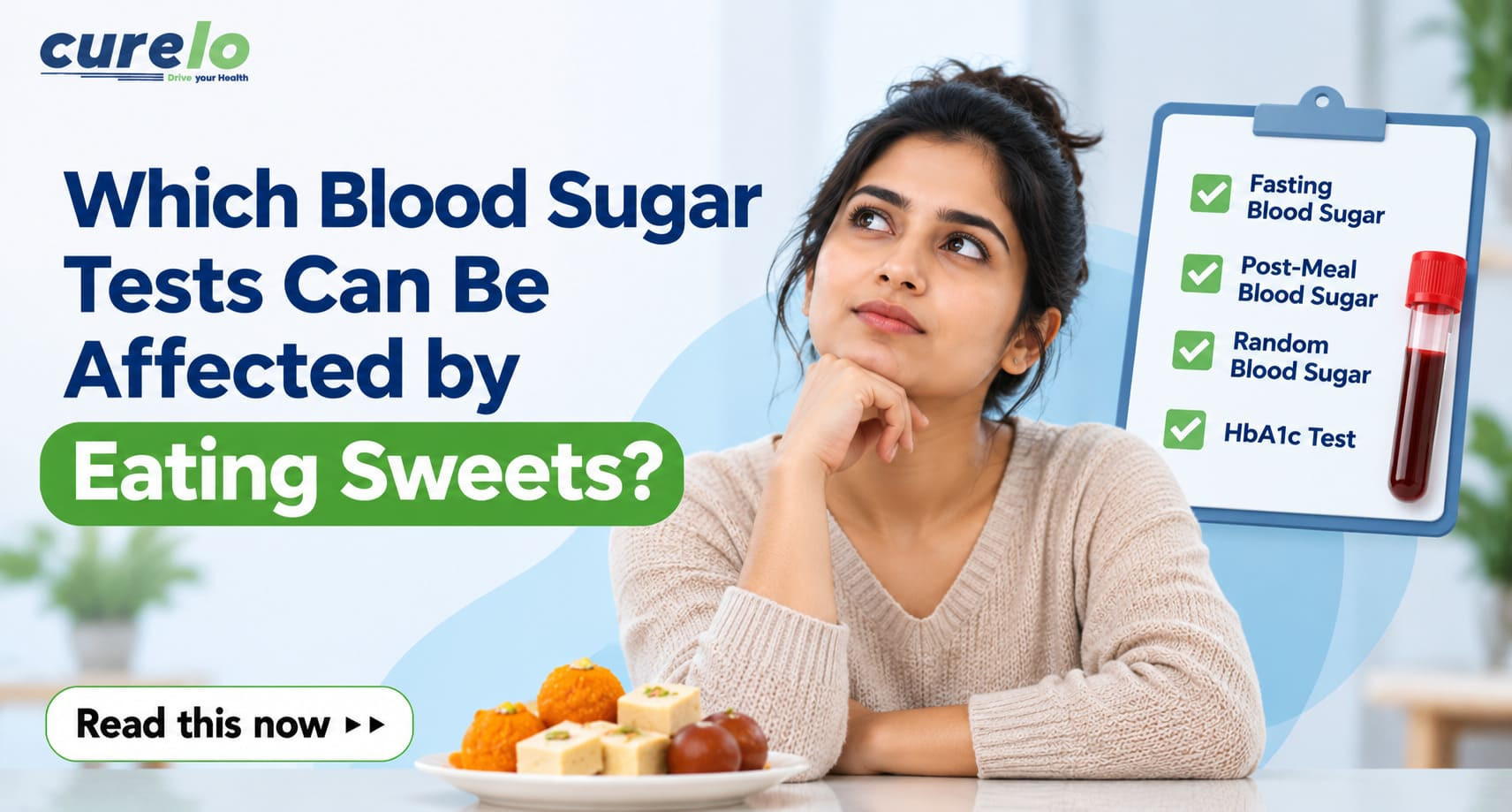
Which Blood Sugar Tests Can Be Affected by Eating Sweets?
Different diabetes tests measure blood sugar in different ways. Some check your glucose levels at a particular time, while others provide information about your average blood sugar over a longer period.
Here are the most common tests you should know about.
1. Fasting Blood Sugar Test
A Fasting Blood Sugar Test measures the amount of glucose in your blood after you have not eaten for a specific period.
It is commonly used to screen for diabetes and prediabetes.
Usually, you need to fast for at least 8 hours before this test. Your doctor or laboratory may provide specific instructions about the fasting duration.
During this period:
- Avoid eating food.
- Do not consume sugary drinks, tea, coffee, or juice.
- Plain water is generally allowed.
- Follow your doctor's instructions regarding regular medications.
Now, what if you ate too many sweets the previous night?
If you complete the required fasting period, eating sweets the previous evening does not automatically invalidate your fasting blood sugar test.
However, an unusually heavy meal, late-night eating, poor sleep, stress, and other factors may influence glucose levels.
Therefore, try to maintain your usual eating routine before the test rather than making sudden dietary changes.
2. Post-Meal Blood Sugar Test
A Post-Meal Blood Sugar Test measures your blood glucose levels after eating.
It helps doctors understand how your body responds to food and manages glucose.
Generally, a two-hour post-meal blood sugar test is performed two hours after the start of a meal. However, your doctor may recommend a different timing depending on your health condition.
If you eat a lot of sweets before this test, your blood sugar levels may be higher than usual.
For accurate interpretation, follow the recommended meal and testing schedule.
This test is particularly useful for people who already have diabetes and need to monitor how their blood sugar responds to meals.
3. Random Blood Sugar Test
Unlike fasting and post-meal tests, a Random Blood Sugar Test can be performed at any time of the day.
You do not need to fast before this test.
It measures your blood glucose levels at the time your sample is collected, regardless of when you last ate.
If you recently consumed sweets, your blood sugar may temporarily increase. This information is considered when interpreting the result.
A random blood sugar test can help identify high glucose levels, but a single result is generally not enough to diagnose diabetes in every situation.
Your doctor may recommend additional tests for confirmation.
4. HbA1c Test
Now comes the test that many people worry about after Diwali!
The HbA1c Test, also known as the glycated haemoglobin test, measures your average blood sugar levels over approximately the previous 2–3 months.
It works by measuring how much glucose is attached to haemoglobin, a protein found in red blood cells.
Since red blood cells live for around three months, the test provides a broader picture of your blood sugar control.
This test reflects your longer-term blood sugar pattern rather than what you ate yesterday.
Another advantage is that you do not need to fast before an HbA1c test.
However, certain conditions, such as anaemia, recent blood loss, blood transfusions, and some haemoglobin disorders, can affect HbA1c accuracy. Your doctor can help decide whether this test is suitable for you.
Can Eating Too Much Mithai During Diwali Cause Diabetes?
This is another common concern, especially after a festive season filled with sweets.
The simple answer is no. Eating sweets for a few days does not directly cause diabetes.
Type 2 diabetes usually develops due to a combination of factors, including:
- Family history of diabetes.
- Excess body weight, particularly around the waist.
- Physical inactivity.
- Insulin resistance.
- Unhealthy eating habits over time.
- Certain hormonal and medical conditions.
Eating too much sugar regularly can contribute to excess calorie intake and weight gain, which may increase the risk of developing type 2 diabetes.
However, having sweets occasionally does not mean you will develop diabetes.
Similarly, avoiding sweets completely does not guarantee that you will never develop the condition.
What matters is your overall lifestyle, eating habits, physical activity, and individual risk factors.
If you have a family history of diabetes or experience symptoms such as increased thirst, frequent urination, unexplained weight loss, or unusual tiredness, speak to your doctor about getting tested.
When Should You Get a Blood Sugar Test After Diwali?
There is no need to wait for several days or weeks just because you enjoyed extra sweets during Diwali.
You can get your blood sugar checked after the celebrations, provided you follow the preparation instructions for the test.
Here is a simple guide:
| Test | When to Get It Done | Fasting Required? |
|---|---|---|
| Fasting Blood Sugar | After the recommended overnight fast | Yes, usually at least 8 hours |
| Post-Meal Blood Sugar | Usually 2 hours after starting a meal | No overnight fast |
| Random Blood Sugar | Any time of the day | No |
| HbA1c Test | Any convenient time | No |
If you already have diabetes, do not postpone your routine monitoring just because you have eaten more sweets than usual.
Your doctor may recommend checking your glucose levels more frequently if your readings have been higher than your target range.
What Should You Do Before a Post-Diwali Sugar Test?
Getting accurate blood test results is not just about choosing the right test. Preparing correctly is equally important.
Here are a few simple things to keep in mind:
1. Follow the Fasting Instructions
If you are getting a fasting blood sugar test, complete the recommended fasting period.
Avoid eating sweets, snacks, or heavy meals during the fasting window.
2. Do Not Skip Meals Unnecessarily
Avoid starving yourself before a blood test to compensate for eating too much during Diwali.
Suddenly changing your eating habits can affect your body's normal routine.
Follow your doctor's instructions and maintain a balanced diet.
3. Stay Hydrated
Drink enough water unless your doctor has advised you otherwise.
Plain water is generally allowed during fasting for routine blood glucose testing.
4. Avoid Excessive Physical Activity Before Testing
Strenuous exercise can temporarily affect blood glucose levels.
Try to maintain your normal activity routine and avoid unusually intense workouts immediately before testing.
5. Inform Your Doctor About Your Recent Eating Habits
If you have been eating unusually large meals, consuming more sweets, or experiencing changes in your routine, let your doctor know.
This information can help them interpret your results more accurately.
6. Do Not Stop Your Diabetes Medication
If you are already taking medication for diabetes, do not skip or change your dose just because you are getting a blood test.
Ask your doctor whether any adjustments are required before testing.
How Can You Maintain Healthy Blood Sugar Levels After Diwali?
Once the festive celebrations are over, it is a good time to return to healthy daily habits.
You do not need extreme diets, detox drinks, or skipping meals to balance out your festive eating.
Small and consistent lifestyle changes can make a difference.
Here are some simple habits to follow:
- Eat balanced meals: Include vegetables, whole grains, protein, and healthy fats in your daily diet.
- Control portion sizes: Enjoy sweets occasionally, but avoid eating large quantities at once.
- Stay physically active: Walking, cycling, or other moderate activities can help improve insulin sensitivity.
- Drink enough water: Choose water over sugary drinks and packaged juices.
- Get proper sleep: Poor sleep can affect how your body regulates blood sugar.
- Monitor your glucose levels: If you have diabetes or are at risk, follow your doctor's recommended testing schedule.
Remember, healthy habits are not about punishing yourself for enjoying festivals. They are about making better choices consistently.
If you have not checked your blood sugar levels in a while, consider discussing a suitable Diabetes Test with your doctor.
Conclusion
Eating too much sugar during Diwali can temporarily increase your blood sugar levels, but it does not mean your blood test results will automatically be inaccurate.
The impact depends on the type of test, the timing of your last meal, and how your body processes glucose.
If you are planning a Post Diwali Sugar Test, remember that a fasting blood sugar test requires proper fasting, while an HbA1c test measures your average glucose levels over the previous 2–3 months and does not require fasting.
So, do not let the fear of high readings stop you from checking your health.
Enjoy your mithai, return to balanced eating habits, and keep track of your blood sugar levels.
Because celebrating festivals is important, but taking care of your health is equally important!
FAQs
1. Can eating sweets one day before a blood test increase blood sugar?
Yes, eating sweets can temporarily increase blood sugar levels, especially if you get tested shortly after eating. However, if you are getting a fasting blood sugar test and have followed the recommended fasting period, the sweets you ate the previous day do not automatically make your results inaccurate. Your glucose levels may also be influenced by sleep, stress, physical activity, and other factors. Always follow your doctor's instructions before testing.
2. How many hours should I fast before a blood sugar test?
For a Fasting Blood Sugar Test, you generally need to fast for at least 8 hours. During this period, you should avoid food and beverages other than plain water. However, the exact instructions may vary depending on the test and your doctor's advice. You should also ask your doctor about your regular medications, especially if you are taking diabetes medication.
3. Can I do an HbA1c test after eating sweets?
Yes! You can get an HbA1c test even if you have eaten sweets recently. This test measures your average blood sugar levels over approximately the previous 2–3 months, so eating sweets once or twice during Diwali will not suddenly change your results. Unlike fasting blood sugar tests, the HbA1c test does not require fasting. It is useful for understanding long-term glucose control and screening for diabetes.
4. How long does sugar stay in your blood after eating sweets?
Blood sugar levels generally start rising within 15–30 minutes after eating, depending on the type of food and other factors. In people with normal glucose regulation, levels usually begin returning towards their pre-meal range within a few hours. However, the timing can vary depending on the quantity of carbohydrates consumed, the overall meal, physical activity, and insulin response. People with diabetes may experience higher glucose levels for longer.
5. Can a blood sugar test detect diabetes after Diwali?
Yes. You can get tested for diabetes after Diwali. Tests such as Fasting Blood Sugar, HbA1c, and sometimes an Oral Glucose Tolerance Test can help doctors identify diabetes or prediabetes. Eating sweets during Diwali does not make these tests useless. However, the correct test preparation and interpretation are important. If your results are higher than the normal range, your doctor may recommend repeating the test or getting additional investigations before confirming a diagnosis.
Need Help In Booking a Lab Test?
Share Your Details, We Will Call You Right Back!


